

Your First Ski Holiday: Complete Beginner’s Guide
Everything you need to know before your first trip, from choosing a resort and booking lessons to getting through your first days on snow.
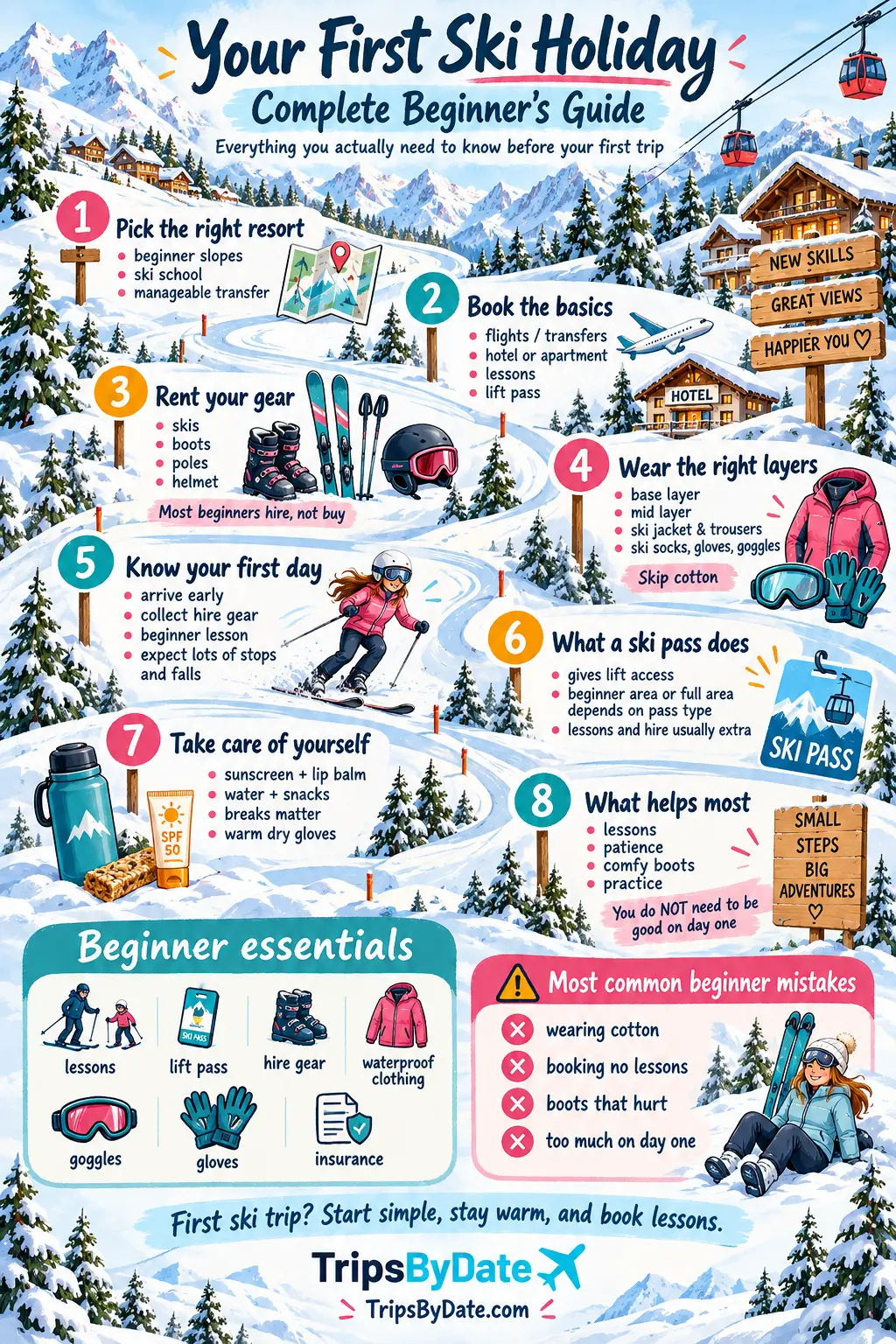
A first ski holiday can feel complicated long before you reach the mountains. You are choosing a resort, learning what a lift pass does, wondering what to pack and trying to decide whether the boots are supposed to feel that strange.
It becomes much easier when you plan around one idea: make your first few days comfortable and manageable, then build confidence from there. This guide brings the essentials together, with links to our detailed advice whenever you need a deeper answer.
Explore Upcoming Ski Holidays
Looking for your first mountain trip? Here are upcoming ski holidays from specialist operators, ordered by departure date.


 LGW • 7 nights
 SC · Iglu Ski

 LGW • 7 nightsHB · Iglu Ski
 GLA • 7 nightsB&B · Iglu Ski
 LGW • 7 nightsSC · Iglu Ski
Your first ski holiday: the quick answer
Your first ski trip is easiest when you keep the plan simple: choose a resort with a proper beginner area, book lessons before travelling, hire suitable equipment, dress in waterproof layers and allow time to get used to it all. You do not need expensive skis, a huge linked ski area or the confidence to ski a red piste.
For many first-timers, the best result is not covering the most miles. It is learning to stop, turn and use beginner lifts safely, with enough energy left to enjoy the mountains after your lesson.
1. Choose a ski resort that makes being a beginner easy
A famous resort is not automatically a beginner-friendly resort. What matters more is a nursery slope that is easy to reach, a reputable ski school, gentle progression pistes and accommodation that does not turn the first morning into a complicated journey.
Look at the piste map rather than only the size of the ski area. A large area can have plenty of difficult skiing but relatively few convenient novice slopes. Check whether the nursery area is served by a conveyor lift or another manageable lift, whether ski-school meeting points are near your accommodation, and whether easy runs return to the village.
If you are going with experienced skiers, choose a resort where they can enjoy different terrain while you still have an accessible place to learn. Do not plan your first day around keeping up with friends.
How to recognise a genuinely beginner-friendly resort
Check where lessons meet, how far the hire shop is from that point, whether beginner lifts are included in your ticket and whether easy runs connect sensibly. Look for recent resort maps and ski-school descriptions rather than trusting a generic claim that a destination suits everyone.
Slope colour conventions can differ by country. Many French resorts use green, blue, red and black; elsewhere the standard colour sequence may begin with blue. The colour alone does not tell you how a run will feel in ice, heavy snow or crowds.
2. Decide when to travel and how many days to ski
A typical European ski season runs through winter, but opening and closing dates are specific to each resort and even to different lifts within the same ski area. Early December and late spring call for particularly careful research into the altitude of the skiing actually open.
Midwinter can offer a wide choice of resorts, but daylight is shorter and conditions can be colder. March often brings longer days, although lower slopes may soften in sunshine. School holiday weeks can make lessons, accommodation and transfers more expensive and busier.
For a first trip, a longer stay gives you more chances to practise without making a single tricky day feel decisive. A short break can still work, but make sure travel and equipment collection do not consume most of your available ski time.
3. Book the essentials before you arrive
The main bookings are travel, airport or rail transfer, accommodation, ski lessons, equipment hire and an appropriate lift pass. Depending on the operator, a package may include some of these but not others. Read the actual inclusions.
Arrange lessons early if you are travelling during school holidays. Confirm the lesson meeting point, start time, required arrival time and the level of skier accepted in the class. A person who has never put skis on should book an absolute beginner lesson.
Check whether the first-day lift pass is required for the nursery area. Some ski schools and resorts offer beginner passes or lessons with certain lift access included; others expect you to buy a separate pass. Avoid paying for a huge ski domain before you know what is necessary.
Should you take lessons before leaving the UK?
It can help. An introductory session on an indoor snow slope or dry slope familiarises you with fastening skis, sliding, balance and basic stopping movements. It does not replace professional instruction on holiday, but it may make your first resort lesson feel less unfamiliar.
4. Hire skis and boots for your first trip
For most first-timers, renting skis, boots and poles is more practical than buying them. A hire shop can recommend forgiving skis and help fit the boots. It also removes the expense of transporting and storing bulky equipment you may not use regularly.
Tell the technician your real height, weight, age and experience level. Ski bindings need to be checked and adjusted by trained rental staff. Do not attempt to change release settings yourself.
Ask whether a helmet is included, whether equipment can be collected the previous evening, what the damage or theft terms cover, and whether an uncomfortable boot can be exchanged. A convenient shop close to your lesson area can be worth more than a tiny discount further away.
What should ski boots feel like?
Ski boots feel much stiffer than everyday footwear. A secure, close fit is normal; sharp pain, numbness or severe pressure is not. Your heel should feel held in place, and the fit should be reassessed if the foot slides noticeably or your toes remain painfully compressed.
Wear one suitable ski sock for fitting, not multiple thick pairs. Take time to walk and flex in the boots before you leave. If they hurt on the slope, return to the shop rather than trying to endure a full week of pain.
5. Pack clothing for movement, snow and waiting around
You need a moisture-managing base layer, a suitable insulating layer and waterproof ski jacket and trousers. Add ski socks, warm waterproof gloves or mittens, a correctly fitted helmet and proper goggles or eye protection. A neck warmer and spare dry gloves are useful extras.
Avoid cotton next to your skin because it holds moisture. You may feel hot while learning a turn, then cold while standing still at a meeting point or waiting for a lift. Layers make it easier to respond to both.
Choose winter shoes with good grip for moving around the village. Ski boots are designed for skiing, not long walks through slippery streets. Keep sunscreen and protective lip balm handy even when the air feels cold; sunshine and reflected light can be intense in the mountains.
6. Get the first morning organised the night before
Locate the hire shop, ski-school meeting point and route from your accommodation. Check the current weather, lift status and any notifications from the ski school. Lay out your clothes and keep your booking confirmation and phone accessible.
Allow more time than you think for breakfast, carrying skis, finding the correct meeting point and getting into boots. Walking in ski boots is slow and carrying skis can feel awkward. Arriving calm is more useful than racing to your first lesson.
Know when you can travel?
Choose your departure airport and the dates you are free, then explore ski holidays that fit.
Find ski holidays by date7. What actually happens in your first ski lesson?
An instructor may begin on nearly flat snow. You will learn to move with equipment on, stand balanced, slide gently, slow down and stop. Many beginners are introduced to a snowplough or wedge before progressing towards linked turns.
You may practise falling and getting back up, use a beginner conveyor or another simple lift, and repeat the same short slope many times. That repetition is progress, not a sign that the day is going badly.
Everyone learns at a different rate. Some people feel comfortable making simple turns quickly; others need more sessions to feel secure. Do not interpret an infographic timeline of two or three days as a promise.
8. Learn the mountain rules before skiing independently
Know the resort piste map and the graded difficulty of the slopes. Begin on instructor-approved terrain, control your speed and leave enough room for other users. Avoid stopping in narrow spots or anywhere you cannot be seen from above.
Respect lift instructions, weather warnings and local closures. Off-piste terrain is a separate activity with serious hazards and should not be treated as an extension of a marked beginner run.
Follow the FIS rules of conduct and the advice of your instructor. If a lift, run or situation feels beyond your ability, ask for help rather than pressing on.
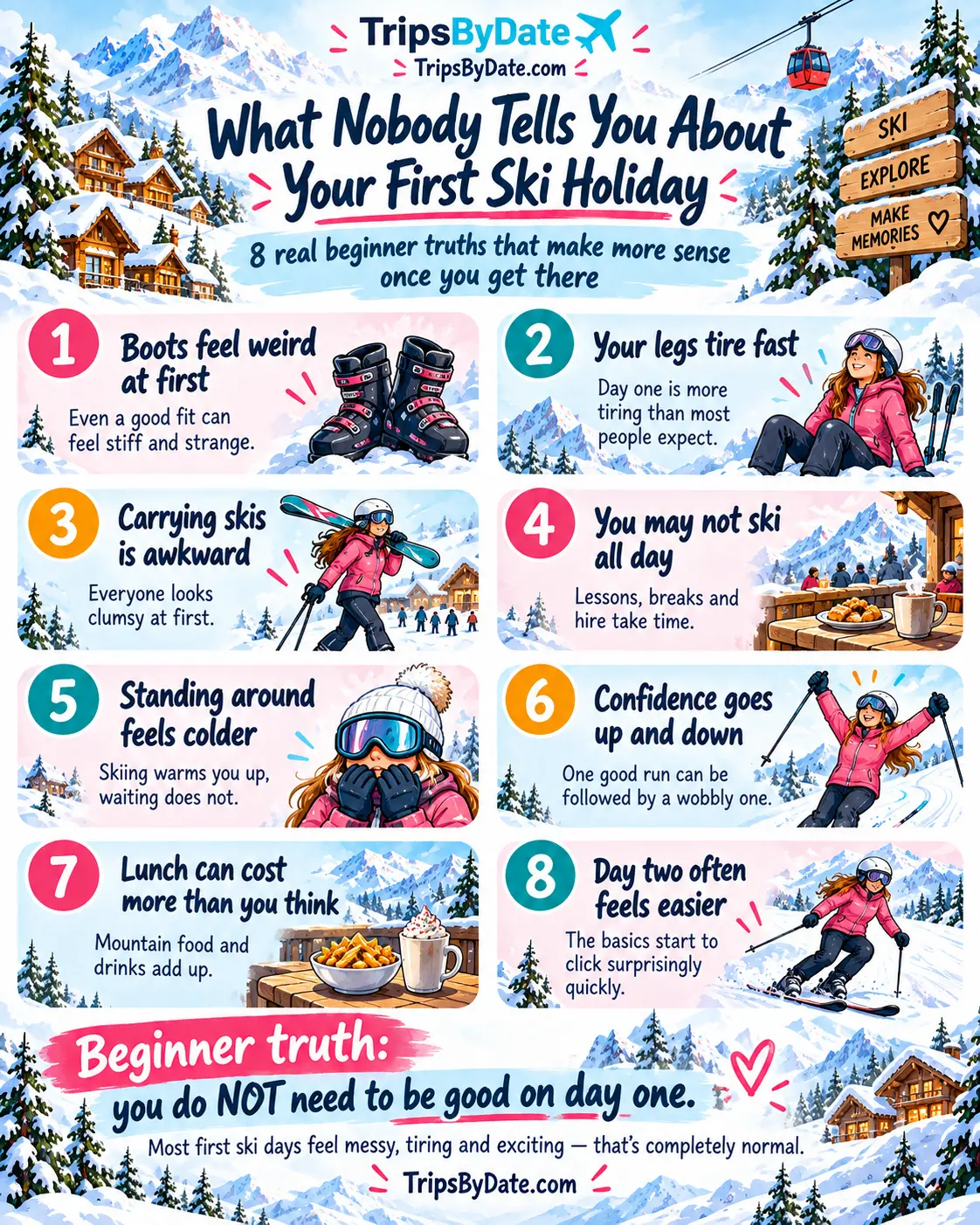
9. The eight first-ski-holiday surprises nobody mentions
Ski boots feel strange. The rigid shell and forward stance can feel unnatural even with a reasonable fit. Strange is expected; pain needs attention.
Your legs may tire surprisingly fast. Balancing, braking and repeated standing up can be tiring, particularly on day one.
Carrying skis is an acquired skill. Get the rental shop to show you how to carry them safely without swinging the tips into other people.
You may not ski all day. Collecting hire gear, listening to instructions, breaks and lift queues are part of the holiday. That is normal.
Standing still can make you colder. Carry a layer for waiting around, not only for when you are moving.
Confidence fluctuates. A good run can be followed by a frustrating one. Improvement is rarely perfectly smooth.
Mountain lunches can surprise your budget. Plan for snacks, drinks and a midday meal, or investigate picnic-friendly alternatives.
The second day may feel easier. Familiarity often helps, although physical fatigue can also build. Take breaks and judge your progress over the trip, not a single run.
10. Budget for the whole holiday, not just flights and hotel
Along with travel and accommodation, make room for airport transfers, checked bags or ski carriage, hire equipment, helmet hire, lessons, the correct lift pass, winter-sports insurance, food, tourist taxes and potential equipment storage.
Compare packages line by line. A cheap apartment far from a beginner lift can create daily transport and logistical costs. A more convenient property may be better value, especially for a short trip.
If you have flexibility, compare travel dates outside peak school holiday periods, check smaller ski resorts and look at self-catering options. Pre-booking can help, but discounts and cancellation rules vary by operator.
11. Do not skip winter-sports insurance
Ordinary travel insurance does not automatically cover skiing. Confirm that your policy includes the exact activities you will do, appropriate medical and rescue expenses, personal liability, and the applicable equipment terms.
GOV.UK also advises checking helmet requirements, exclusions for rented-equipment damage, and cover for off-piste activities. A UK GHIC or valid EHIC may help with medically necessary state healthcare in eligible countries, but it does not replace travel insurance or cover private care, mountain rescue or repatriation.
12. Give yourself permission to enjoy the non-skiing parts
Your first holiday is still a holiday. A lunch on a sunny terrace, a winter village walk, a spa afternoon or simply finishing a beginner lesson feeling more confident all count as a successful day.
You do not have to keep up with the fastest skier in the group. A good first trip should make you want to return, not leave you dreading another day on the mountain.
A simple first-ski-holiday planning timeline
Before booking: Compare beginner areas, ski schools, village layout, likely ski-season conditions, transfer times and the total budget.
Once the trip is booked: Reserve lessons and hire equipment, work out the lift-pass options, and arrange appropriate insurance.
A few weeks before departure: Check your layers, gloves, socks, eyewear and waterproof outerwear. If possible, try an introductory lesson at home.
The evening before skiing: Confirm weather, slope status, meeting points, hire collection and lesson start times.
Each ski day: Begin gently, drink water, take breaks, follow your instructor and stop when fatigue affects your control.
Beginner FAQs
Can you go skiing without knowing how to ski? Yes. Book a first-timer lesson and choose a resort with a suitable nursery area. You do not need to learn independently before travelling.
How many lessons do beginners need? There is no universal number. A structured run of lessons gives you more consistent practice, and your instructor can advise when you are ready to ski without direct supervision.
Do I need to buy my own equipment? Usually not for a first trip. You can hire skis, boots and poles, and often a helmet, while buying or borrowing suitable personal clothing.
Do I need a lift pass for my first lesson? Sometimes, but not always the full ski-area pass. Ask the ski school exactly what is included and required.
Will I be able to ski blue runs by the end of the week? Possibly, but not necessarily. Conditions, confidence, fitness and instruction all affect progress. Aim for control before harder terrain.
Can non-skiing friends enjoy the holiday? Often, yes. Pick a resort with village activities, pedestrian-access lifts or winter walks and check availability before booking.
Is skiing or snowboarding better for a beginner? Skiing often feels easier in the first session for some people, but interests and previous board-sport experience matter. Lessons help in either sport.
Read our detailed beginner ski guides
How to Choose the Right Ski Resort
Best Ski Resorts for Absolute Beginners
When Is the Best Time to Go Skiing in Europe?
How Many Days Do You Need for a Ski Holiday?
What Ski Lessons Do Beginners Need?
How Ski Hire Works for Beginners
What Ski Boots Should Feel Like
What to Wear Skiing for the First Time
What to Pack for a Ski Holiday
Skiing for Beginners: Your First Day
What Do the Ski Slope Colours Mean?
How Much Does a Ski Holiday Cost?
How to Save Money on a Ski Holiday
Best Ski Resorts for Non-Skiers
Skiing vs Snowboarding for Beginners
Trusted ski holiday advice and sources
The Ski Club of Great Britain offers extensive advice on first lessons, clothing, UK practice slopes and choosing suitable terrain:
Ski Club of Great Britain: New to Snowsports
Its equipment section also covers clothing, packing, boots, goggles and other kit:
Ski Club of Great Britain: Kit & Equipment
For an independent packing checklist, see the Ski Club’s detailed packing guide:
Ski Club of Great Britain: Packing List
GOV.UK explains insurance exclusions, GHIC and EHIC limitations, piste safety and helmet considerations:
GOV.UK: Preparing for Winter Sports Abroad
The real goal of your first ski holiday
You do not need to be good on day one. You need a resort and lesson plan that lets you learn safely, boots you can comfortably wear, clothing that keeps you warm and enough time to enjoy the experience. Small improvements count.
If you arrive home knowing how to control your skis better than when you arrived, and with a few favourite memories from the mountains, that is a first ski trip worth celebrating.
‹ BACK TO SKIING
Know when you can travel?
TripsByDate works the other way around. Pick your departure airport and the dates you are free, then see the holidays that actually fit.
Find holidays by date