

How Ski Hire Works for Beginners
What happens at a ski rental shop, what you need to bring, and how to make sure your equipment feels right before your first lesson.
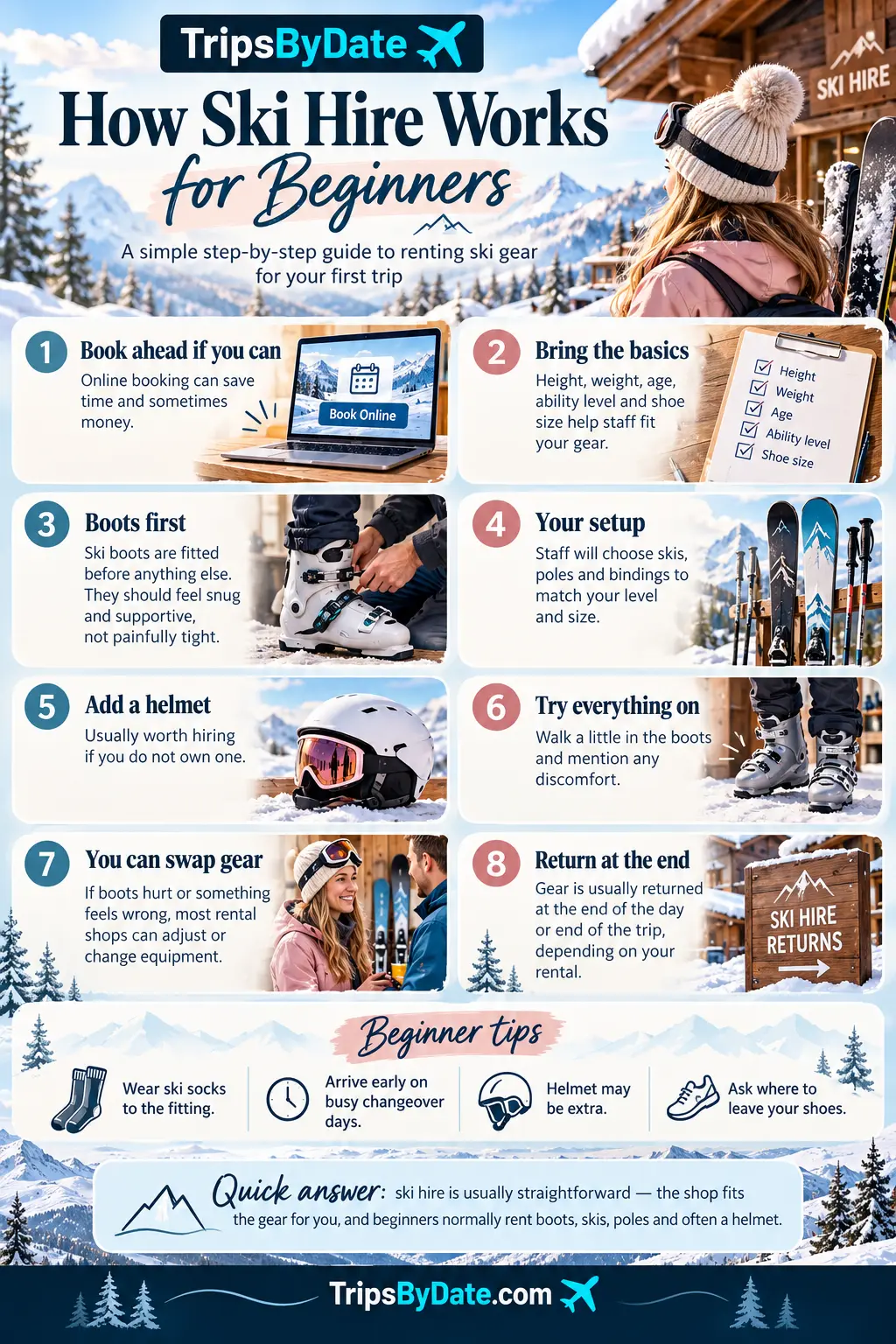
Walking into a ski hire shop for the first time can feel a little intimidating. There are dozens of different skis, strange-looking boots, bindings, helmets and questions about your ability when you have never actually skied.
Fortunately, you do not need to understand all the equipment before you arrive. A rental technician normally helps select and fit the gear, while you explain your size, experience and what you need for the holiday.
The process is straightforward once you know what to expect. Below is a practical guide to booking, collecting, fitting, using and returning your ski equipment, plus the details that are easy to miss on your first trip.
Explore Upcoming Ski Holidays
Looking for your next ski trip? Here are some upcoming ski holidays from specialist operators, ordered by departure date.


 LHR • 7 nights
 AI · Ski Line

 BRS • 7 nightsHB · Iglu Ski
 LGW • 7 nightsHB · Iglu Ski
 LGW • 7 nightsSC · Ski Line
How does ski hire work?
You reserve or request equipment, visit the rental shop, provide fitting information, try on boots and have the rest of the equipment selected and adjusted. Then you use it for the agreed hire period and return it at the end.
A typical downhill ski package includes skis with bindings, boots and poles. A helmet may be offered separately or included in a particular package. Exact inclusions depend on the rental provider.
You generally do not need to know your ideal ski length, boot model or binding settings. Those are matters to discuss with the rental technician, who should take your ability and measurements into account.
1. Book your ski hire before you travel if possible
Reserving in advance is often the easiest option, particularly for February half-term, Christmas, New Year and other busy ski weeks. It gives you a chance to compare equipment packages, collection times and shop locations before you arrive.
Many rental companies let you choose a resort, rental dates and equipment category online, then collect everything in person. INTERSPORT Rent, for example, describes a process of selecting a shop, choosing the rental products and reserving for collection on the requested date.
Booking online does not necessarily mean the boots are fitted remotely. You will normally still need to attend the shop so staff can check the fit and set up the equipment for you.
Before paying, check whether the quoted period includes your first and last skiing days, and whether collection is possible the previous evening. Some providers offer evening-before collection, but you should not assume every shop does.
Do you have to reserve ski equipment in advance?
Not always. Many ski hire shops accept walk-in customers, subject to availability. The disadvantage is that popular sizes or equipment categories can be limited during busy periods, and fitting queues can take time.
If you have a ski lesson first thing in the morning, booking ahead and arranging collection earlier can remove unnecessary stress.
2. Bring the basic details the shop needs
Rental staff will normally ask for information including your height, weight, age, normal shoe size and skiing ability. Some shops also ask whether you prefer cautious, recreational skiing or more demanding terrain.
These details help the shop choose suitable equipment. Some information also contributes to the technician's assessment when adjusting the ski binding release settings.
Be accurate about your ability. If you have never skied, say so. Claiming to be more experienced is not helpful and can affect the equipment setup chosen for you.
Bring your booking confirmation and whatever identification or payment card the shop says it requires. Some rental businesses request a deposit, card authorisation or identification, while others handle this differently.
3. Ski boots are usually fitted first
Boots are one of the most important parts of the rental experience. They connect your feet and lower legs to the skis, and an uncomfortable pair can make an otherwise enjoyable first day miserable.
A technician may measure your feet rather than relying exclusively on your everyday shoe size. Ski boots use their own sizing system, and the correct fit depends on foot shape as well as length.
Put on one pair of proper ski socks before the fitting. Thick socks, multiple sock layers or ordinary cotton socks can create bunching, pressure and moisture problems inside the boot.
How tight should rental ski boots feel?
Ski boots should feel secure and supportive, with your foot held in place rather than sliding around. They may feel noticeably firmer than normal walking shoes, especially if you have never worn them before.
But snug does not mean painfully tight. Sharp pressure, persistent numbness, significant pinching or severe discomfort are reasons to tell the fitter immediately.
Stand and gently flex your knees with the boots fastened as instructed. Your heel should feel reasonably secure. If your toes are painfully compressed or your foot is moving around, ask the technician to reassess the fit before taking the boots away.
Never assume that a badly fitting pair will automatically become comfortable after several hours of skiing.
Should you wear two pairs of ski socks?
Generally, no. One suitable ski sock is usually the better approach. Doubling up can create wrinkles and unwanted pressure points, and may make a correctly sized boot feel too tight.
If the shop does not have a suitable boot fit, ask about alternatives rather than trying to solve it by adding extra socks.
4. Staff select your skis, poles and binding setup
Once your boots fit, the shop can choose skis suited to your size, ability and intended skiing. A complete beginner will generally be offered manageable recreational equipment rather than highly demanding specialist skis.
The technician also checks boot compatibility with the bindings and adjusts the setup using the required skier and equipment information. Proper binding setup matters because bindings need to retain the boots during normal skiing while allowing release in appropriate circumstances.
Do not adjust ski binding release settings yourself.If something seems wrong, return to the rental technician for a check. Equipment needs professional adjustment and inspection.
How long should beginner rental skis be?
There is no single correct length for everyone. Height and weight matter, but so do skiing experience, the type of ski and the conditions it is designed for.
Beginners are often given forgiving equipment that is easier to handle while learning basic turns. Ask the technician why a particular length has been selected rather than copying what an experienced friend uses.
Do complete beginners need ski poles?
Poles are commonly included in ski rental packages, but some instructors begin first-day lessons without them so learners can concentrate on balance, movement and stopping.
Ask your ski school whether poles will be needed for the first session. If they are provided, the rental shop should choose an appropriate length.
5. Add a properly fitted helmet
Helmets are widely available from rental shops, although they may cost extra depending on the package. The Ski Club of Great Britain specifically advises using a snowsports helmet with an appropriate fit.
The helmet should sit securely and comfortably without wobbling excessively. Check that the straps work, that it fits properly with your goggles and that there is no obvious damage.
Resort rules vary, and some travel insurance policies require helmet use. GOV.UK advises travellers to check both the local rules and their insurance requirements before skiing.
A helmet reduces some risks but does not make skiing risk-free. Staying in control and choosing appropriate terrain remain essential.
6. Try everything on before leaving the rental shop
Even if staff are busy, take a few minutes to check your boots and helmet before leaving. Walk carefully in the boots on a suitable shop surface, flex your knees and explain any discomfort.
Make sure you understand how to fasten and loosen the boot buckles, how the skis should be carried and how to get into and out of the bindings. If you are uncertain, ask for a demonstration.
Also check the collection receipt or rental details so that you know which pieces belong to you, where to return them and whether they are insured against damage or theft.
What should you check before your first lesson?
Check that your boots are comfortable enough to wear, the helmet is fitted correctly, your equipment matches the booking and you know where the ski-school meeting point is.
Give yourself extra time. Walking through a resort in ski boots, carrying skis for the first time and finding the beginner area can take considerably longer than expected.
For a broader first-day plan, see our Skiing for Beginners: What to Expect on Your First Day guide.
7. What if your rental boots or skis feel wrong?
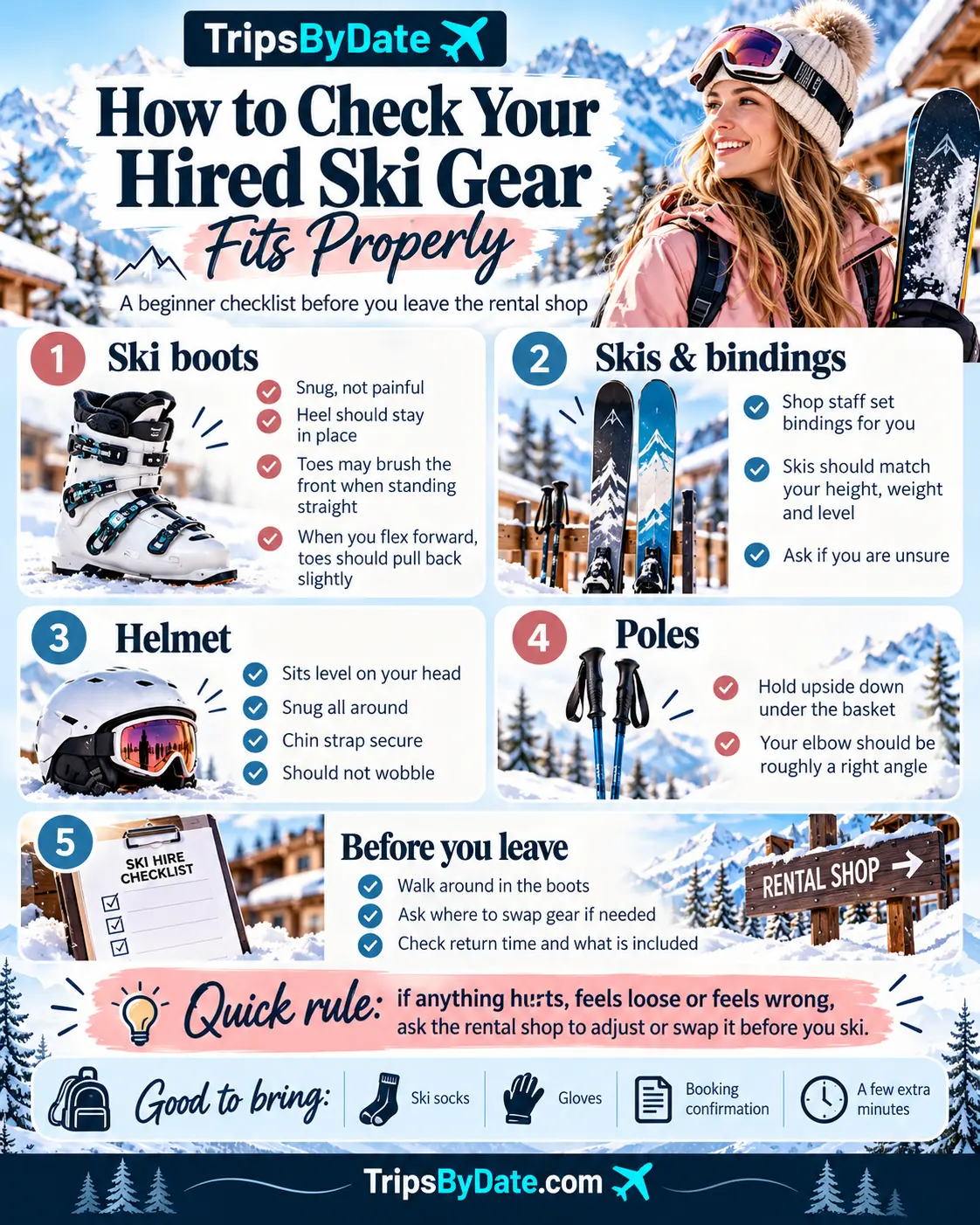
Tell the shop. One of the useful advantages of hiring is that rental staff may be able to adjust or change equipment if the initial setup does not suit you, subject to stock and the shop's policy.
Do not try to tolerate sharp boot pain for an entire week. A different size, boot shape or adjustment may solve the problem, and the technician is better placed to assess it than someone guessing on the slopes.
Similarly, if a binding appears damaged, does not function as expected or you are concerned about its setup, stop using the equipment and have the shop inspect it.
Can you swap rented skis during your holiday?
Often, yes, depending on availability and the rental agreement. Some providers permit exchanges within an equipment category or upgrades for an additional charge.
INTERSPORT Rent advertises equipment adjustments and exchanges subject to availability at participating shops. Policies vary, so ask before booking if the ability to swap gear matters to you.
8. Return your gear at the agreed time
At the end of the hire period, return the equipment to the location specified in your agreement. Some shops require a return after your final skiing day; others set a morning or evening deadline.
Check whether the shop expects the skis, poles, boots and helmet to be returned together. Keep proof of return if provided, particularly if the company has taken a card deposit.
Late returns, lost items or damage outside normal wear may lead to charges under the rental contract. Check the terms rather than assuming every shop handles these situations the same way.
What is usually included in a ski hire package?
Skis and bindings: normally supplied together and adjusted by the technician.
Ski boots: often part of a standard complete rental package, but check the option you selected.
Poles: commonly included with ski equipment, though first lessons may not use them.
Helmet: sometimes bundled, sometimes an extra. Ask for a helmet specifically if you do not already own one.
Gloves, ski socks, thermal clothing, goggles and jackets are generally items you bring yourself unless the supplier explicitly offers a clothing-rental service.
For clothing preparation, see What to Wear Skiing for the First Time and What to Pack for a Ski Holiday.
Is a ski lift pass included with equipment rental?
Usually not. A ski hire agreement pays for equipment, while a ski pass provides access to the lifts covered by that ticket. Lessons are normally another separate product unless you book a bundle.
Some holiday operators sell combined offers, so check the breakdown before paying twice for something already included.
Our What Does a Ski Pass Include? guide explains the different types of pass and what they cover.
How much does ski hire cost?
The price depends on the resort, the rental duration, your age, the equipment category and whether you include boots and a helmet. Discounts may be available for advance booking, families or longer rental periods.
Rather than trusting a single Europe-wide price estimate, compare the actual quotes for your dates and location. An apparently cheap ski-only price may not include boots, a helmet or any optional damage protection.
Check the total payable amount, whether a deposit is required, and what happens if you need to cancel or change your reservation.
For the wider cost of a trip, see How Much Does a Ski Holiday Cost?.

Know when you can travel?
Pick your departure airport and the dates you are free, then see the ski holidays that actually fit.
Find ski holidays by dateIs ski hire cheaper than buying your own equipment?
For somebody trying skiing for the first time, hiring is usually the more practical choice. You avoid a large upfront purchase and can learn what type of equipment actually suits you.
Buying may become worthwhile if you ski frequently and want equipment with a familiar fit. However, ownership also brings maintenance, storage and possible airline baggage costs.
Read Should You Hire or Buy Ski Equipment? for a full comparison of both approaches.
Should children hire their ski equipment?
Hiring is often convenient for children because sizes change as they grow. A rental shop can help select appropriate boots, ski lengths and helmets for the child's current measurements.
When booking, enter each child's details accurately. Ask whether the shop has the required sizes and whether a helmet is included in the children's package.
Children can also get tired quickly on their first ski days. Booking suitable ski-school sessions and allowing enough time for fitting can make the experience much easier.
For family resort ideas, see Best Ski Resorts for Families.
Do rental shops provide ski clothing and goggles?
Standard ski equipment hire does not generally mean a complete outfit. Shops typically focus on skis, boots, poles and helmets, although some businesses offer clothing or accessory rental.
Bring your own proper ski socks, gloves and suitable clothing, and make sure you have goggles or appropriate eye protection. Do not assume these personal items will be waiting in your rental package.
Can you collect ski equipment the evening before?
Some providers allow collection on the afternoon or evening before your first booked skiing day. This can be especially useful if you have an early lesson the following morning.
INTERSPORT Rent advertises advance-evening pickup at participating locations. Check your particular shop's opening hours and collection rules before planning around that option.
What if your flight arrives after the rental shop closes?
Check opening hours before you travel. A booking confirmation does not necessarily mean the shop will remain open for a late flight or transfer.
If you arrive late, you may need to collect the equipment the following morning. Allow extra time before lessons and ask the ski school whether a delayed arrival affects your course.
What happens if rental equipment is damaged or stolen?
Your responsibilities depend on the rental agreement. Shops may offer optional protection for accidental damage or theft, but exclusions, excesses and reporting requirements can apply.
GOV.UK specifically warns that many travel insurance policies may not cover rental-equipment damage, and winter-sports cover should be checked carefully before travel.
Ask the shop what is covered, whether a police report would be needed after theft, and what you should do immediately if something is damaged or missing.
Should beginners rent premium skis?
Not automatically. A beginner usually benefits more from forgiving equipment, properly fitted boots and professional instruction than from the most expensive rental category.
Tell the rental shop your actual experience and let the technician explain which category suits your lessons and the terrain you plan to ski.
You can reconsider equipment categories later as your technique and preferences develop.
First-time ski hire checklist
Before travelling: choose a convenient shop, reserve the correct dates, check what is included, confirm collection hours and understand any deposit or protection terms.
At the fitting: give accurate height, weight, age, shoe size and ability details. Wear ski socks, check boot comfort, try the helmet and ask staff to demonstrate the equipment if anything is unfamiliar.
During the holiday: return to the rental shop if equipment hurts, appears damaged or needs professional adjustment. Do not change binding settings yourself.
Before leaving: check the return deadline, gather all the hired items and keep any receipt or proof of return provided by the shop.
Reliable ski hire advice and sources
INTERSPORT Rent explains how online reservations, in-shop collection and equipment selection work in a major European ski rental network.
INTERSPORT Rent: ski rental and booking process
Its France rental guidance provides examples of advance collection and equipment exchanges, subject to shop availability.
INTERSPORT Rent: ski rental in France
The Ski Club of Great Britain explains skiing accessories, helmet choice and correct fitting principles.
Ski Club of Great Britain: ski accessories and helmets
GOV.UK provides winter-sports guidance about suitable insurance, equipment-related exclusions, helmets and skiing within your ability.
GOV.UK: preparing for winter sports abroad
So is hiring ski equipment difficult for beginners?
No. Most beginners can leave the practical equipment choices to the rental staff, provided they give accurate information, check the fit and explain any problems.
Book ahead if it makes your arrival easier, wear proper ski socks for your fitting and allow enough time before your first lesson. The equipment should help you learn, not become the most stressful part of your holiday.
More help for your first ski holiday
What to Wear Skiing for the First Time · What Ski Lessons Do Beginners Need? · Should You Hire or Buy Ski Equipment? · What to Pack for a Ski Holiday
‹BACK TO SKIING
Know when you can travel?
TripsByDate works the other way around. Pick your departure airport and the dates you are free, then see the holidays that actually fit.
Find holidays by date