

Best Ski Resorts for Non-Skiers
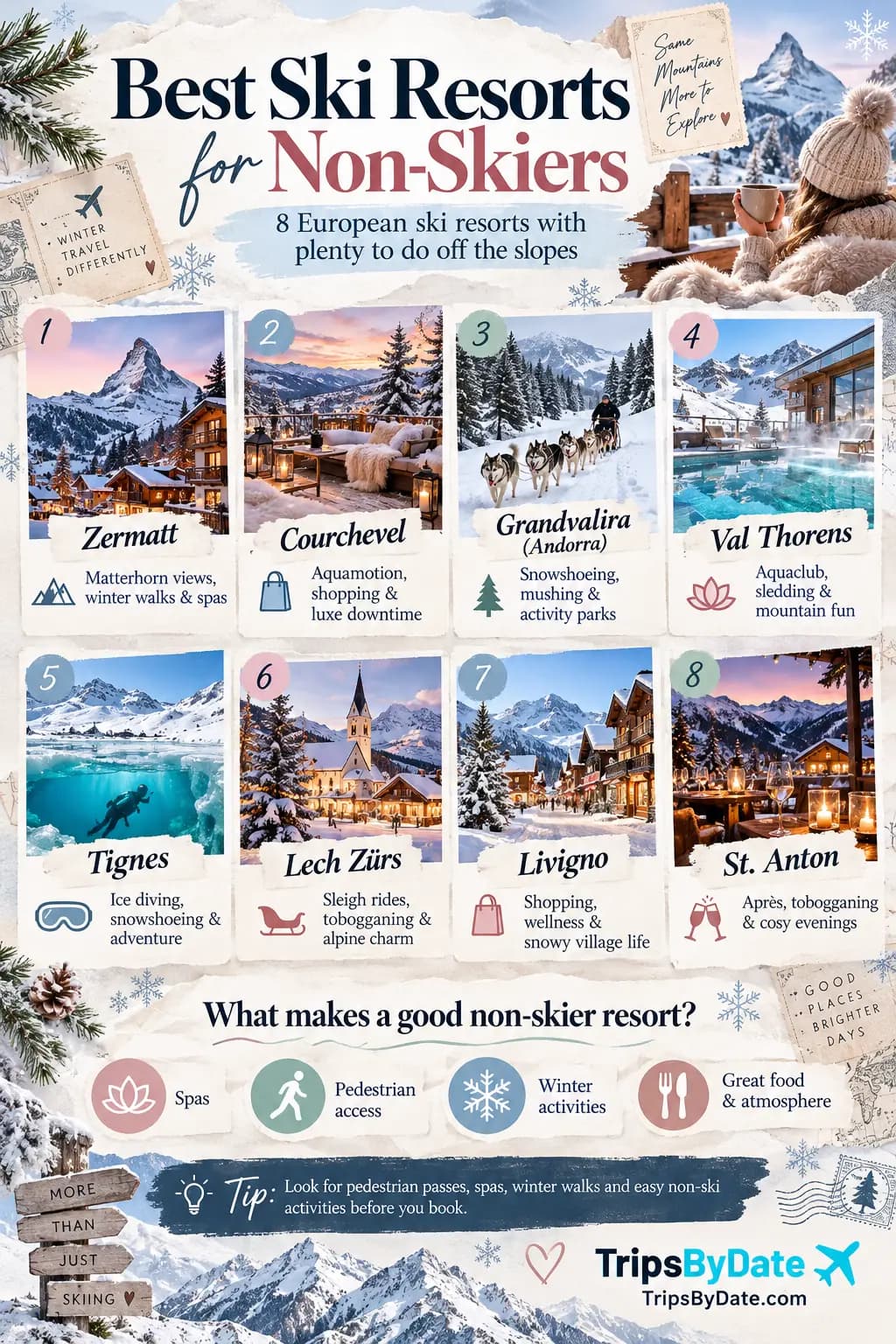
Fourteen European mountain escapes with scenery, winter walks, spas, shops and adventures beyond the slopes.
You do not have to ski to love a winter holiday in the mountains. Picture a quiet breakfast overlooking snowy peaks, a scenic cable-car ride, a walk through a beautiful village and an afternoon at a spa. The trick is choosing a resort where the non-ski activities are more than an afterthought.
These fourteen European destinations offer very different ways to enjoy winter. Some are all about mountain views and walking; others suit people who want shopping, relaxation, lively evenings or an unusual guided adventure.
Explore Upcoming Ski Holidays
Planning a mountain getaway with or without skiing? Here are upcoming holidays from specialist operators, ordered by departure date. Check that each package suits your non-ski plans before booking.
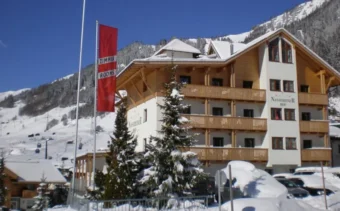


 MAN • 7 nights
 HB · Skiline

 MAN • 7 nightsHB · Skiline
 LTN • 3 nightsHB · Skiline
 BHX • 7 nightsRO · Skiline
Can you enjoy a ski resort if you do not ski?
Absolutely. The right mountain resort can be a rewarding winter holiday in its own right, with villages to explore, panoramic mountain transport, prepared winter walking routes, restaurants, wellness facilities and organised activities. The catch is that some ski resorts are much better for non-skiers than others. A spectacular ski area does not always equal an enjoyable place to spend a whole day without skis.
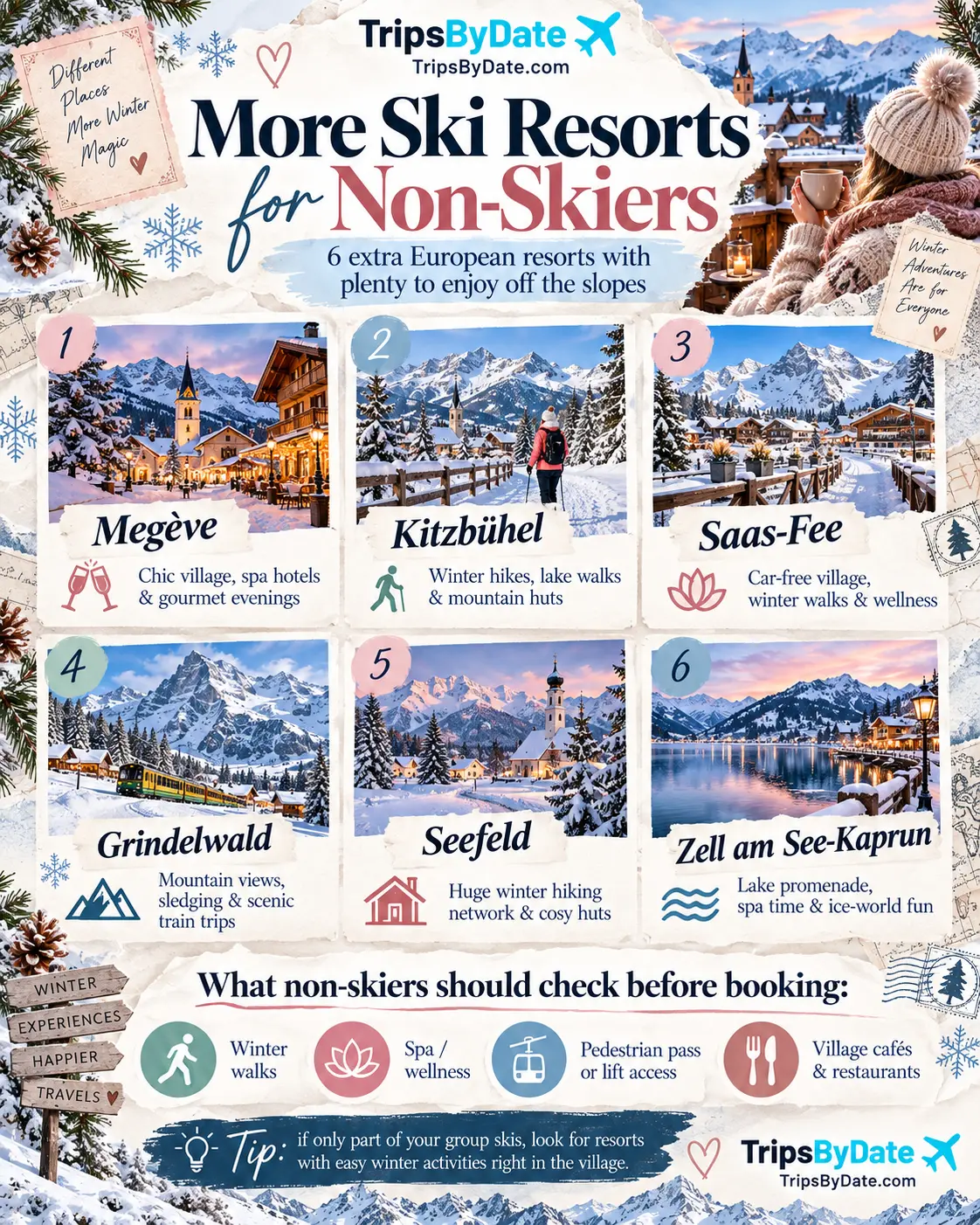
Our selection follows the two accompanying guides: eight featured destinations and six further European alternatives. The resorts are not presented as a measured ranking. They offer different types of non-ski holiday, and we have linked to official resort or tourism information to help you check what is actually available for your dates.
The best ski resorts for non-skiers at a glance
Zermatt — mountain railways, Matterhorn scenery and winter walks.
Courchevel — spas, Aquamotion, restaurants and village experiences.
Grandvalira, Andorra — organised snowshoe outings and winter adventures.
Val Thorens — leisure facilities and an energetic high-altitude atmosphere.
Tignes — ice-diving experiences, snowshoeing and family snow activities.
Lech Zürs — sleigh rides, winter trails and elegant Alpine scenery.
Livigno — shopping, food and wellness in a lively mountain town.
St Anton am Arlberg — tobogganing and sociable après-ski.
Megève — an atmospheric village, fine dining and winter walks.
Kitzbühel — marked winter walks, historic centre and mountain viewpoints.
Saas-Fee — a car-free village beneath dramatic glacier peaks.
Grindelwald — spectacular scenic railways and First mountain excursions.
Seefeld — extensive winter-walking routes and traditional Tyrolean hospitality.
Zell am See–Kaprun — lakeside scenery, town life and thermal-spa options.
1. Zermatt, Switzerland — best for unforgettable mountain scenery
Zermatt is compelling even if you never intend to wear ski boots. Its car-free village sits beneath the Matterhorn, while mountain railways and lifts offer excursions for visitors who primarily want the views. Winter walking and snowshoe routes, village shops, cafés and mountain dining provide plenty of ways to spend a day beyond the pistes.
The area has officially marked winter hiking trails, although their status depends on conditions. You can combine a mountain excursion with a relaxed lunch, or build an entire day around viewpoints and the village. Do not assume a normal skier lift pass is the right product; look at pedestrian or excursion tickets instead.
Best for: memorable scenery, photography and relaxed winter walking. Check before booking: mountain railway operating days, pedestrian tickets and the current winter-trail map. Official Zermatt winter hiking information.
2. Courchevel, France — best for spas, shopping and a pampered winter break
Courchevel has more to offer than its famous pistes. Across its villages you will find restaurants, winter walking, shopping and indoor activities. The official resort guide highlights Aquamotion, an aquatic and wellness complex, along with ice skating, bowling, snowshoeing and other winter excursions.
A crucial planning detail is that “Courchevel” covers several villages, which do not all feel alike or have the same prices. If your priority is a spa, particular restaurants or strollable streets, choose your accommodation location around those activities, not simply the nearest ski lift.
Best for: spa-focused holidays, food and a more polished mountain break. Check: which Courchevel village you are staying in, transfers between villages, Aquamotion admission and activity reservations. Official Courchevel winter activities.
3. Grandvalira, Andorra — best for organised winter adventures
Grandvalira is an extensive ski domain rather than a single compact village. It offers an excellent range of alternatives for people who enjoy the snow but do not want to ski. Official activities include snowshoe excursions, dog-sledding experiences and other organised mountain adventures in specific sectors, including Grau Roig, Canillo and El Tarter.
This is a particularly good choice when your idea of a non-ski day is doing something active rather than just sitting in a café. However, activity locations can be widely separated, and the requirements are not uniform. Some experiences include access arrangements, while others require a pedestrian lift pass or advance booking.
Best for: trying structured snow activities with a guide. Check: the exact sector, transport, age restrictions, weather cancellation policy, insurance and whether lift access is included. Grandvalira official experiences.
4. Val Thorens, France — best for mountain atmosphere and indoor leisure
Val Thorens is a purpose-built, high-altitude resort with a lively winter-holiday feel. Its modern sports centre, Le Board, is an especially useful option for people who want a break from the cold: the resort lists swimming pools, fitness, wellness and family-friendly indoor spaces.
It is not our first recommendation for someone whose main aim is to wander through a historic Alpine village, because Val Thorens has a more functional resort layout. But for a group in which some people ski all day and others want a pool, restaurants and easy social meeting points, it can be convenient.
Best for: mixed groups and indoor leisure between mountain experiences. Check: Le Board opening dates and prices, pedestrian lift availability and whether your accommodation is near the facilities you plan to use. Official Val Thorens Le Board sports centre.
5. Tignes, France — best for unusual snow experiences
Tignes is strong on adventurous alternatives. Its tourism office lists winter activities including snowshoeing, sledging and professionally supervised ice diving in the frozen lake. That last experience is particularly distinctive, but it is not a casual walk-up attraction: access depends on ice conditions, provider availability and safety requirements.
The wider resort comprises separate areas, so it is worth identifying where your activities take place. For visitors travelling with children, the tourism office also describes winter play areas and sledging options, many subject to snow conditions.
Best for: active non-skiers who want a memorable experience. Check: suitability, minimum ages, seasonal opening, supervision and the actual distance from your accommodation. Tignes official winter activities; Tignes official ice-diving information.
6. Lech Zürs, Austria — best for quiet Alpine luxury and sleigh rides
Lech Zürs has a more traditional, relaxed Alpine appeal, with handsome mountain scenery and plenty to enjoy at a gentle pace. The official tourism organisation promotes winter hiking, snowshoeing, horse-drawn sleigh rides and tobogganing in addition to the extensive skiing.
The place to check carefully is the distinction between Lech, Zürs and the surrounding hamlets. Staying close to the village activities you actually want can make a much bigger difference than an impressive ski-in/ski-out hotel that feels isolated when you are not skiing.
Best for: scenic walks, romantic sleigh rides and unhurried mountain time. Check: transport, reservation requirements for sleigh rides and winter path conditions. Lech Zürs official non-ski activities.
7. Livigno, Italy — best for shops, cafés and an easy-going resort town
Livigno stands out for its lively village environment and shopping. Its official tourist site highlights a substantial retail scene, local dining and relaxation options; it is a sensible choice for someone who wants places to browse and somewhere pleasant to spend time while travelling companions ski.
It also has winter activities outside the normal downhill-ski routine, but the practical appeal is the ability to structure a day around shops, lunch and wellness instead of booking something physically demanding. Its mountain location can make travel time a consideration, so check transfers carefully before choosing it for a short break.
Best for: sociable village days, shopping and food. Check: the location of your hotel relative to the centre, transfer times and any specific wellness facilities you want to use. Official Livigno non-ski ideas.
8. St Anton am Arlberg, Austria — best for social evenings and tobogganing
St Anton is famous for its skiing, but it also works for non-skiers who like an energetic resort atmosphere and want to share evenings with a skiing group. Its official destination and mountain lift websites detail tobogganing from Gampen towards Nasserein, alongside winter walking and other leisure options.
Do not confuse lively après-ski with a guarantee that every venue works for people arriving on foot. Some bars are high on the mountain or are reached via skiing routes. Choose accessible meeting places, and check the last lift or local transport rather than assuming you can join everyone anywhere.
Best for: sociable mixed groups and winter tobogganing. Check: lift access to planned venues, evening transport and toboggan operation in current snow conditions. Official St Anton tobogganing.
Six more excellent resorts for non-skiers
9. Megève, France — best for village charm and gourmet evenings
Megève is ideal if the Alpine village experience matters as much as the snow. Its historic streets, food scene, wellness facilities and opportunities for winter walking give non-skiers varied options without having to spend every day at altitude. Its official tourism site even has a dedicated guide to visiting in winter without skiing.
Choose accommodation near the village if browsing cafés and walking to dinner are your priorities. For a guided snowshoe outing or an indoor spa session, book the individual activity rather than treating it as an automatic hotel inclusion. Megève: official guide to winter without skiing.
10. Kitzbühel, Austria — best for accessible winter walks and town atmosphere
Kitzbühel combines a town with an extensive network of winter walking opportunities. Its official tourism body publishes itineraries around the Schwarzsee lake, the Hahnenkamm and Kitzbüheler Horn, including routes reached by mountain lifts. That gives non-skiers several genuinely different days rather than relying on one spa or one shopping street.
The important distinction is between easy cleared valley walks and more demanding or weather-dependent mountain outings. Check the trail description, whether it is open and which lift ticket is suitable before leaving the hotel. Official Kitzbühel winter hiking.
11. Saas-Fee, Switzerland — best for a car-free mountain village
Saas-Fee is a striking setting for people who want a quieter mountain retreat. The tourism organisation describes a car-free village set among high peaks and provides a winter-hiking network in the wider Saas Valley. It suits visitors content with a beautiful setting, steady walks and a slower pace.
Car-free does not mean no logistics: if you arrive by car, parking is outside the village, and travel between valley settlements requires planning. Winter trails also require checking for closures and avalanche warnings. Official Saas-Fee winter hiking.
12. Grindelwald, Switzerland — best for spectacular scenic excursions
Grindelwald is unusually well suited to someone who wants iconic Alpine scenery without skiing. The Jungfrau railway and cable-car network opens up mountain excursions, while Grindelwald-First provides viewpoints and the First Cliff Walk, subject to weather and opening status.
This is a strong choice for a visitor who wants to take photographs, enjoy mountain restaurants and build full days around the scenery. But some advertised attractions have separate tickets, minimum requirements or winter limitations, so distinguish general mountain access from adventure-activity tickets. Jungfrau official Grindelwald-First guide.
13. Seefeld, Austria — best for a dedicated winter-walking holiday
Seefeld is one of the strongest choices here for visitors who genuinely love walking. The regional tourism authority documents an extensive collection of prepared, signposted winter hiking routes and snowshoe options, with huts and villages along the way. This is more than just a ski destination with a couple of pavements cleared.
Some routes are straightforward short walks, while others require more stamina and suitable winter footwear. Select your route by distance and conditions, and check access to the start point rather than assuming every path begins at your hotel. Official Seefeld winter hiking information.
14. Zell am See–Kaprun, Austria — best for lake scenery and spa days
This region combines an attractive lakeside town with mountain experiences and the Tauern SPA in Kaprun. Winter programmes can include walks, guided activities and seasonal events; the lake is an appealing focal point even for people with no interest in downhill skiing.
The key planning distinction is that Zell am See and Kaprun are separate locations. Staying in Zell am See makes the town and lake easier to enjoy, while the Tauern SPA is in Kaprun. Confirm how you will move between them before assuming everything is within walking distance. Official Zell am See–Kaprun winter experiences; Tauern SPA official tourism information.
How to choose a resort when you are not skiing
Start with the village, not the piste map. If you plan to spend most of the day on foot, prioritise a pleasant, walkable centre and a hotel close to cafés, shops or attractions. A lift-side property can be ideal for skiers but inconvenient for everyone else.
Look for two or three real activities, not vague promises. “Lots to do” is not enough. Name the spa you would use, the walking route you would take and the mountain viewpoint you would visit. Then check the provider’s operating dates and costs.
Work out how the group will meet. If some friends or family members ski, identify a restaurant or base-area meeting point that everyone can reach legally and safely. Not all mountain restaurants are accessible to pedestrians, even if they appear close on a map.
Choose the right mountain ticket. A full ski pass is often unnecessary. Look for pedestrian, sightseeing or individual return-trip fares and confirm the lifts you want are included. What Does a Ski Pass Include? explains how passes differ.
Check alternatives for bad-weather days. Snowshoe walks, mountain railways and scenic viewpoints may be affected by weather. Resorts with a swimming pool, interesting village, museum or spa can make a mixed-weather trip more enjoyable.
Can non-skiers use ski lifts?
Know when you can travel?
Choose your departure airport and dates, then explore ski holidays that fit your plans — even if you would rather enjoy the mountains without skiing.
Find holidays by dateOften, yes, but only on lifts approved for foot passengers and with a suitable ticket. Depending on the resort, gondolas, cable cars and some mountain railways may welcome pedestrians, while particular chairlifts or drag lifts may not. The resort lift company is the authoritative source for permitted access and operating conditions.
A pedestrian ticket is not automatically valid for every lift. If your plan involves a mountain lunch, confirm that the restaurant is reachable on foot from the top station and that you can return before the last service.
What can you do in a ski resort without skiing?
Popular options include prepared winter walks, guided snowshoeing, sledging, mountain-view train or gondola journeys, spa sessions, swimming, shopping, food experiences and organised adventures. Activities such as ice diving, dog sledding or paragliding require a proper operator and may have age, fitness or weather restrictions.
Winter hiking and snowshoeing are not the same as wandering onto a ski run. Stay on designated open paths, wear suitable footwear and respect closures. Unmarked mountain terrain can expose visitors to serious hazards even when a village looks calm.
Is a ski resort worth it if only one person in your group skis?
It can be, provided the non-skier has something genuinely appealing to do independently. A half-day spa and one restaurant may not sustain a full week. If one person skis every day, choose somewhere with a walkable centre, several non-ski choices and realistic meeting points.
For a long weekend, you may prioritise one extraordinary scenic excursion and good dining. For a week, look for enough variety to alternate active days with relaxed ones. Our How Many Days Do You Need for a Ski Holiday? guide can help with trip length.
Will non-ski activities cost extra?
Frequently. A hotel spa may require a treatment booking, mountain transport may need a pedestrian pass and organised activities are typically separately priced. Even where access is advertised as free, equipment, guiding or transfers might not be.
For your budget, calculate accommodation, transport, meals, any pool or spa entry, excursion tickets and the cost of getting around. The cheapest ski package for the skiers may not be the cheapest option for the person who will spend their days elsewhere. See How Much Does a Ski Holiday Cost? for the broader cost categories.
Practical questions to ask before booking
Check: Is the village walkable from our accommodation, including in snow and ice?
Check: Which mountain lifts accept pedestrian passengers, and what are their last return times?
Check: Are planned winter paths open during our travel dates?
Check: What indoor activities are available if visibility and weather are poor?
Check: Which mountain restaurants can a non-skier actually reach?
Check: Will we need buses, taxis or a hire car to access activities?
Check: Are the activities we want included, separately ticketed or reservation-only?
Check: How much will the non-skier realistically spend over the whole stay?
Official resort research and sources
These are the original resort and lift-provider resources used to check the activities described above. They are also the right places to confirm winter 2026–27 schedules, prices, eligibility and closures shortly before you book.
- Zermatt winter trails
- Courchevel winter activities
- Grandvalira activities
- Val Thorens sports centre
- Tignes winter activities
- Lech Zürs other winter activities
- Livigno winter relaxation and shopping
- St Anton tobogganing
- Megève winter without skiing
- Kitzbühel winter hikes
- Saas-Fee winter walking
- Grindelwald First
- Seefeld winter hiking
- Zell am See–Kaprun winter
So which ski resort is best for someone who does not ski?
For dramatic, memorable views, Zermatt or Grindelwald are particularly attractive. If you want a beautiful village and spa time, consider Megève, Lech Zürs or Courchevel. For proper winter walking, look closely at Seefeld, Saas-Fee or Kitzbühel. And for organised snow activities, Grandvalira or Tignes deserve a place on your shortlist.
The right choice is not the biggest ski area. It is the destination where you will be excited to wake up each morning, even if you never put on skis.
More skiing and winter-holiday guides
Best Ski Resorts for Couples · How to Choose the Right Ski Resort · Best Ski Resorts for Families · What Does a Ski Pass Include? · What to Pack for a Ski Holiday
‹ BACK TO SKIING
Know when you can travel?
TripsByDate works the other way around. Pick your departure airport and the dates you are free, then see holidays that actually fit.
Find holidays by date