

Warmest Places in Europe in April
Where to find warmer April weather, what the climate figures actually mean, and how to avoid booking the wrong kind of spring holiday.
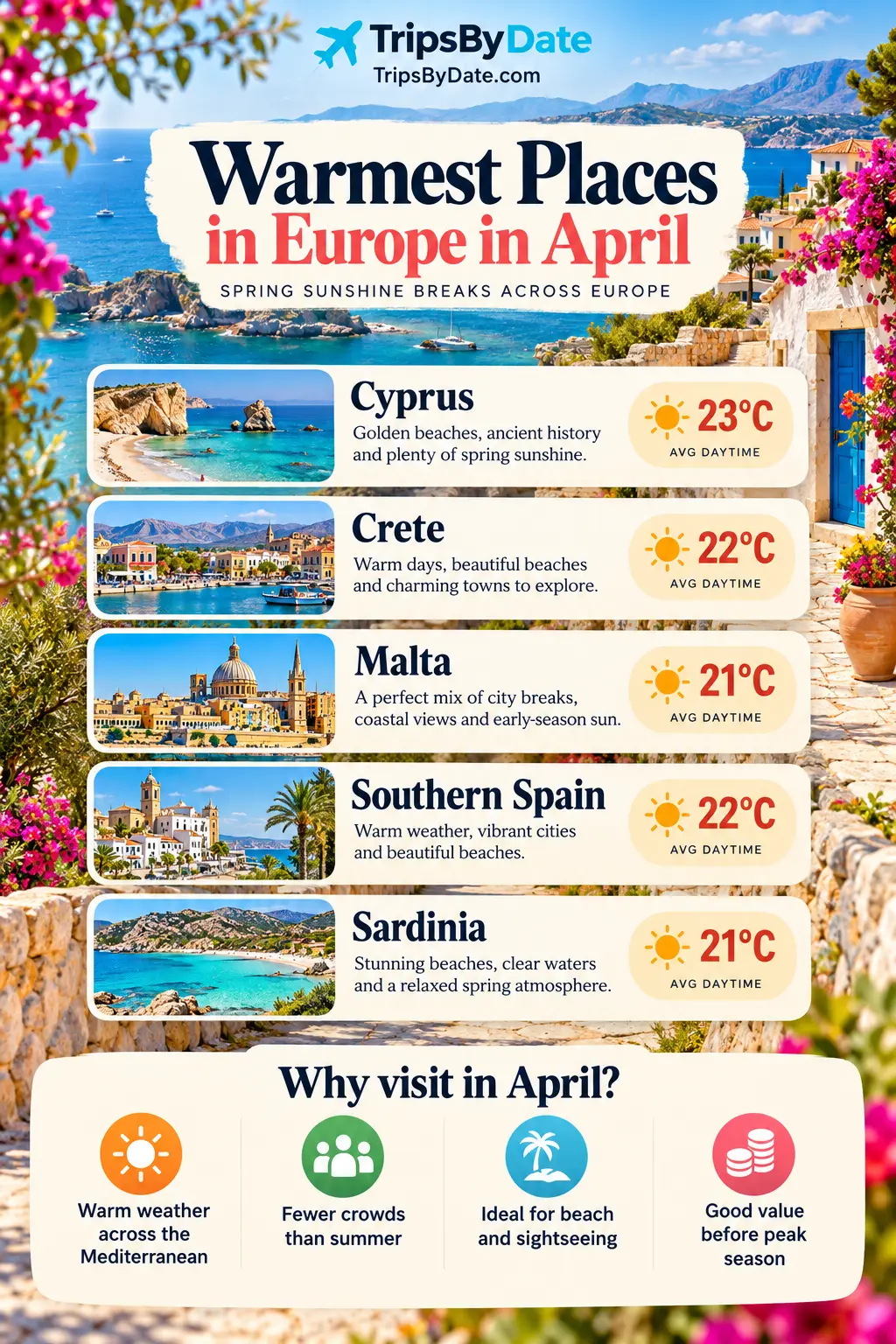
April is when a European holiday begins to feel like spring rather than an escape from winter. Longer days make exploring easier, wildflowers bring colour to hillsides and southern cities can be beautifully warm in the afternoon. But there is a catch: pleasant April sunshine does not automatically mean warm swimming water, a fully open resort or a bargain holiday.
The short answer: Cyprus, southern Spain and the southern Greek islands deserve a place on an April shortlist, but the Canary Islands should not be overlooked if your priority is dependable warmth. Malta and Sardinia are often more satisfying as spring sightseeing holidays than traditional sun-lounger escapes. The right choice depends on what you want to do once you arrive.
About the word “Europe”: this guide includes destinations widely searched as European holidays. The Canary Islands belong to Spain but lie off north-west Africa; Cyprus is geographically in the eastern Mediterranean. We have not attempted a formal temperature ranking of every weather station on the continent.
Where is warmest in Europe in April? The figures that matter
A historical average daily maximum measures typical afternoon highs, not temperatures all day, and certainly not a guarantee for your dates. Weather stations use different locations and reference periods. The infographic's rounded estimates for Cyprus, Crete, Malta, southern Spain and Sardinia are useful inspiration, but they should not be treated as a verified, like-for-like temperature league table.
- Seville, southern Spain: 23.4°C. AEMET's standard April average maximum at Seville Airport (1981–2010). Superb potential for an outdoor city break, but with cooler evenings and some spring rainfall.
- Tenerife South: 23.1°C. AEMET's April average maximum at the airport (1981–2010). A useful warmer-island alternative to the mainland Mediterranean.
- Crete: Greece's official tourism authority places spring daily highs within a rising seasonal pattern. The island is warmer later in spring, but exact April conditions vary by coast, wind and weather system.
- Cyprus, Malta and Sardinia: all can offer appealing April afternoons, but each combines sea exposure, local weather and considerable seasonal variation. Comparing a single island-wide “21–23°C” figure would suggest more certainty than the evidence supports.
You can inspect AEMET's Seville climate normals, Tenerife South's climate record and Greece's official spring travel guide. These explain typical patterns rather than predicting a particular holiday week.
A more useful test than the headline number: look at expected daytime warmth, overnight temperature, wind, rain risk and whether the sea or your hotel pool will be comfortable. A sheltered terrace in 21°C sunshine may be more enjoyable than a windswept 23°C coastal promenade.
Explore holidays departing on your dates
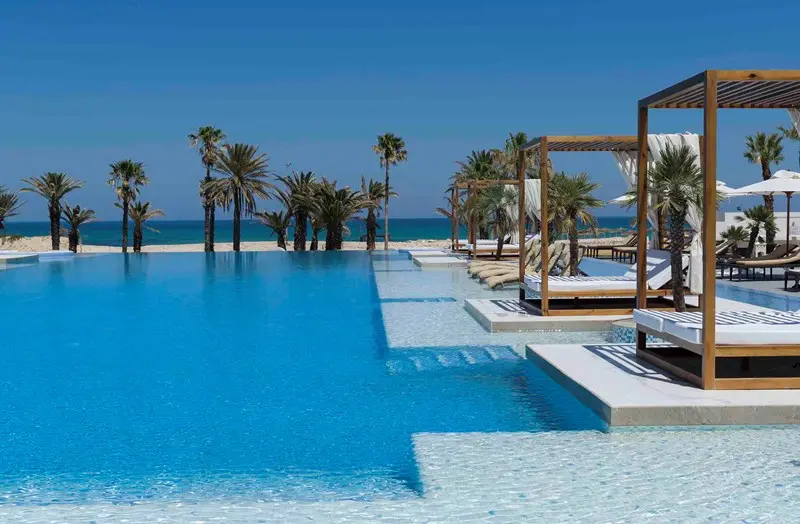
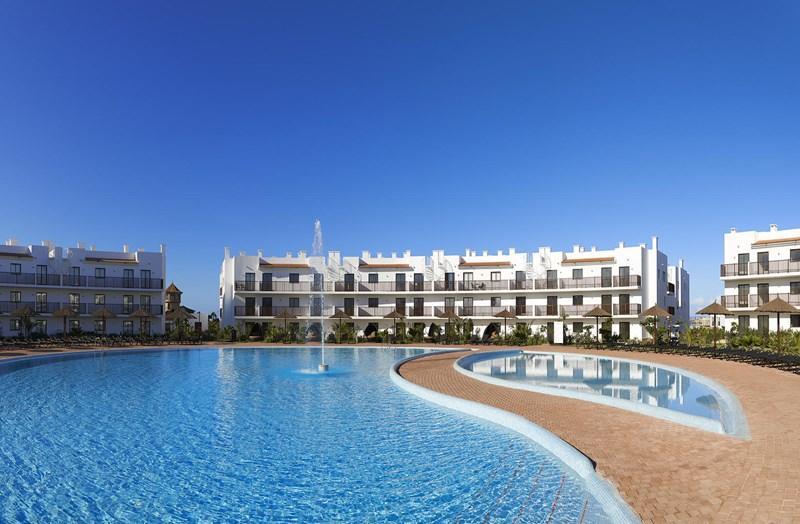
TripsByDate shows advertised package holidays across its wider inventory. The changing options below are not necessarily Christmas-week departures or packages to these five destinations. Use them as starting points, then compare your own dates and check the final price, availability and festive arrangements with the provider.


 LGW • 3 nights
 SC · First Choice

 NCL • 7 nightsAI · easyJet holidays
 BRS • 7 nightsAI · easyJet holidays
 LGW • 7 nightsRO · First Choice
1. Cyprus: the classic early-spring sunshine candidate
Cyprus can work extremely well in April if you want days with a beach in the morning and a historic site or village later on. Spring gives you time to explore without the most intense heat of midsummer, and the island offers more variety than the beach photography might suggest.
Choose your base carefully: Paphos suits a holiday combining coastal walks, archaeology and cafés; Larnaca is useful for a seafront city stay; Limassol offers urban amenities and day-trip possibilities. Ayia Napa and Protaras appeal more to travellers who specifically want resort beaches, but check which facilities and seasonal businesses are operating on your dates.
Make the most of April: visit archaeological sites earlier in the day, take a coastal walk when the light is softer, and keep one flexible day for the Troodos region. The mountains can be considerably colder than the coast, so do not pack as if every outing will be a pool day.
The honest trade-off: the sea can still feel chilly after winter, even when sitting outdoors is delightful. A heated pool may matter more than the resort's headline afternoon temperature. Before you book a beach-focused trip, check the hotel's pool-heating policy and the opening dates of beach facilities. Use the official Cyprus tourism portal for attractions and local guidance.
For a broader spring-holiday comparison, see Where to Go on Holiday in April and Best Months for a Beach Holiday in Europe.
2. Crete: history, villages and coast before summer
Crete is at its best in April when you appreciate an island with more to offer than beach clubs. Ancient sites, mountain landscapes, old towns and local food can fill a week without needing swimming weather every day. Greece's official tourism service specifically highlights spring flowers and the comfortable conditions for exploring.
Where to stay: Chania suits old-town evenings and west-Crete day trips; Heraklion is practical for Knossos and museums; Rethymno mixes a characterful centre with access to the northern coast. If travelling for just a few nights, stay on one side of the island rather than trying to see both ends.
Something people often miss: April is not simply a quieter version of July. Some resort-only hotels, beach concessions, tours and frequent bus services may still be on seasonal schedules. Choosing a lively town with year-round restaurants is often safer than booking an isolated resort for its photographs.
For families: sightseeing and short beach stops can be a more realistic combination than promising children long daily sea swims. For ideas, start with the Greek tourism authority's Crete guide. Also see Best Months to Visit Greece for when classic beach conditions become more established.
3. Malta: a particularly strong choice for city-and-coast days
Malta deserves consideration because April's mild conditions can make walking around fortifications, harbours and historic streets a pleasure. It is small enough to build interesting days around history and food, yet varied enough to choose between lively towns and quieter coastal corners.
Where to base yourself: Valletta puts history on your doorstep; Sliema offers a seafront location and transport connections; St Julian's has a busier restaurant and nightlife scene. Consider Gozo if you value a slower pace, but account for ferry journeys if your main interests are on Malta itself.
Suggested rhythm: use a clear day for open-air wandering, harbour views or the coast, and keep indoor museums and churches for a windy or wet spell. It is an easy way to avoid the disappointment of a seaside holiday planned entirely around lying on a beach.
Before booking: check the location of your hotel against the places you intend to visit. A cheap room that requires several long journeys can be worse value than a slightly more central base. The official Visit Malta site has useful starting points for cultural sights and events. You can also compare the seasonal choices in Best Months for a European City Break.

4. Southern Spain: warmer city days, not necessarily warmer water
Southern Spain provides one of April's most persuasive alternatives to an island holiday. Seville's verified 23.4°C average April daytime maximum is warmer than many people expect, and spring is much more comfortable for long sightseeing days than the scorching height of summer.
Seville: choose it for architecture, tapas, gardens and evenings in outdoor squares. The temperature can drop noticeably after sunset, so pack layers. Major spring events, including Semana Santa and the Feria de Abril, can change crowd levels and accommodation prices considerably. Verify their dates for your travel year before assuming the city will be quiet.
Málaga and the Costa del Sol: better when you want a city-break-and-seafront combination. Málaga's museums and food scene mean a cooler beach day is not wasted; coastal towns can deliver attractive walks without forcing a full summer resort experience.
The key distinction: warm air in inland Seville tells you almost nothing about the temperature of the Mediterranean off Málaga. If swimming is your priority, check the water conditions separately and consider whether a heated pool would be a better fit. See Best Months to Visit Spain for other regions and Spain's official tourism website for destination planning.
5. Sardinia: an excellent spring escape for scenery and food
Sardinia is worth considering if your idea of a good April holiday is quiet coastal scenery, local food, old towns and driving between viewpoints. The sea can look vivid turquoise before it is particularly pleasant for extended swimming. That distinction is important: Sardinia's beaches are beautiful year-round, but its summer beach experience depends on much more than the colour of the water.
Where to stay: Cagliari offers an urban base with restaurants and access to southern-coast outings; Alghero suits old-town atmosphere and north-western scenery. For rural stays, carefully check which restaurants and activities will be open before committing to a remote property.
A smarter itinerary: use April for walking, archaeology and countryside villages as well as coastal stops. Pack for changeable conditions and have a rainy-day option. Hiring a car can help with rural exploring, but always check driving time rather than assuming two beaches close on a map are quick to connect.
Who should wait until summer? Anyone whose entire plan relies on beach bars, bathing and a full programme of watersports. Those who like uncrowded landscapes may prefer April. For planning destinations and transport, consult Italy's official tourism guide to Sardinia.
Worth adding to your shortlist: Tenerife
The infographic focuses on Mediterranean choices, but Tenerife should be included in any credible discussion of where to find April warmth in a Spanish holiday destination. AEMET records a historical April average daily high of 23.1°C at Tenerife South Airport. That is comparable to Seville's figure, with a very different kind of holiday on offer.
Choose it for: established year-round resorts, beach promenades, volcanic excursions and family hotels. Costa Adeje, Los Cristianos and Playa de las Américas have different atmospheres; check the actual accommodation location and pool facilities rather than relying on “Tenerife” as a single weather forecast.
Be aware: the island's north, south and mountains can have markedly different conditions. Teide is not a T-shirt excursion just because you were warm by the sea. Visit official Tenerife tourism for practical location ideas, or see Best Months for Winter Sun.
What is actually the best April trip for you?
- Warm afternoons with a strong city experience: Seville is a particularly compelling choice, especially outside its busiest event dates.
- Easy mixture of coast and archaeological sites: Cyprus or Malta, depending on whether you prefer island touring or compact historic towns.
- A large island with varied landscapes: Crete, provided you stay near year-round services and do not assume resort facilities are fully open.
- Quiet scenic coastline and food: Sardinia, with less emphasis on swimming.
- Established warmer-weather resort infrastructure: southern Tenerife, especially when a reliable hotel pool matters.
A useful shortcut: decide whether you are booking a sunshine holiday, a swimming holiday or a sightseeing holiday with good weather. Many disappointing spring trips are simply one type booked with the expectations of another.
Five April booking mistakes to avoid
1. Treating April as a single weather pattern
Early and late April are not interchangeable. A holiday in the final week may feel noticeably warmer than one at the start, especially in the Mediterranean. Check monthly climate records to understand the broad season, then examine the forecast closer to departure.
2. Assuming Easter means cheaper shoulder-season prices
Demand can jump sharply during school holidays and around Easter events. In 2027 Easter Sunday is 28 March, but school breaks can reach into April. For other years, the dates move. Check the school calendar and local festivals before assuming an April week is low season. Our Cheapest Months to Go on Holiday guide explains why dates matter as much as destinations.
3. Overlooking resort opening dates
Check that your hotel restaurant, pool heating, kids' club, nearby shops and attractions will operate during your actual stay. A resort can look wonderful in summer photographs but feel unusually quiet in April. Quiet can be a benefit, provided it is what you wanted.
4. Confusing clean water with warm water
The European Environment Agency maintains a map of monitored bathing-water quality. It is useful for checking assessed water quality at individual sites, but it does not tell you whether the water will feel warm or whether swimming is safe on a windy day. Check local beach conditions and warnings too.
5. Picking a cheap flight without pricing the whole trip
Compare return flight times, luggage, transfers, room type, board basis and the number of genuinely usable holiday days. For a short spring break, the difference between an airport transfer of half an hour and a long cross-island journey can be more important than a modest airfare saving.
How to use April to find better-value holidays
Begin with the dates you can travel and your departure airport, then compare different destinations for the same dates. A four-night city stay in Málaga and a four-night break in Malta may involve very different hotel and transfer costs. Do not presume either wins simply because one has a cheaper flight.
If your dates are flexible, check departures a few days apart and consider nearby airports when getting there is practical. Keep the room, board basis, baggage and transfer costs comparable. If you are travelling with children, factor in school attendance rules and confirm resort facilities in writing before paying.
For broader options see Where to Go on Holiday in April, Best Months for a Family Holiday and Best Months for a Beach Holiday in Europe.

Know when you can travel?
Choose your departure airport and compare upcoming holidays by date, without deciding on one destination before you see the options.
Find holidays by dateFrequently asked questions about April warmth in Europe
Where in Europe is hottest in April?
There is no single winner for every station and every year. Southern Spain and the Canaries both offer strong options, with official April historical average daytime highs of 23.4°C in Seville and 23.1°C at Tenerife South Airport. The better choice depends on whether you want sightseeing or resort facilities.
Can you have a beach holiday in Europe in April?
Yes, if you are happy with beach walks and sunny afternoons rather than expecting peak-summer swimming. Cyprus, Crete and the Canaries may suit different styles of beach holiday. Check sea conditions and hotel-pool heating before booking.
Is Greece warm enough in April?
Crete and other southern Greek destinations can be lovely for outdoor exploring in April. The official Greek tourism board recommends spring for scenery, heritage and walking. Sea temperatures and tourist services may be less suited to a full summer-style beach break.
Is Malta or Cyprus warmer in April?
It depends on the weather station, dates and conditions. A single rounded temperature from a brochure is not a defensible island-wide comparison. Choose Cyprus for a broader touring-and-beach holiday; choose Malta when compact historic sightseeing is the priority, then check local weather normals.
Is April cheaper than July and August?
It can be, but not across every route or week. Easter, school holidays and local festivals can lift prices. Compare a genuine like-for-like package including baggage, meals and transfers, not just the flight headline.
Where should families go in April?
Look for a resort with year-round facilities, confirmed pool heating and manageable transfer times. Tenerife can be a good choice; Cyprus and Malta work particularly well for families happy to mix culture with outdoor time. Check children's activities against your specific dates.
Related April and seasonal travel guides
Warmest Places in Europe in March · Where to Go on Holiday in April · Best Months for Winter Sun · Best Months to Visit Greece · Best Months to Visit Spain
‹ BACK TO HOLIDAYS BY MONTHKnow when you can travel?
TripsByDate starts with your airport and available dates, then lets you compare holidays that fit instead of searching destination by destination.
Find holidays by date