

Best Months to Visit Greece
Greece is not one holiday season or one kind of island. Find the right time for swimming, exploring ancient sites, travelling with children or visiting more than one island.
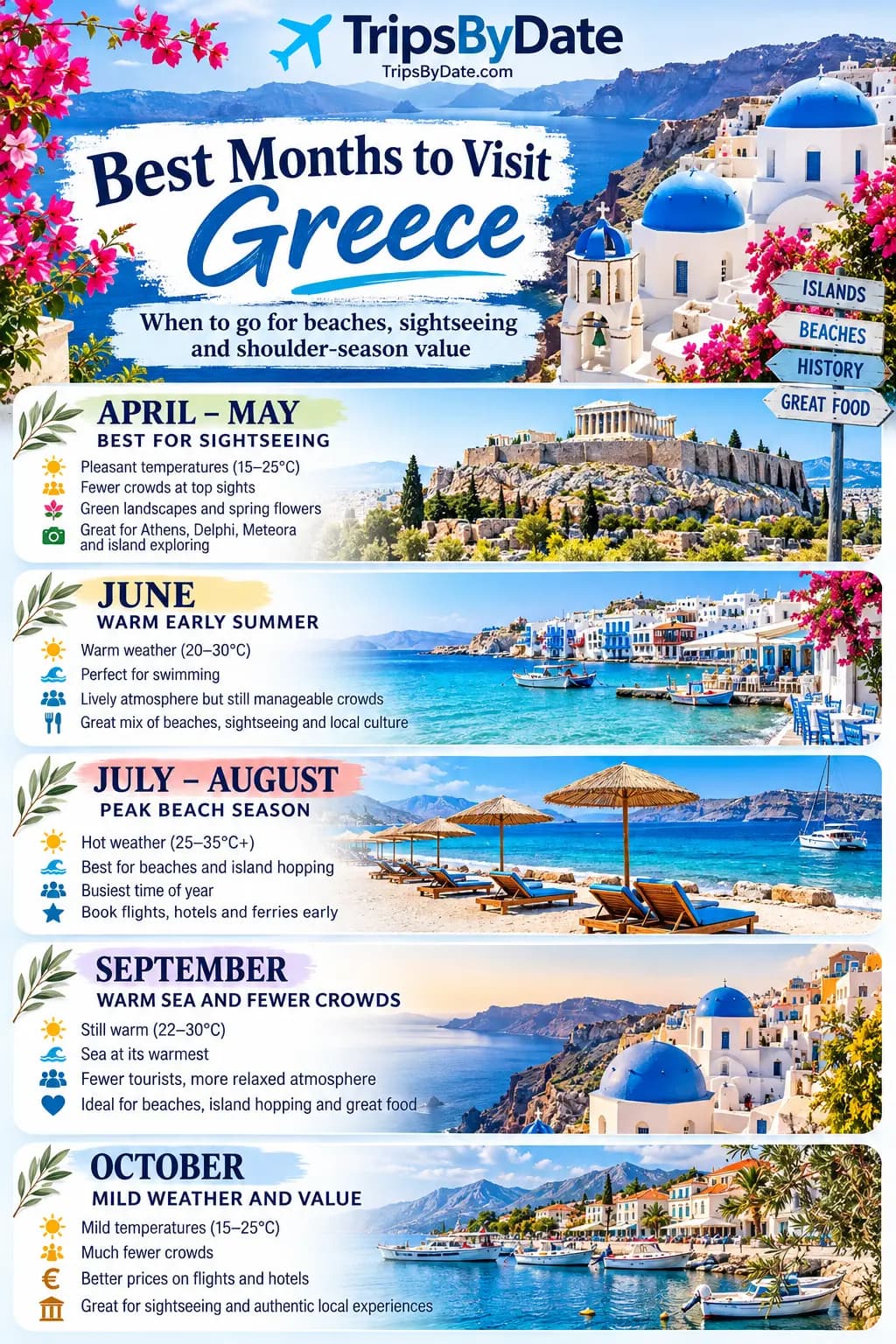
May, June and September are excellent starting points for many Greece holidays, but the best month depends on what you actually want to do. If you dream of swimming every day, September may suit you better than May. If you want to explore the Acropolis without battling intense midday heat, spring or autumn deserves a closer look. If school dates fix your trip in August, the right resort and a sensible daily routine become more important than chasing a supposedly perfect month.
There is another complication that makes Greece interesting: Athens, mountainous mainland areas, the Ionian Islands and the southern Aegean do not experience an identical season. A beautiful quiet island in April may have fewer open hotels, restaurants and boat services than it does in July. The destination and the date must work together.
Best months to visit Greece at a glance
- April and May: particularly appealing for Athens, archaeological sites, walking and green spring scenery; sea swimming can still feel cool.
- June: a strong all-round choice for beaches, sightseeing and a lively but not always peak-summer atmosphere.
- July and August: the classic busy beach season, with hot weather, active resorts and higher demand. Heat, wind and crowds need planning.
- September: one of the strongest candidates for warm sea swimming and a more relaxed beach break after many schools return.
- October: often rewarding for sightseeing and late-season sunshine, especially early in the month, but resort services and transport may reduce later.
Bottom line: choose May for comfortable exploring, June for variety, July or August for the liveliest beach season, and September when warm water and a less hectic trip are your priorities. None of those outcomes is guaranteed by the calendar alone.
Explore upcoming holidays
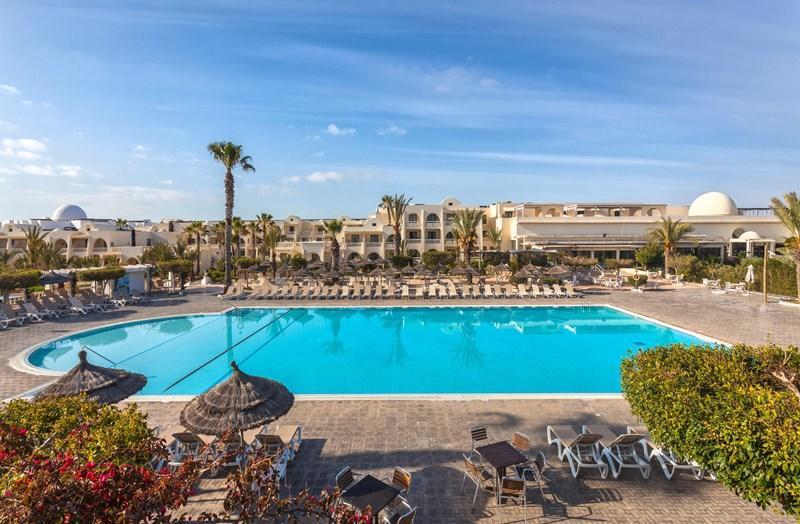
Here are a few upcoming package holidays from our wider inventory, selected by this guide's stable listing variation and ordered by departure date. These are general holiday examples, not Greece-only departures or a promise of a particular season. Use the date-first search to compare the Greek options available from your airport for your actual dates.


 STN • 7 nights
 RO · Hays Travel

 MAN • 7 nightsAI · easyJet holidays
 SEN • 7 nightsAI · easyJet holidays
 LPL • 7 nightsB&B · Hays Travel
April and May: Greece for sightseeing, history and spring landscapes
Spring is a wonderful time to see Greece as something more than a beach holiday. Athens is more enjoyable when you can spend time outdoors without planning every walk around the strongest summer sun. Delphi, Meteora and old towns around the country reward slower exploration, while many landscapes are still green after winter rainfall.
For Athens, combine the Acropolis with the Acropolis Museum, the Ancient Agora and time in neighbourhoods such as Plaka or Koukaki. Rather than rushing between sites, reserve a morning for the major outdoor archaeological attractions and save a museum or relaxed lunch for the afternoon. Check official Acropolis opening times and ticket information before setting your itinerary; hours vary between seasons and some public holidays bring closures.
May can also work beautifully for Crete, particularly if you want to explore Chania or Rethymno, visit historical sites and take scenic drives. But a warm afternoon is not proof that the sea will feel comfortable. Families with small children or anyone who loves long swims may prefer later dates, a heated pool or a destination where the particular beach is sheltered.
The trade-off: spring tends to suit people who want to walk, eat, explore and spend time outdoors. Some smaller island resorts, seasonal excursions and ferry routes may still have reduced services. Check actual hotel opening dates and local transport before choosing an isolated base.
For the wider spring picture, see where to go in April and where to go in May.
June: possibly the best all-round Greece holiday month
June offers many of the reasons people love Greek holidays at once: a strong chance of beach weather, established tourist services, long days, evening meals outdoors and more choice of boat trips. It is a sensible month for travellers who want some beach time but also plan to visit villages, ruins, markets and restaurants.
It is especially attractive for a first visit to Rhodes or Crete. You can spend one morning sightseeing, enjoy the beach in the afternoon and use the next day for a longer excursion without committing to the most crowded weeks of the year. Nevertheless, popular islands and famous hotels can already be busy in June, and prices are not automatically low.
One practical question: do you want to swim in the sea or simply sit by it? Sea temperatures usually lag behind rising air temperatures in spring. June may feel convincingly summery on land while water temperature still varies between coasts, islands and individual bays. Consult the Hellenic National Meteorological Service's climate records, then check local sea conditions for your chosen beach.
If the schedule allows, compare early and late June rather than assume they are interchangeable. Flight demand, school calendars, accommodation availability and local festivals can change the overall value. Our June holiday guide covers further destinations worth comparing.

July and August: the fullest summer experience, with real trade-offs
If you picture long hot days, busy waterfront restaurants and a lively evening atmosphere, these are the classic months to visit the Greek islands. Resorts are geared towards holidaymakers, families can find organised activities, and many popular excursions run through the high season.
However, midsummer is not a universally better experience. Outdoor ruins can be tiring in high heat, famous viewpoints may be crowded, and hotel or flight prices around school holidays can be substantial. Greece's national meteorological service provides long-term climate figures showing summer heat in Athens, but the country is geographically varied; do not apply one city's temperature to every island. See historical Greek climate data.
For an August sightseeing day, consider an early start, a long lunch or indoor museum during the hottest hours, and a quieter evening. When choosing accommodation, air conditioning, walkability, shade and access to a usable beach may matter more than how impressive the hotel looks in photographs.
A less obvious summer issue is wind. The Meltemi is a seasonal northerly wind affecting parts of the Aegean, especially the Cyclades. It can be welcome on a hot terrace but less welcome on an exposed beach or when your itinerary depends on a small boat excursion. Greece's tourism information discusses these seasonal sailing winds. Read the Aegean sailing and Meltemi overview. Ask whether your chosen beach is sheltered from the prevailing wind and keep boat plans flexible.
For families travelling in August, prioritise direct flights, short transfers, pools with suitable areas for different ages, and accommodation that lets everyone retreat from midday heat. Our family holiday timing guide explains the school-holiday trade-offs in more detail.
For further peak-season options see July holiday ideas and August holiday ideas.
September: warm-water holidays without the same peak-season rhythm
September is arguably the most interesting month to compare for a Greece beach holiday. After a full summer of warmth, the sea can be more comfortable for swimming than it was in May, while some destinations begin to feel less crowded after families return to school. That combination makes September a compelling choice for couples, flexible adults and families with children who are not tied to school term dates.
Early and late September can be very different trips. Early in the month, busy resorts may still feel summery and full of life. By the end of the month, some smaller seasonal businesses may start reducing hours, and a windy or rainy day becomes more relevant to a short holiday. Do not assume the atmosphere of a resort in the first week describes the last.
For beach-lovers, compare Crete, Rhodes and the islands that have the resort atmosphere you want. For scenery and photographs, Santorini can be memorable, but it is worth understanding that many of its most famous views sit along steep caldera cliffs rather than beside broad sandy beaches. Explore the official Santorini destination guide before choosing it specifically as a beach holiday.
Our September holiday guide and European beach-season comparison help place Greece against other Mediterranean choices.
October: consider where you stay, not just which country you choose
October can still be very appealing for parts of Greece, especially if you want quieter sightseeing, good food and coastal scenery rather than a packed beach schedule. But it is a transition month, and that matters more than the headline temperature on a travel graphic.
Large year-round cities such as Athens are a different proposition from small island resort villages. In a quiet coastal resort, your hotel might remain open while nearby restaurants, excursion operators and beach services begin winding down. Ferry services can also differ from their summer frequency.
For an October beach trip, check the precise resort, not just whether the island is shown as “warm”. Ask whether the hotel pool is heated, which restaurants stay open, what transport is available, and whether your chosen beach is suitable in changeable weather. Early October and late October should not be treated as the same season.
If you are mainly visiting Athens and major sights, cooler weather can be an advantage. If you are choosing Greece solely for guaranteed hot swimming weather, October is a riskier commitment. Compare other October holiday destinations before booking.
Know when you can travel?
Start with your departure airport and dates, then compare upcoming holiday options before choosing a destination.
Find holidays by dateWhich part of Greece should you choose?
Athens for archaeology and city life: ideal for a shorter visit, historic landmarks, museums and food. Spring and autumn are particularly practical if extensive walking is a priority. Book the Acropolis using its official ticketing options and respect your admission time.
Crete for variety: Greece's largest island brings together beaches, Venetian old towns, ancient sites and mountains. It is particularly suitable when your group wants different activities during the same holiday. Chania and Rethymno provide charming town bases; resort areas in other parts of the island can be more hotel-focused. Official Crete guide. Remember that the island is large: a day trip across it can be a substantial drive.
Rhodes for beach-and-history combinations: a strong option for families and couples who want resort facilities but also the Medieval Town and Lindos. Stay choices make a significant difference: an Old Town apartment, a beach hotel and a quiet village give very different holidays. Official Rhodes guide.
Santorini for dramatic scenery and couples: choose it for caldera views, distinctive villages and memorable restaurants rather than assume that every hotel is beside a sandy beach. Accommodation on the caldera may involve steps and steep streets, which matter for pushchairs, mobility needs and heavy luggage.
Corfu for greenery, beaches and a charming old town: the Ionian setting is different from the drier Cycladic image people often associate with Greece. Beach conditions and access vary greatly around the island; investigate the actual coastline near the hotel rather than relying on a generic “Corfu beach” description. Official Corfu guide.
Thessaloniki and Halkidiki for food, city culture and beaches: a useful pairing for travellers interested in a different side of Greece. Thessaloniki offers urban restaurants and history, while Halkidiki has distinct peninsulas: developed Kassandra and more nature-focused Sithonia are not the same kind of trip. Official Halkidiki destination guide.
Planning an island-hopping trip? Keep the route realistic
Island hopping sounds effortless on a map, but Greek islands sit in several different groups. A journey from one island to another is not always a direct, frequent or short ferry ride. Adding too many stops can turn a holiday into repeated hotel checkouts, bags, port transfers and waiting.
For a week-long holiday, consider whether staying on one island with day trips might give you more actual beach and sightseeing time than three different hotels. If you want multiple islands, choose a geographically sensible pair, check the exact sailing dates, and avoid relying on a tight ferry-to-flight connection at the end of your holiday.
Use a current Greek ferry schedule search to investigate routes for your travel dates. Weather and operator changes can affect sailings; build in a buffer, especially before an international flight. July and August usually attract heavy holiday demand, but published schedules and capacity still matter in every month.
How to find better value without choosing the wrong month
Shoulder-season dates often deserve comparison, but Greece is not automatically cheap in May or September. Famous sunset-view hotels, event weeks, bank holidays, direct flight schedules and small-island accommodation supply can all keep prices high. A lesser-known resort with good transport might deliver better overall value than a fashionable location with an apparently low headline price.
Compare the complete trip: flights, checked bags, airport transfers, meals, ferry journeys, resort location and travel insurance. If you want to eat out in local tavernas, consider whether half board genuinely helps. If you are travelling with children, a convenient resort and short transfer may be worth more than the cheapest room on the island.
Try shifting departure dates by several days, checking nearby UK airports and comparing different Greek regions rather than the same famous hotel repeatedly. For a broader strategy, see the cheapest months to go on holiday. There is no reliable rule that a particular Greek month will always have the lowest price.
Important checks before booking Greece
- Check current travel advice: UK government guidance includes entry requirements, insurance and safety information. Read Greece travel advice.
- Plan around heat: in summer, sightseeing is often more comfortable early or late in the day. Follow local forecasts and heat alerts.
- Understand wildfire risk: the FCDO warns of significant summer-season wildfire risk and recommends following local alerts. Read official safety guidance.
- Consider wind exposure: a beautiful beach on the map might be uncomfortable on a windy afternoon. Ask about sheltered alternatives nearby.
- Verify seasonal services: check actual hotel, restaurant and ferry operations, particularly in April and October.
- Match the hotel to the holiday: beach proximity, pool heating, steps, parking, walkability and children's facilities may matter more than an island's reputation.
Frequently asked questions about visiting Greece
What is the best month to visit Greece for swimming?
July, August and September are good starting points for warm-water beach holidays. September is especially interesting because the sea has had the summer to warm up. Exact conditions differ by location, recent weather, currents and exposure, so choose a specific beach rather than assuming every island is identical.
Is May warm enough for a Greek beach holiday?
May can be pleasantly warm for sunbathing and exploring, especially later in the month, but the sea can still feel cool. It suits travellers who enjoy beaches without requiring long daily swims. Check whether any advertised pool is heated if that is important.
Is September better than August in Greece?
For people who can travel outside school holidays, September may offer a more relaxed experience and warm seas. August can be better for people who want the busiest, liveliest season and widest range of peak-summer resort activities. Neither is automatically cheapest.
What is the best month to visit Athens?
April, May, September and October are sensible months to compare if you expect to walk extensively between outdoor historic sites. Athens remains visitable year-round, but midsummer heat changes how comfortably you can sightsee. Check official attraction opening hours and any special closures.
Is Greece worth visiting in October?
Yes, particularly for sightseeing, food and slower coastal exploration. But October is less dependable for a conventional resort holiday than midsummer, and some island businesses may reduce services. Investigate the exact location and whether you are travelling early or late in the month.
Do I need a ferry to see the Greek islands?
No. Many popular destinations, including Crete, Rhodes, Corfu and Santorini, have airports. Other islands require connections. If a ferry is part of your plans, check published schedules for your actual dates before committing to non-refundable accommodation.
More holiday-planning guides
Read our European beach holiday month guide, family holiday timing guide, June destinations, September destinations and holiday value guide to help narrow your choices.
The most useful way to decide: pick the experience first, shortlist the Greek destinations that offer it, then compare dates and departure airports. A brilliant month for Athens may not be your ideal month for swimming in Santorini. The details are what make the trip work.
‹BACK TO HOLIDAYS BY MONTHKnow when you can travel?
Choose your departure airport and available dates, then discover holidays that fit. Less searching. More choosing.
Find holidays by date