

Warmest Places in Europe in February
Where to find the strongest chance of winter warmth, and how to choose a holiday that feels good beyond the temperature chart.
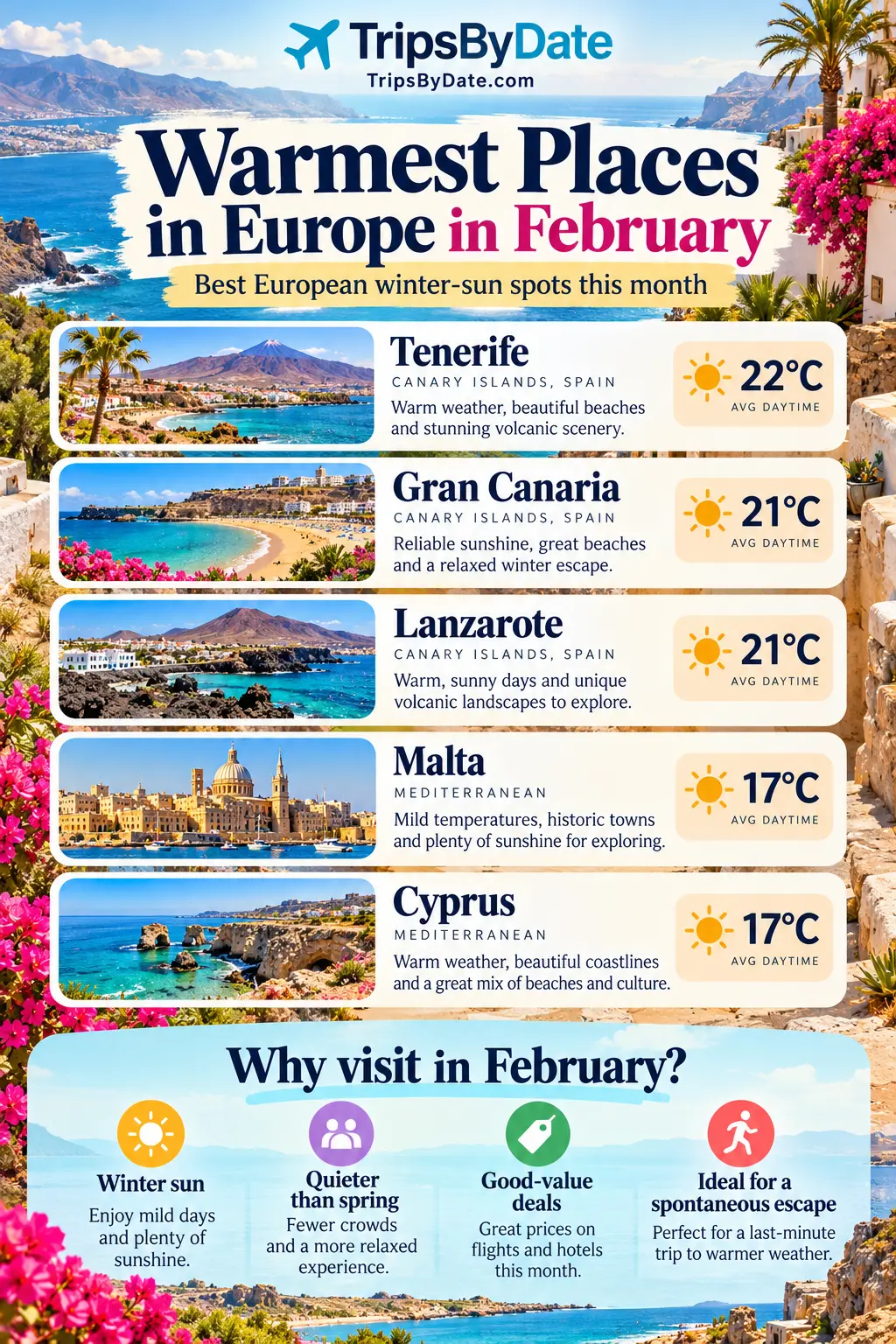
February is when a little sunshine can feel like a proper holiday. But searching for the “warmest place in Europe” can lead you to book the wrong sort of break. A bright afternoon in a sheltered Canary Islands resort is not the same as a warm sea, and a pleasant day exploring Malta is not the same as a summer beach holiday.
For the warmest established winter-sun resorts among the destinations covered here, start with Tenerife, Gran Canaria and Lanzarote. For history, walking and milder sightseeing weather, Malta and Cyprus are worthwhile alternatives. The trick is matching the weather to what you actually want to do, not chasing a single number.
About “Europe”: the Canary Islands are geographically in the Atlantic off north-west Africa but are part of Spain. Cyprus sits in the eastern Mediterranean and is commonly included in European travel searches. This is a practical comparison of European holiday destinations, not a definitive ranking of every geographical location in Europe.
February weather: the numbers behind the sunshine claims
The following are historical averages of daily maximum air temperature from Spain's national meteorological agency, AEMET. They are measured at particular weather stations, not promises about the conditions at your hotel.
- Tenerife South: 22.0°C. The February average daily maximum at Tenerife South Airport; the monthly average sunshine total is 195 hours.
- Gran Canaria Airport: 21.2°C. A useful island reference, although the sheltered south-west resorts have their own microclimate.
- Lanzarote Airport: 21.3°C. Similar average daytime warmth, with approximately 201 hours of sunshine during February.
- Malta and Cyprus: generally much cooler in winter than the southern Canary Islands. A pleasantly sunny sightseeing day is possible, but temperatures and rainfall are more variable, and this is not reliable hot beach weather.
These AEMET normals use the 1981–2010 reference period. View the original station tables for Tenerife South, Gran Canaria and Lanzarote. Comparisons can be affected by each station's location, altitude and exposure.
Useful distinction: a monthly average daily maximum tells you roughly how warm afternoons have historically been. It does not tell you whether the sea is comfortable, whether the beach is windy, or whether you will get sun every day. Those details determine how the holiday feels.
Explore holidays departing on your dates
TripsByDate shows advertised package holidays across its wider inventory. The changing options below are not necessarily Christmas-week departures or packages to these five destinations. Use them as starting points, then compare your own dates and check the final price, availability and festive arrangements with the provider.


 LGW • 7 nights
 RO · Broadway Travel

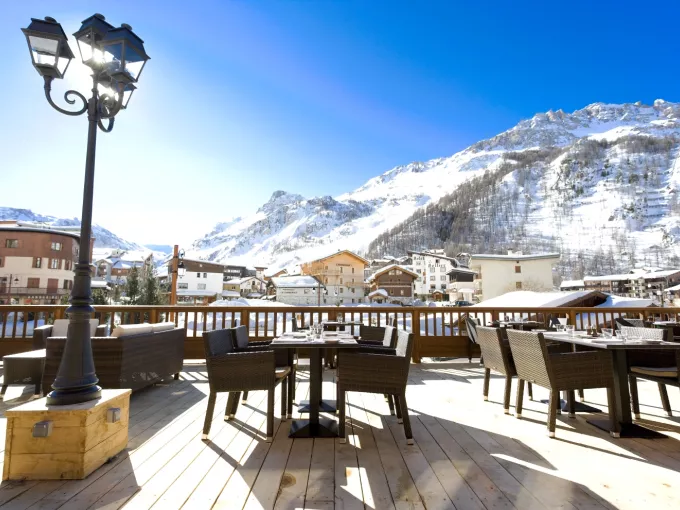 MAN • 7 nightsHB · Neilson
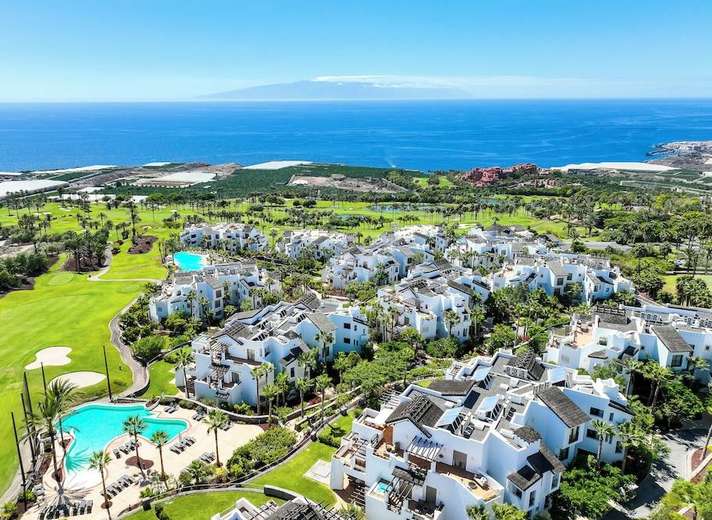 BHX • 2 nightslastminute.com
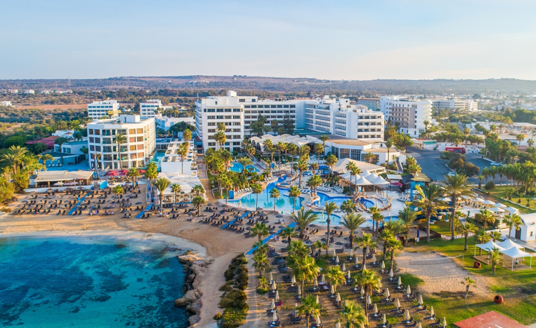 LGW • 7 nightsB&B · Olympic Holidays
1. Tenerife: our first choice for a February winter-sun holiday
Tenerife South leads this particular comparison by a small margin on the official airport average, but its bigger advantage is the breadth of established southern resorts. You can find promenades, restaurants, varied hotels and excursions without treating February as an off-season experiment.
Where to stay: Costa Adeje is a strong option for families and couples who want an established resort base. Los Cristianos has a harbour, restaurants and a practical town atmosphere. Playa de las Américas suits travellers wanting more activity and evening entertainment. Check exact hotel location rather than assuming every Tenerife address delivers the same weather or walkability.
The microclimate matters: Tenerife's mountains divide different weather patterns. Southern coastal conditions can be considerably more inviting than conditions at altitude or on the north coast. A day around Mount Teide may require warm layers and checking mountain access even when the beach resort feels comfortable.
The drawback: February is not tropical summer. A warm pool terrace might be much more enjoyable than an exposed beach, and Atlantic water can feel cool. For children who expect to swim daily, make a heated pool a booking requirement rather than a pleasant surprise.
For the climate data, see AEMET's Tenerife South weather record. For more varied trip ideas, see Where to Go on Holiday in February.
2. Gran Canaria: choose the right side of the island
Gran Canaria is nearly level with Tenerife on the official airport figures. Rather than choosing between them over a fraction of a degree, think about the sort of resort you want. Gran Canaria is particularly appealing if you like the choice between sheltered beaches, long promenades, sand dunes and small harbours.
Where to stay: compare Puerto Rico, Amadores and Puerto de Mogán for south-west coast holidays; Maspalomas and Meloneras for longer walks and broad resort facilities. The official tourism board describes quieter family beaches at Amadores and Puerto de Mogán, alongside larger sandy stretches near Maspalomas.
A small but valuable tip: check whether the beach is sheltered from wind, not just how many hours of sunshine are forecast. If your ideal holiday involves reading beside the water, an exposed beach at 22°C might be less comfortable than a protected bay at 20°C. Some coves have calmer conditions, but always check current safety flags and swell before swimming.
Who it suits: people wanting flexible resort choices, families looking for a sheltered beach setting, and couples who prefer a quieter harbour or promenade over nightlife.
Explore the official Gran Canaria beach guide and the south-west coast route before choosing your base.
3. Lanzarote: sunshine with volcanic landscapes
Lanzarote is a particularly good February option if you do not want to spend your entire break on a sunlounger. Its historical airport average high of 21.3°C is comparable to Gran Canaria's, while the island's volcanic scenery makes cooler or windier days useful for exploring rather than disappointing.
Where to stay: Playa Blanca can work well for a relaxed resort break, while Puerto del Carmen is worth investigating for a broad selection of accommodation and restaurants. Costa Teguise is another established resort option. Whichever you choose, look at the location of the hotel, the beach exposure and what remains within comfortable walking distance.
What to do beyond the beach: use one day for dramatic lava landscapes, local villages or a scenic drive. February can be a good time to sightsee without the intense heat of summer. For volcanic attractions, check opening arrangements and whether advance booking is needed.
Best for: couples, walkers and travellers who enjoy unusual landscapes alongside some pool or beach time. Less ideal for: anyone expecting reliably hot swimming weather or guaranteed wind-free afternoons.
The official Lanzarote climate table lets you compare February with March and April before choosing dates.
4. Malta: better for culture and a change of scene than beach heat
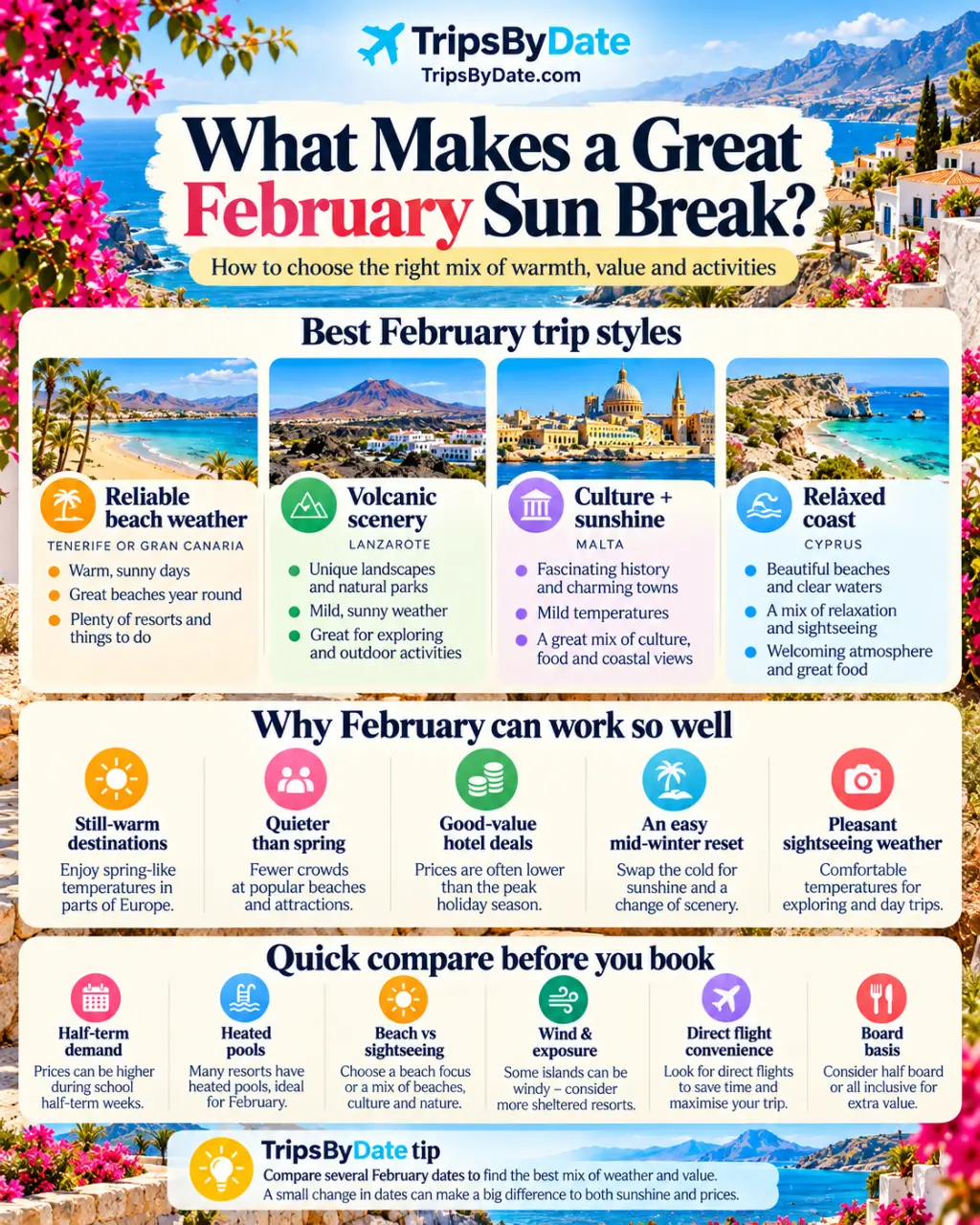
Malta belongs in a February travel conversation, but not at the top of a warm-weather ranking. The image suggests around 17°C as a daytime reference. That can occur, but February can also bring cooler, wet and windy spells. The island is more convincing as a short cultural escape than a hotel-and-swimming-pool holiday.
Why go: Valletta's historic streets, harbour views and architecture give you plenty to enjoy without relying on beach conditions. Mdina and the Three Cities are worthwhile alternatives, while coastal walks can be rewarding on settled days.
Where to stay: Valletta is especially useful if culture, restaurants and access to historic areas matter most. If you choose a coastal hotel, investigate whether local dining options and transport are convenient in winter; a lively summer waterfront can feel quite different in February.
A practical itinerary: plan one day around Valletta, another around Mdina or the Three Cities, and keep the most weather-sensitive outdoor outing flexible. A city break often gives you a better February holiday here than packing several days with beach expectations.
The official Visit Malta cultural guide and its walking routes offer specific ideas. For a broader seasonal comparison, see Best Months for a European City Break.
5. Cyprus: peaceful coastal sightseeing, not dependable swimming weather
Cyprus is another destination where February's appeal is often about fewer crowds and time outdoors rather than heat. Its winters are generally milder than northern Europe, but occasional sunny afternoons should not be confused with guaranteed warm beach weather. If your primary aim is sunbathing and swimming, the southern Canaries are a stronger starting point.
Where to stay: Paphos is a good place to compare if you enjoy archaeology, coastal walking and restaurants. Larnaca offers a different mix of waterfront and town life. Resort facilities can be more limited outside peak season, so verify whether restaurants, attractions and hotel pools are operating during your actual dates.
How to get more out of the trip: build around historic sites and a scenic drive or two. February can feel refreshing for exploration when summer temperatures would make a long day outdoors harder. Pack waterproof layers and plan an alternative for wet weather.
Important: check the current UK government travel advice for Cyprus, including entry requirements and regional guidance, before making arrangements.
Which destination should you actually choose?
Don't use a temperature ranking as the entire decision. These are the most helpful distinctions:
- Closest to a February beach-resort feeling: southern Tenerife, southern Gran Canaria and established Lanzarote resorts.
- Sheltered beach and family facilities: compare specific coves and hotels in Gran Canaria and Tenerife; check the pool temperature.
- Volcanic landscapes and active days: Lanzarote or Tenerife, keeping mountain and exposed-coast weather in mind.
- Historical towns, food and sightseeing: Malta, where an indoor backup plan is useful.
- Coastal history and a quieter pace: Cyprus, accepting that winter rain and cool sea temperatures are part of the package.
A useful way to compare: imagine what you would do on the coolest day of the trip. Would you still enjoy the resort, its restaurants, scenery and attractions? If not, choose a more flexible destination or wait for warmer months. Our Best Months for Winter Sun guide helps compare the wider season.

Know when you can travel?
Compare upcoming holidays across departure dates, airports and destinations, then choose the February escape that fits your plans.
Find holidays by dateSeven things to check before booking February winter sun
- 1. The exact resort: an island-wide forecast can hide major differences between sheltered south coasts and exposed northern areas.
- 2. Swimming plans: check recent sea conditions and whether your hotel has a genuinely heated pool. “Outdoor pool” does not mean warm water.
- 3. Wind exposure: a balcony with sweeping sea views might be windier than a sheltered courtyard or bay.
- 4. Winter opening: verify whether kids' clubs, water attractions, restaurants and excursions run during your travel dates.
- 5. February half-term: dates vary by school and council, and popular family departures can be expensive. Use the GOV.UK school-holiday checker rather than guessing.
- 6. The whole journey: compare departure airport, flight times, transfer arrangements and luggage charges as well as the headline holiday price.
- 7. Booking protection: check the provider, cancellation terms, insurance and relevant package protection. Review current FCDO advice for Spain or Malta before departure.
Are February holidays cheaper than summer holidays?
They can be, but there is no universal February bargain. Accommodation in an established winter-sun resort may be popular precisely because much of Europe is cold. School half-term, direct flight supply and the popularity of particular hotels all influence prices. A beach town that becomes quieter in winter may have lower rates, but it might also have fewer restaurants or facilities open.
Try comparing the same trip length on adjacent departure dates. Then check nearby UK airports and the total cost, including baggage, transfers and meals. A lower package price is only better value if the holiday still gives you what you want. For more detailed advice, see Cheapest Months to Go on Holiday and Best Months for a Family Holiday.
Frequently asked questions
Where is warmest in Europe in February?
For the established destinations compared here, southern Tenerife has the highest official February airport average daily maximum at 22.0°C, with Gran Canaria and Lanzarote close behind at 21.2°C and 21.3°C. That small difference is not enough to guarantee Tenerife will feel warmest on your dates; resort exposure, clouds and wind can matter more.
Can you swim in the sea in February?
Some people do, especially in the Canaries, but the Atlantic is not reliably warm in February. Look for local water temperatures, flags and conditions rather than relying on air-temperature averages. If swimming is central to your trip, a hotel with a confirmed heated pool is the more dependable choice.
Is Malta warm enough for a February holiday?
Malta can be pleasant for sightseeing, walking and a short break, particularly when sunshine appears. It is not a dependable February destination for hot beach days. Pack for wind and rain as well as sunshine.
Is Cyprus hotter than Tenerife in February?
Generally not on the historical winter climate figures discussed here. Cyprus can offer mild days and good sightseeing, but the southern Canary Islands are typically the stronger choice for afternoon warmth in February.
Is February half-term a good time for winter sun?
Yes, if you want a family break in a place with established year-round tourism. But check local school dates, the exact flight schedule and whether the hotel has winter-ready facilities. Half-term can increase demand, so compare several dates and airports if you have flexibility.
Would March be better?
It depends on your priorities. March generally brings more daylight and warming temperatures in several destinations, while prices still depend on holidays and local demand. Compare the March holiday destination guide when planning a later departure.
More guides to help plan your break
Warmest Places in Europe in January · Where to Go on Holiday in February · Best Months for Winter Sun · Best Months for a Beach Holiday in Europe
Bottom line: the Canaries are the sensible first search for February warmth, but the best holiday is the one whose beaches, activities and hotel still suit you if the thermometer drops a few degrees.
‹ BACK TO HOLIDAYS BY MONTHKnow when you can travel?
Pick your departure airport and the dates you are free, then see holidays that fit. Less searching, more choosing.
Find holidays by date