

Warmest Places in Europe in January
Where winter feels more like spring, and how to choose a January escape that lives up to the weather forecast.
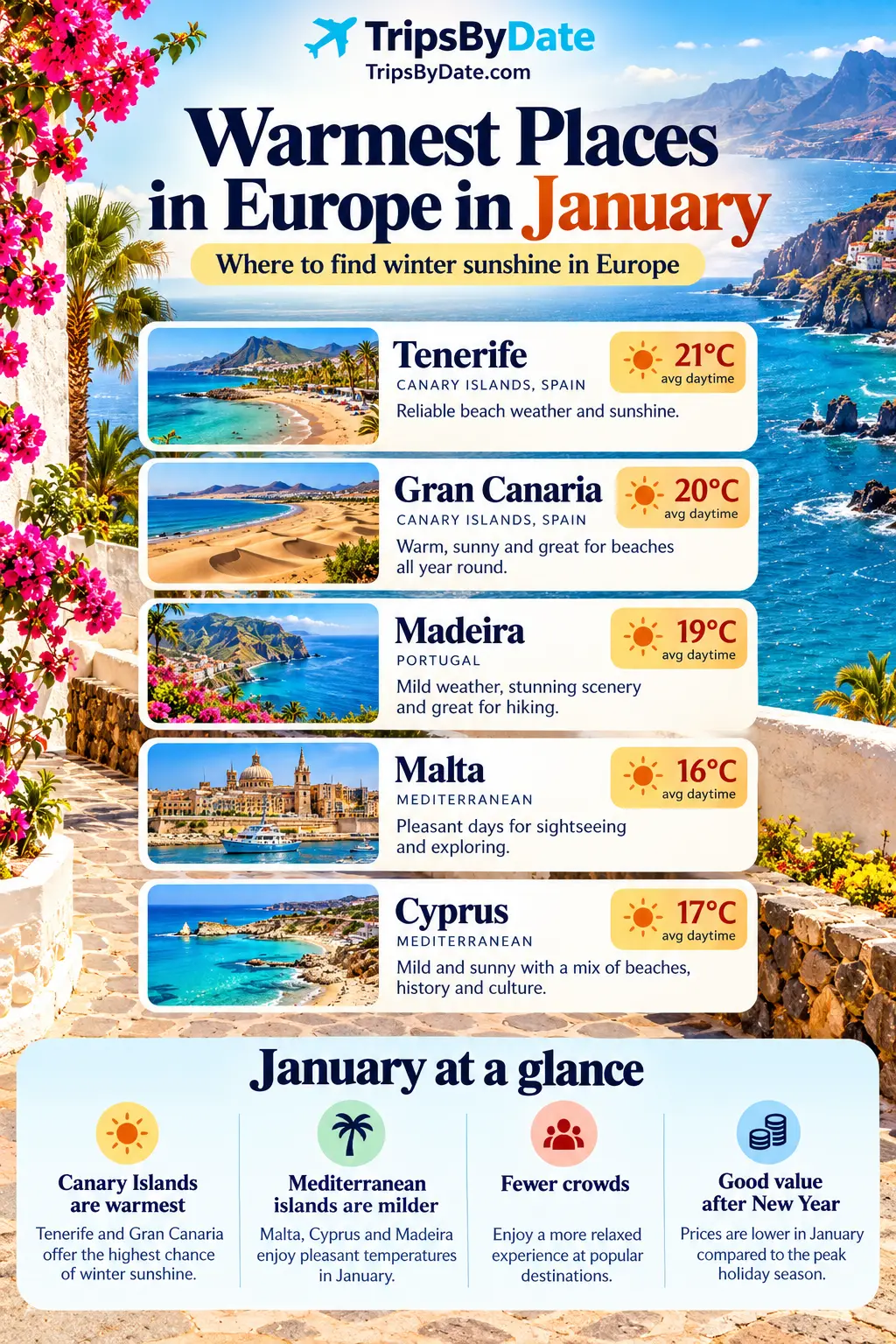
If you want to swap January coats for a few afternoons in the sunshine, southern Europe and its Atlantic islands can offer a welcome change. But the difference between mild and beach-worthy matters. A 20°C afternoon in a sheltered Canarian resort can feel lovely; the same reading on a windswept promenade is a different holiday.
Our best starting point for January warmth is the southern Canary Islands, particularly Tenerife and Gran Canaria. Madeira is excellent for scenery and walking. Malta and Cyprus are milder alternatives for history, food and exploring, not reliable hot-weather beach holidays. Below, we compare the numbers and, more importantly, explain what they mean once you arrive.
One geographical clarification: the Canary Islands and Madeira are Atlantic archipelagos geographically near north-west Africa, but belong to Spain and Portugal respectively. Cyprus lies in the eastern Mediterranean and is often included in European holiday searches. This is a guide to familiar European travel destinations, not a strict geographical ranking of every place on the continent.
January temperatures compared: what the official records show
These figures are historical averages of daily maximum air temperature at named weather stations, not the temperature every afternoon, a forecast, or the temperature of the sea.
- Tenerife South, Spain: 21.7°C. AEMET weather-station normal, 1981–2010. A strong option for sheltered resort days and winter sun.
- Gran Canaria Airport, Spain: 20.8°C. AEMET normal, 1981–2010. Southern resort microclimates can feel different from the airport.
- Funchal, Madeira, Portugal: 20.0°C. IPMA normal, 1991–2020. Mild coastal weather, with much cooler conditions in the mountains.
- Cyprus and Malta: generally mid-teens at the coast. Cyprus tourism's published coastal January daily maximum is 16°C. Malta's January climate is likewise mild but cooler than the Atlantic islands; do not read an isolated warm day as a typical January afternoon.
Sources: Spain's AEMET, Tenerife South; AEMET, Gran Canaria Airport; Portugal's IPMA, Funchal 1991–2020 normals (PDF); and Cyprus Tourism's published coastal climate table (PDF). Stations and reference periods differ, so this is a practical comparison rather than a perfectly controlled scientific league table.
Explore upcoming holidays
Here are four varied upcoming package holidays from available operators. These listings are not restricted to January or to the five destinations below; they show general opportunities in our current inventory. For January departures, choose the relevant dates and departure airport in the main search.
Explore holidays departing on your dates
TripsByDate shows advertised package holidays across its wider inventory. The changing options below are not necessarily Christmas-week departures or packages to these five destinations. Use them as starting points, then compare your own dates and check the final price, availability and festive arrangements with the provider.


 LGW • 7 nights
 RO · Broadway Travel

 LTN • 7 nightsSkiworld
 GLA • 7 nightsHB · Skiline
 LGW • 7 nightsHB · Skiline
1. Tenerife: the strongest all-round January winter-sun choice
There is a reason Tenerife appears repeatedly in winter-sun conversations. AEMET's historical January daytime maximum at Tenerife South Airport is 21.7°C, with an average of 193 hours of sunshine during the month. That does not mean every holiday will be sunny, but it gives a firmer basis for planning than a brochure promising endless summer.
Where to stay: Costa Adeje and Los Cristianos are sensible starting points for established resort facilities, restaurants and coastal walking. Playa de las Américas suits people wanting a livelier base. Even within the south, check whether your hotel sits on a windy beachfront, an exposed hillside or a sheltered promenade.
What surprises first-time winter visitors: Tenerife is not one uniform temperature. The north, highland areas and Mount Teide can have dramatically different weather from the southern beach resorts. You can enjoy a sunny terrace at lunchtime and need proper cold-weather clothing for a mountain excursion. If visiting Teide, check access and forecast conditions before setting off.
Who will enjoy it: couples, families looking for a hotel with winter facilities and travellers who want a mix of relaxing days and scenic trips. If swimming every day matters, confirm a heated pool; even pleasant afternoon air does not guarantee comfortable ocean swimming.
For a broader mix of destinations, see our January holiday guide. The official Tenerife South climate record is useful when comparing January with February or March.
2. Gran Canaria: choose the south rather than relying on the island average
Gran Canaria Airport's historical January average high is 20.8°C. But a single island-wide number hides one of Gran Canaria's most useful features: its microclimates. The official Gran Canaria tourism website explains how the trade winds, mountains and elevation create noticeably different weather, with the southern coast tending to be drier and sunnier.
Where to stay: Puerto Rico and Amadores are worth comparing for resort-style winter breaks; Maspalomas and Meloneras offer wide promenades and established visitor facilities. Puerto de Mogán can suit people who value restaurants, a harbour setting and a slower pace. Don't choose a northern town solely because the forecast for “Gran Canaria” looks warm.
For beach lovers: investigate the actual bay, shelter from prevailing winds, shade, access steps and whether there are lifeguards or flags on the dates you visit. Sandy does not always mean calm; Atlantic swell and currents still matter. Gran Canaria tourism notes that sea temperatures can be around 18°C in winter, cool for many swimmers even with sunny air.
For families: check pool heating in writing, including which pool is heated and the operating dates. A hotel that merely advertises “outdoor pools” may not provide the experience expected by children who want to swim all afternoon.
3. Madeira: mild walking weather rather than a classic beach escape
Funchal's official IPMA climate normal gives a January average maximum of 20.0°C. That sounds close to Gran Canaria, but the holiday experience is very different. Madeira's strengths are its dramatic coastline, gardens, viewpoints, food and extensive walking possibilities, not long sandy resort beaches.
Where to stay: Funchal is practical for restaurants, bus and excursion connections and alternatives when the mountain weather turns. More remote villages may deliver exceptional views but can make every day's activities dependent on winding roads or a hire car.
The critical weather distinction: a forecast for Funchal doesn't tell you conditions at a mountain trail. Cooler temperatures, cloud, heavy rain or wind can change plans at altitude. The sensible strategy is to keep lower-altitude alternatives available rather than build a week around one exposed route.
Important booking tip: since January 2026, Madeira's classified walking trails require advance time-slot reservations, with applicable fees. Check the official Visit Madeira trail-status and booking page before planning a particular walk. A path featured in an old travel article may currently be restricted or closed.
Madeira is excellent when you want January to feel active and refreshing. It is a weaker match when your definition of a winter holiday is a sunlounger, a sandy beach and daily swimming. See also our Portugal seasonal guide.

4. Malta: a rewarding winter city and culture break
Malta belongs on a list of milder January destinations, but not alongside the Canaries as if the temperatures were equivalent. Malta International Airport's Meteorological Office reports that January can bring unsettled weather, wind and rain as well as bright spells. One unusually sunny year or a single 20°C day should not be mistaken for the climate normal.
Make the most of the season: base yourself where restaurants and transport operate year-round, then plan Valletta, the Three Cities and historic attractions around the day's weather. The official Visit Malta guide is a useful starting point for culture, museums and activities.
What to avoid: paying a premium for a beach-focused hotel if its main appeal is summer swimming. In January the sea is cool, some tourist-oriented businesses work shorter hours, and a breezy waterfront can feel colder than the thermometer suggests. A well-located city hotel can be better value than an isolated resort.
Best for: a three- to five-night history, food and sightseeing trip with flexible daily plans. Bring a light waterproof and layers, even when the long-range forecast shows sun.
5. Cyprus: quieter coastlines, but not dependable swimming weather
Cyprus can be delightful in January for coastal walks, archaeological sites and time outdoors, yet its official tourism climate table gives a January coastal daily maximum of about 16°C and sea temperature around 17°C. It is therefore misleading to sell it as interchangeable with the warmest Canarian resort areas.
Where to stay: Paphos offers archaeological attractions, a harbour setting and coastal excursions. Larnaca can suit a shorter trip with local restaurants and straightforward airport access. Look carefully at winter hotel opening arrangements, pool temperatures and whether the surrounding restaurants you want will actually be operating.
What makes January interesting: it is a good time to see a destination beyond its summer sunloungers. The countryside can be greener, and cultural sightseeing may be more comfortable than during intense summer heat. Conversely, mountain areas may be very cold, while winter rain can affect plans.
Best for: travellers who value history and exploring over pool time. Compare our winter-sun month guide if warmth is your first priority.

Know when you can travel?
Choose your departure airport and dates, then compare upcoming holidays across destinations instead of searching them one by one.
Find holidays by dateThe important distinction: sunny, warm or swimmable?
Sunny means there may be pleasant bright spells, not that the whole holiday will be cloudless. Warm usually describes the air temperature measured in the shade; sitting in direct sun, walking in wind and dining outside after dark can all feel different. Swimmable depends on sea conditions, water temperature and your tolerance for cold water, not the lunchtime maximum on a weather chart.
For a January holiday, ask yourself which result would actually satisfy you. Would you be happy walking along the coast in a jumper? Do you need to be comfortable reading outside at lunchtime? Or are you paying for a week because you want to swim every day? Those are three different holiday specifications and they should not produce identical destination recommendations.
Six January booking checks that prevent disappointment
- Research the resort, not the country. South Tenerife is not the same as north Tenerife; Funchal is not the same as Madeira's mountains.
- Look at night temperatures and wind. A sunny 21°C afternoon can become a chilly evening. Bring layers even for a winter-sun trip.
- Verify pool heating. Ask which pools are heated, whether heating operates in January and whether there are temperature restrictions.
- Check real journey time. Flight duration is only part of the holiday. An inconvenient transfer can consume a large part of a four-night break.
- Compare the full price. Transfers, luggage, meals, pool facilities and a more central or sunnier hotel may matter more than a small headline saving. See how to find better-value holiday dates.
- Check the current outlook and travel rules. Historical averages help pick a month, but forecasts and entry requirements need checking before departure. For British travellers, the FCDO's destination travel advice is an appropriate final check.
Is January cheaper than December or February?
It can be, particularly after the New Year travel period and away from school holidays. But there is no January-wide price rule: winter-sun resorts remain desirable, popular accommodation can be booked well ahead, and flight availability varies by airport. The useful comparison is the same type of holiday across nearby departure dates, not simply a January average against a February average.
Try several dates and, if practical, alternative nearby airports. Check that the cheaper package has similar trip length, luggage allowance, board basis and arrival time. A late arrival and early departure can make an apparently cheap four-night trip feel like two days away. Our February holiday guide and March guide may help if you can move your plans.
Frequently asked questions
Where is warmest in Europe in January for a holiday?
For familiar European holiday destinations, southern Tenerife and southern Gran Canaria are among the strongest options for mild winter sunshine. Official historical January average daytime highs are 21.7°C at Tenerife South Airport and 20.8°C at Gran Canaria Airport. Averages vary by station and resort, and no destination guarantees warm weather every day.
Is anywhere in Europe genuinely hot in January?
If you mean consistently hot, summer-style temperatures, that is difficult within these destinations. The Canaries are more accurately described as comfortably mild or warm on favourable afternoons. For stronger heat you may need to widen your search beyond European destinations, consider a longer flight and compare weather for the specific month.
Are Tenerife and Gran Canaria warm enough for the beach in January?
Many travellers enjoy sunbathing in sheltered resort areas on good days. Swimming is more personal: Atlantic water is cooler than in summer, and waves or wind can make a beach unsuitable on a particular day. Check the beach conditions and consider a hotel with a confirmed heated pool.
Is Madeira warmer than Malta in January?
Funchal's IPMA historical average maximum is 20.0°C, generally milder than Malta's typical January conditions. But Madeira's mountains are considerably cooler than its coast. Choose Madeira for scenic exploring and walking rather than expecting the whole island to feel like a beach resort.
Is Cyprus worth visiting in January?
Yes, for sightseeing, archaeology, coastal walks and quieter travel. It is a less suitable choice for a holiday where warm seawater or reliable sunbathing is non-negotiable. Its official January coastal maximum is about 16°C, and cooler or wet days are possible.
Which January destination is best for a family?
The south of Tenerife and Gran Canaria are practical places to start because of their established resort choice. Choose a hotel based on winter pool heating, indoor or bad-weather activities, beach accessibility and room layout, not simply a family-friendly label. See our family holiday timing guide.
Should I book January winter sun early or wait for deals?
Neither approach always wins. Booking earlier may help if you need a specific hotel, airport or school-holiday date, while flexibility sometimes reveals late availability. Compare real packages for the dates you can travel, and assess the full cost rather than trusting a generic booking rule.
Where to research before you book
Use AEMET for Tenerife, AEMET for Gran Canaria, IPMA for Portugal, Visit Madeira for trail access, Visit Malta for activities and the UK government's travel-advice pages for destination requirements. Climate normals describe the past, not the weather on your travel dates.
For related reading, try Where to Go on Holiday in January, Best Months for Winter Sun.
‹ BACK TO HOLIDAYS BY MONTHKnow when you can travel?
Pick your departure airport and available dates, then see holidays that fit. Less searching, more choosing.
Find holidays by date