

Warmest Places in Europe in November
Find November sunshine that actually suits your trip, with verified temperatures, sensible swimming expectations and advice on choosing the right resort.
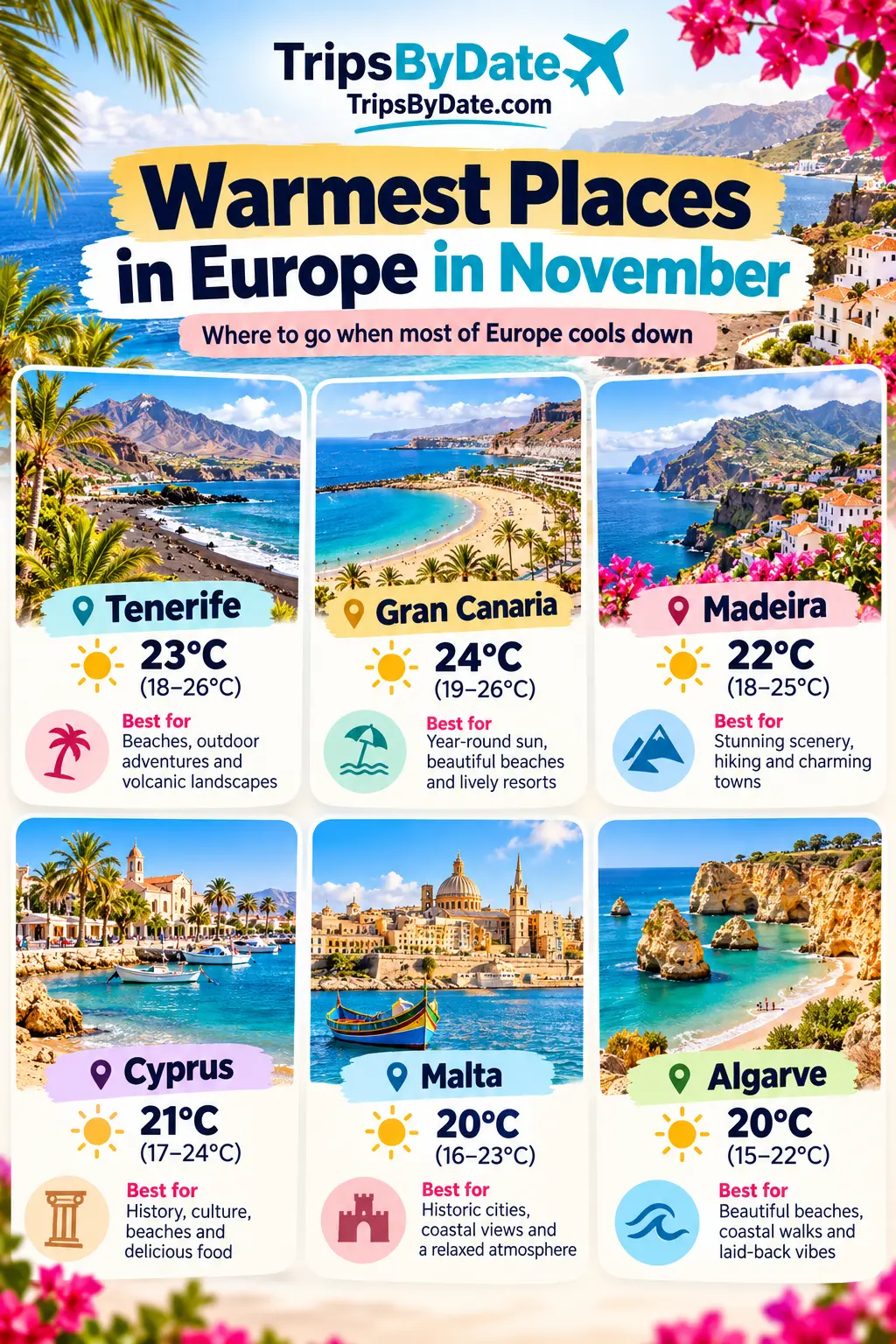
Where can you find warm weather in Europe in November without booking a holiday that looks sunny in photographs but feels chilly in reality? The Canary Islands are among the strongest choices for dependable late-autumn resort weather, while Madeira, Cyprus, Malta and the Algarve can be excellent for very different reasons. Choosing well means looking beyond the headline temperature: consider wind, rain, sea conditions, daylight, hotel facilities and what you actually want to do.
Quick answer: compare south Tenerife and southern Gran Canaria first if your priority is warm outdoor resort days. Choose Madeira for dramatic scenery and walking, Cyprus for a potentially mild combination of coast and history, Malta for culture with sea views, and the Algarve for attractive towns and beaches rather than reliable hot-weather swimming.
A geographical note: the Canary Islands and Madeira are geographically in the Atlantic off Africa, though part of Spain and Portugal respectively. Cyprus is in the eastern Mediterranean. This guide follows the common UK holiday-search meaning of European destinations, not a literal ranking of mainland European weather stations.
How warm is November? Check the evidence, not just the picture
A November temperature on a holiday infographic is often a rounded guide, but it may be unclear whether it means the daily high, 24-hour mean or a broad range. For a more meaningful comparison, use official long-term average daily maximum temperatures at named weather stations. These describe historical daytime highs, not a forecast or guarantee.
- Tenerife South Airport: 24.8°C historical November average daily maximum, from Spain's meteorological agency AEMET (1981–2010 normals).
- Gran Canaria Airport: 24.2°C on the same AEMET basis. That does not mean every Gran Canaria beach resort is cooler than every Tenerife resort.
- Madeira, Cyprus, Malta and Algarve: the conditions vary by location and rainfall pattern; the rounded figures on the infographic are not a like-for-like ranking based on one set of weather stations.
See the underlying Tenerife South climate normals and Gran Canaria Airport normals. The tables also report rainfall and sunshine hours. For Portugal, the national meteorological service publishes regional climate normals.
Important: the infographic puts Gran Canaria at 24°C and Tenerife at 23°C. That might reflect different unspecified resort observations, but the comparable AEMET airport figures above put Tenerife South slightly higher. A one-degree difference is rarely a reason to book one island over another; shelter and hotel location matter more.
Explore holidays departing on your dates
TripsByDate shows advertised package holidays across its wider inventory. The changing options below are not necessarily Christmas-week departures or packages to these five destinations. Use them as starting points, then compare your own dates and check the final price, availability and festive arrangements with the provider.


 STN • 7 nights
 SC · Thomas Cook

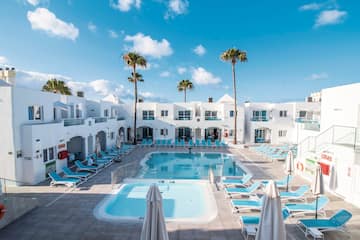 LGW • 7 nightsSC · TUI
 LGW • 7 nightsB&B · Thomas Cook
 LGW • 7 nightsSC · Ski Line
1. Tenerife: best for established winter-sun resorts
Tenerife is the most straightforward option for travellers who want to spend a significant part of their November holiday outside. The south has established year-round hotels, accessible promenades, cafés, beaches and excursions. It is still not summer in the tropics: wind, cloud and an occasional wet day remain possible.
Where to stay: Costa Adeje suits people wanting a wide hotel choice and restaurants within easy reach. Los Cristianos is useful for a walkable base and beach access. Playa de las Américas has a livelier feel, although atmosphere varies by area. Check the exact hotel rather than assuming all properties within the same resort name feel identical.
More useful than the temperature: ask whether the pool is heated, how far the hotel is from the beach, whether the outdoor seating is sheltered and how much direct sun the property receives. An exposed balcony in the shade can feel much cooler than a sheltered south-facing terrace.
If you want to explore: Teide National Park and the island's north offer striking scenery, but elevation changes the weather quickly. Carry layers for mountain visits even when your beach resort feels warm. For broader context, read Best Months to Visit Spain and Best Months for Winter Sun.
2. Gran Canaria: best for a blend of sunshine and contrasting landscapes
Gran Canaria's appeal is choice. You can spend a relaxed day near the dunes or beaches of the south, then find very different scenery and cooler conditions higher in the island. That variety is brilliant for people who want more than a hotel pool, but it makes an island-wide weather forecast a poor way to pick accommodation.
Where to stay: Meloneras appeals to travellers seeking a polished resort feel and seafront walks. Maspalomas is convenient for many hotel facilities. Puerto de Mogán offers a marina setting and a gentler pace. Puerto Rico and nearby southern locations are other options to compare for beach access and shelter; the precise part of each resort matters.
Think about wind and shade: late-autumn comfort can change between two beaches on the same island. A cove protected from prevailing wind might feel warmer than a more exposed stretch of sand even with identical forecast temperatures. Compare actual beach position, hotel reviews for November and local forecasts.
Worth checking: if a hotel advertises a pool and sea views, that says nothing about pool heating, bathing depth or whether the view comes with hours of shade. Ask those questions directly before booking. The official Gran Canaria tourism site is a useful place to compare different areas.
3. Madeira: best for scenery, nature and walking
Madeira offers a different sort of November escape. The gardens, levadas, rugged cliffs and dramatic mountain viewpoints often create a far richer trip than an ordinary beach resort. But the island's rugged geography also produces big local weather differences. Funchal's conditions cannot be assumed to apply to its high ridges or northern coast.
Where to base yourself: Funchal works particularly well for restaurants, gardens and day trips; the Lido area suits visitors wanting hotel facilities and coastal walks. Consider whether you will hire a car or prefer organised tours, especially if mountain driving is not your idea of a relaxing holiday.
A planning rule that really matters: classified Madeira walking routes require advance booking via the SIMplifica platform and may carry an access charge. The official tourism authority also publishes whether routes are open, restricted or closed. Check Visit Madeira's live trail guidance rather than relying on an old blog or a saved walking itinerary.
Have a flexible plan: keep the clearest day for a major viewpoint or exposed hike and use cloudier weather for gardens, museums, markets and food. Proper shoes and a waterproof layer can be more important than an extra swimsuit. See Best Months to Visit Portugal for more ideas.
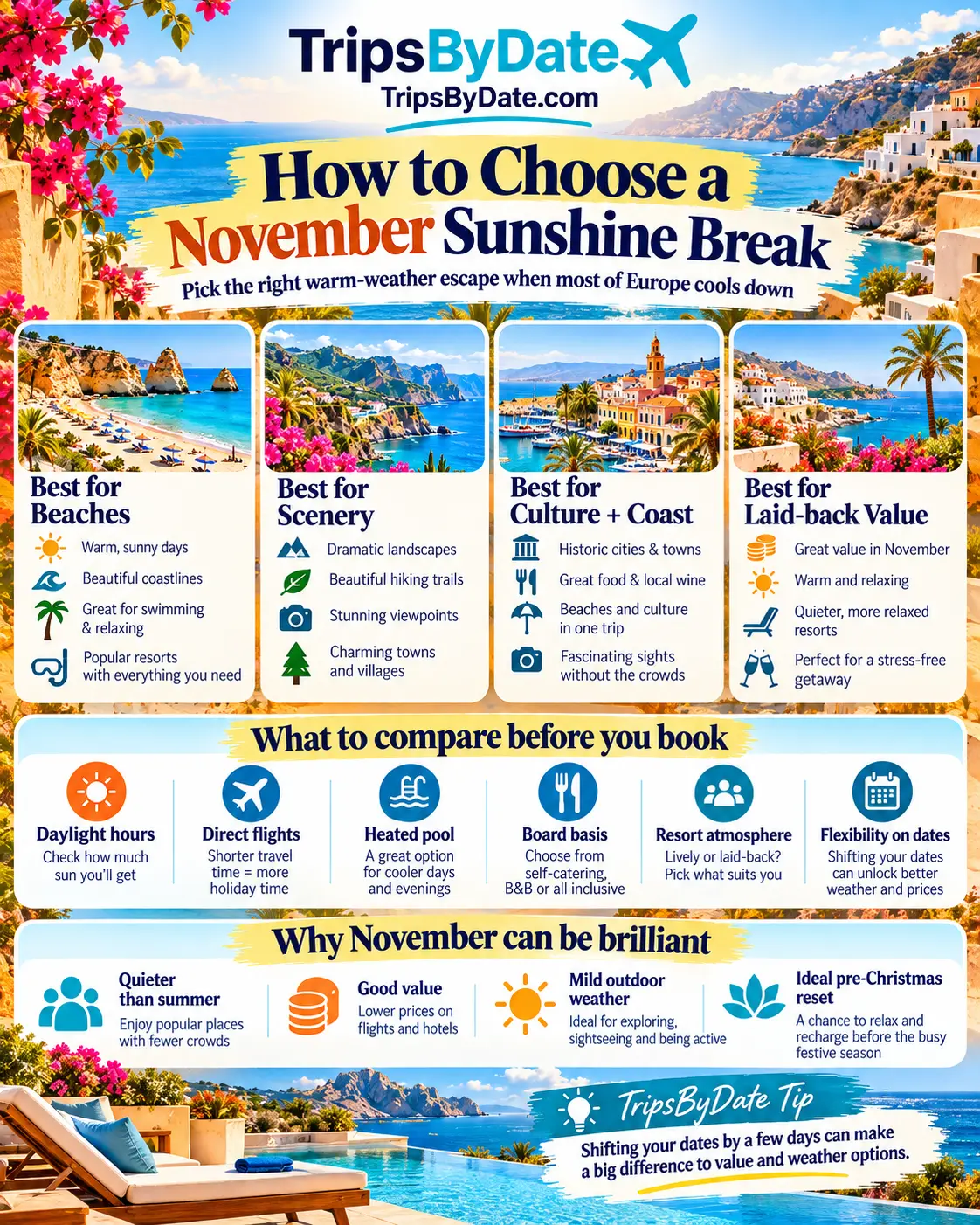
How to choose the right November sunshine break
If your main holiday goal is to lie outside with a book, the southern Canaries are a stronger first shortlist than Malta or the Algarve. If you are happy to walk, eat well and explore interesting places, a milder destination may produce an even better holiday. Make the decision around what fills your days, not simply a weather-app icon.
4. Cyprus: best for a coast-and-culture holiday
Cyprus still has plenty to offer in November, but it is important to match expectations to the season. The coast can have attractive mild afternoons, and the sea holds some residual summer warmth. Yet more changeable conditions and shorter days make a beach-only itinerary less dependable than in September or October.
Where to stay: Paphos offers a useful mix of harbour restaurants, archaeological sites and excursions. Limassol is suited to travellers who enjoy a more urban coastline. Protaras and Ayia Napa are popular for sandy beaches in summer, but you should check precisely which hotels, restaurants and visitor facilities remain open for your November dates.
Swimming tip: the official Visit Cyprus climate guidance says open-sea temperatures can remain above 22°C from June into November. That is a seasonal description, not a daily guarantee of calm or comfortable swimming. Check beach flags, local conditions and whether lifeguards are operating.
Who should choose Cyprus? Travellers who like beaches but are equally happy with archaeological sites, local restaurants and scenic drives. It is less sensible if your entire holiday depends on hot sunshine or every resort bar being open.
5. Malta: best for a fascinating short break with sea views
Malta excels when the holiday is about heritage, interesting streets and food rather than spending all day on the sand. Valletta, the Three Cities, Mdina and coastal villages make it possible to fill even a cloudy day with worthwhile experiences. November can also mean showers and breezier conditions, so plan a mixture of indoor and outdoor activities.
Where to stay: Valletta puts you close to history and dining, but think about access to your accommodation on steep streets and whether you want a quieter evening. Sliema offers waterfront walks and transport connections; St Julian's is livelier in parts. The best option depends on your interests and where you intend to spend time.
A practical two-day plan: use one day for Valletta and harbour viewpoints, and another for Mdina or the Three Cities. If you stay longer, consider Gozo, but check ferry and weather conditions before setting a rigid timetable. See Visit Malta for official attraction ideas.
Common mistake: treating a sunny midday temperature as proof you can wear summer clothes at night. Pack an extra layer for exposed waterfronts and evening dining.
6. Algarve: best for coastal walking and quieter towns, not guaranteed heat
The Algarve can be beautiful in November. Lagos's dramatic coastline, Tavira's streets and the coastal scenery around Carvoeiro suit people happy to walk, enjoy seafood and take advantage of a slower pace. But compared with the Canary Islands, it is generally a less dependable choice for a beach-and-pool holiday.
Why the Atlantic matters: sea temperature and surf can make the water feel considerably cooler than the air, and November's weather is more unsettled than peak summer. Portugal's official 1991–2020 Faro climate normals record average November precipitation of 75.5mm and 6.6 days with at least 1mm of rain. These are long-term figures, not a forecast for your particular holiday.
Choose a year-round base: larger towns can be more convenient for restaurants, markets and indoor options than very small seasonal beach developments. Check whether boat trips and beach facilities operate in November; sea conditions can force cancellations even where tours are advertised.
Best for: couples who enjoy self-guided exploring, golf, attractive towns and a relaxed atmosphere. Consider Best Months for a Beach Holiday in Europe if swimming is your main priority.
November warmth versus November value: avoid a false bargain
Lower seasonal demand can create interesting offers, but the cheapest quote does not necessarily provide the most enjoyable holiday. A hotel with fewer restaurants open, no heated pool and an awkward location may cost you more in taxis and meals than a slightly pricier all-round option.
- Compare the total package: flights, luggage, transfers, room type, meals and any resort charges.
- Look at the full week: midweek versus weekend departures can shift the price without changing your destination.
- Check winter facilities: confirm heated pools, kids' clubs, restaurants and excursion availability in writing if they are essential.
- Check daylight: November sightseeing days are shorter than in summer, especially if you have a long transfer.
- Choose shelter: a sheltered beach, sun-facing pool and walkable town can make more difference than a 1°C climate average.
- Be realistic about the sea: a warm air temperature does not automatically mean calm water, safe swimming or active lifeguards.
See our Cheapest Months to Go on Holiday for more on seasonal demand, or Where to Go on Holiday in November for alternatives beyond this weather-focused shortlist.
Know when you can travel?
Compare upcoming departures and airports across destinations. Check the total package cost, then choose your preferred November weather and holiday style.
Explore holidays by dateFrequently asked questions about November sunshine
What is the warmest place in Europe in November?
For popular European-country holiday destinations, the southern Canary Islands are strong candidates. AEMET reports historical November average daytime highs of 24.8°C at Tenerife South Airport and 24.2°C at Gran Canaria Airport. These do not identify a single hottest beach on every date or prove an exhaustive ranking across Europe.
Is Tenerife or Gran Canaria warmer in November?
The comparable AEMET airport normals put Tenerife South slightly ahead. Real holiday conditions vary between resorts and even across a single island, so look at shelter, forecast wind, local rainfall and hotel facilities rather than booking on a difference of less than 1°C.
Can you swim in the sea in November?
Some people swim in the Canaries or Cyprus in November. Comfort varies with location, wind, currents and personal preference; the Atlantic may feel cool even on warm afternoons. Follow local swimming advice and check whether lifeguards are operating.
Is November a good time to visit Madeira?
Yes for scenery, gardens, food and walking, provided your itinerary can adapt to changing mountain conditions. Check classified trail status and complete any required official reservation before setting out.
Is Malta warm enough for a November beach holiday?
Malta can have mild, pleasant days, but it is a better recommendation for history, food and sightseeing than for a guaranteed beach-and-pool holiday. Pack layers and allow time for indoor attractions if the weather changes.
Is the Algarve warm in November?
It can have lovely sunny spells and excellent coastal-walking weather, but rainfall and cooler Atlantic conditions make it a less reliable choice for a hot beach holiday. Base yourself somewhere with restaurants and other things to do.
Are November package holidays usually cheaper?
They can be outside busy dates, but prices depend on destination, demand, airports, hotel availability and what is included. Compare nearby departures where possible rather than assuming November guarantees a bargain.
Should I book a heated pool for November?
If swimming is central to your trip, it is worth checking. Ask whether the particular pool you intend to use is heated during your dates and whether children can use it. An advertised pool is not the same as a heated pool.
Related travel guides
Warmest Places in Europe in October · Warmest Places in Europe in January · Best Months for Winter Sun · Best Months to Visit Portugal
‹ BACK TO HOLIDAYS BY MONTHKnow when you can travel?
Search by date and departure airport, compare live trips, and spend less time trying destinations one by one.
Find holidays by date