

Best Places to Go for an Easter Holiday
Six spring holiday ideas, with practical tips for school holidays, weather, beaches, Easter traditions and choosing the right trip.
An Easter holiday can be a brilliant first break of the spring, but picking the right destination involves more than finding a photograph of a sunny beach. The school timetable, the date Easter falls, the sea temperature and whether local resorts are fully open all affect the trip you'll actually have.
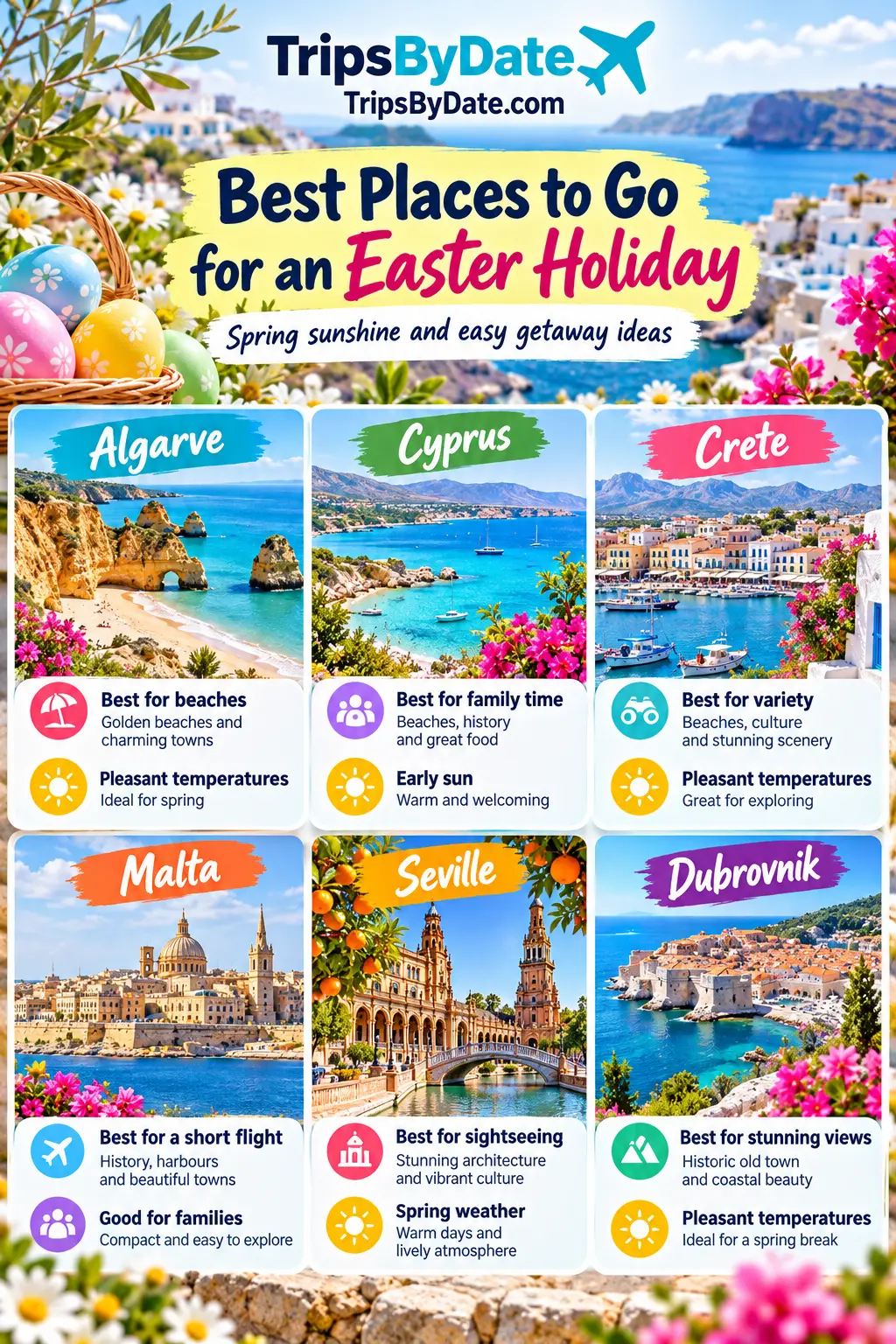
Our six Easter ideas are the Algarve, Cyprus, Crete, Malta, Seville and Dubrovnik. Each offers something different, from family-friendly coastal breaks to an unforgettable Holy Week in a historic city. The question is which will suit your dates and the kind of holiday you want.
Where should you go for an Easter holiday?
- Algarve: choose it for cliffs, beaches, family apartments and coastal exploring, but expect the Atlantic to be cool.
- Cyprus: a good choice for pleasantly warm spring days, historic sites and outdoor family activities; don't assume swimming-pool weather every day.
- Crete: best for mixing Greek food, ancient history, harbour towns and scenery, with some seasonal facilities still reopening.
- Malta: excellent for a compact blend of history, coastal views and Easter traditions, especially when beach swimming isn't essential.
- Seville: for food, architecture and one of Europe's most remarkable Holy Week experiences; expect crowds during major processions.
- Dubrovnik: for atmospheric Old Town walks and Adriatic views before the summer rush; plan for changeable spring weather.
First, check the Easter dates: they change everything
Easter moves between March and April each year, which can make a big difference to the weather, prices and experiences available. Always check the exact Easter dates and your local school holidays before booking. The UK bank-holiday calendar and school term-date finder are useful starting points.
Another important detail is that Greek Orthodox Easter does not always fall on the same date as Western Easter. This matters if you're visiting Crete to experience traditional celebrations. Check the relevant dates before booking, particularly if local Easter events are a major reason for your trip.
Explore holidays departing on your dates
TripsByDate shows advertised package holidays across its wider inventory. The changing options below are not necessarily Christmas-week departures or packages to these five destinations. Use them as starting points, then compare your own dates and check the final price, availability and festive arrangements with the provider.
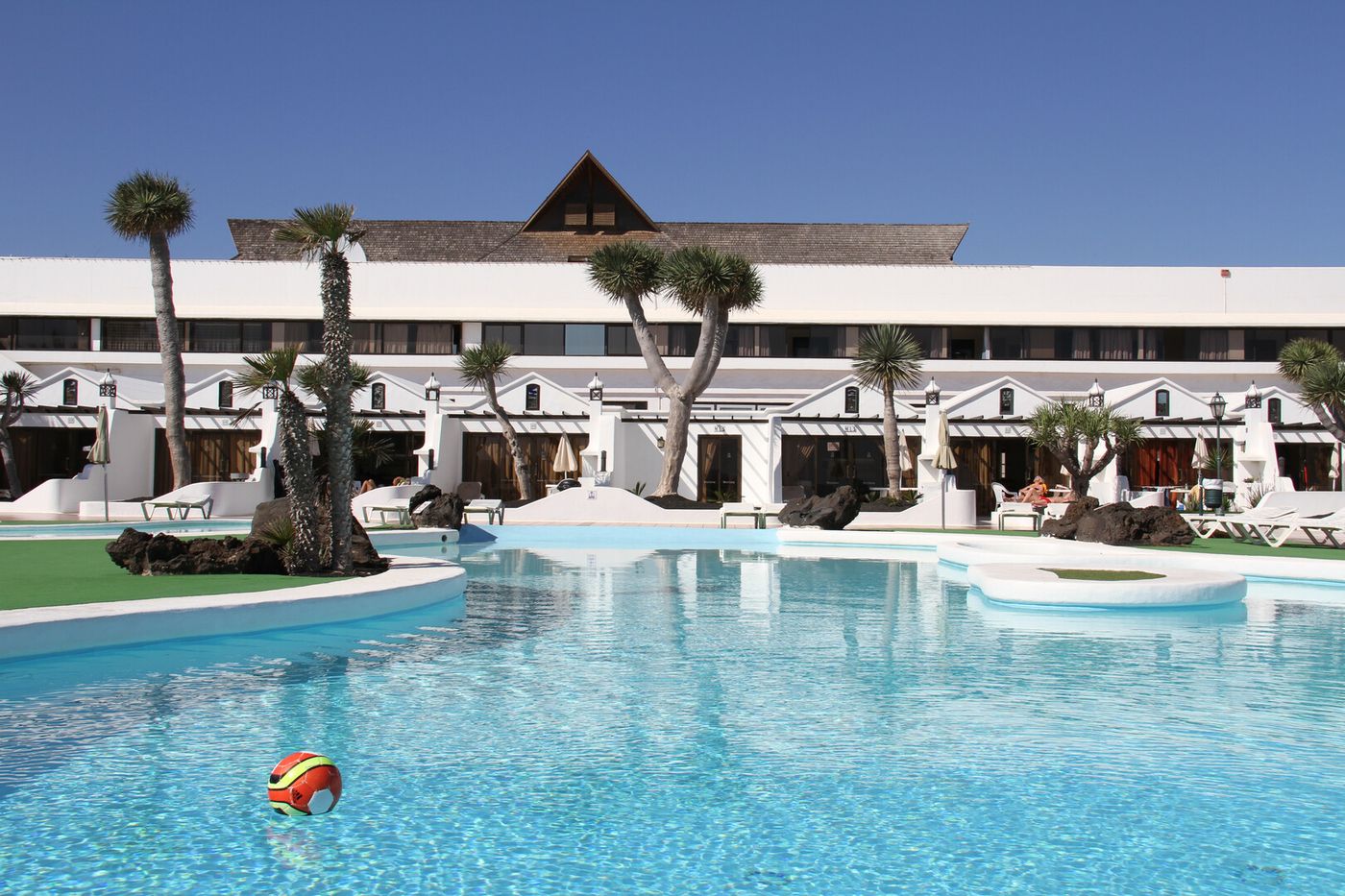


 BRS • 7 nights
 SC · On the Beach

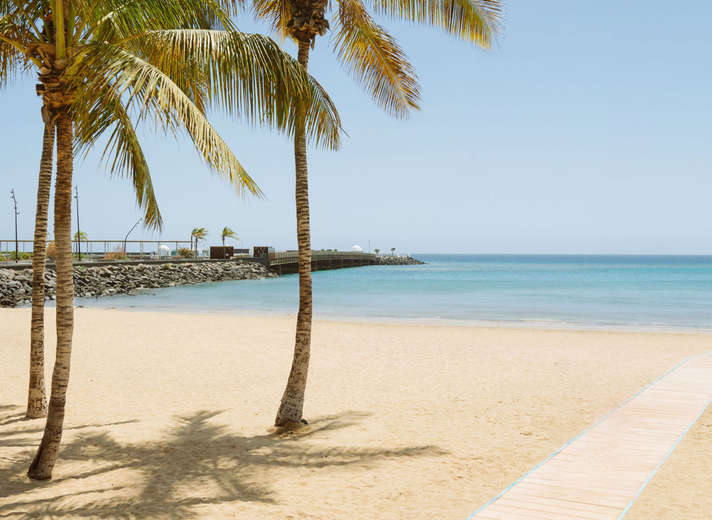 LON • 4 nightsB&B · lastminute.com
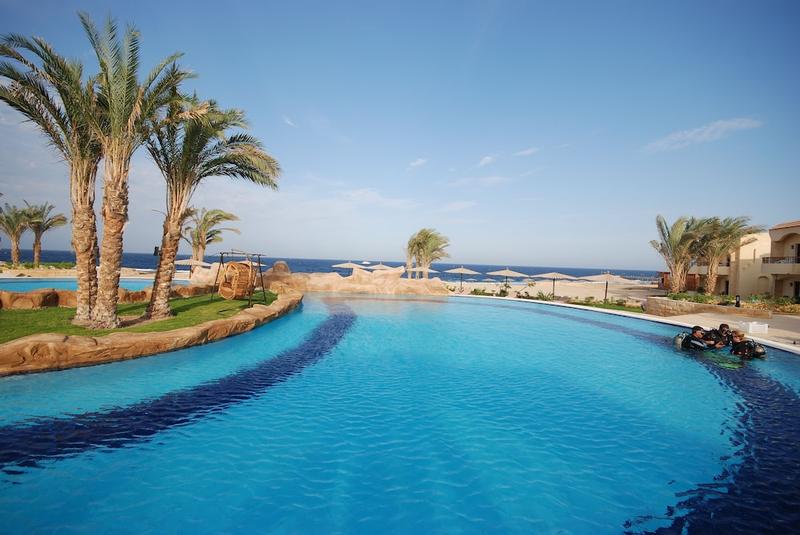 BRS • 7 nightsAI · Thomas Cook
 STN • 7 nightsB&B · Olympic Holidays
Six Easter holiday destinations, with the details that matter
1. Algarve, Portugal: best for beaches, coastal walks and easy family days
The Algarve is a lovely Easter choice if you want open-air time without the hottest part of summer. The limestone cliffs near Lagos, beaches around Albufeira and coastal paths around Carvoeiro reward exploring even when it's too chilly for a long sea swim. A beach holiday here in spring is often as much about walking, rock pools, viewpoints and relaxed lunches as lying on a sunbed.
Family plan: choose a base near a sheltered beach and restaurants, then alternate beach mornings with a short boat trip, nature visit or historic town. If you're travelling with small children, prioritise accommodation with an indoor or specifically heated pool. Do not assume outdoor resort pools will feel comfortable.
Insider check: don't judge an Algarve beach by its photographs alone. Some coves involve long staircases and are affected by tides; certain boat or cave trips are also weather-dependent. For a trip with a pushchair or anyone less mobile, look closely at beach access before booking. Start with the official Algarve tourism site.
Choose it for: coastal scenery, independent family exploring and relaxed resorts. Think twice if: your only goal is reliably warm sea swimming in late March.
2. Cyprus: best for a warmer spring feel and varied family activities
Cyprus is especially appealing when Easter comes early. In spring, the countryside can be green and full of flowers, while coastal areas offer mild, often bright days for walking, archaeological sites and outdoor meals. Paphos combines ancient remains with an accessible tourist base; the east of the island suits travellers attracted by sandy beaches, although the exact resort matters.
A rewarding week: give yourselves a couple of unhurried resort days, take a half-day heritage outing, and keep a weather-flexible day for a rural village or nature walk. This works much better than booking an activity every morning and assuming sunshine is constant.
Important reality check: Visit Cyprus's official climate guidance describes April and May as pleasantly warm, with cooler evenings, and says the sea remains relatively cool earlier in spring. Pack layers, check for pool heating and consider whether an inland excursion will be cooler than your coastal hotel.
Choose it for: families who want beaches plus history and nature. Think twice if: your definition of a holiday requires hot weather and tropical-feeling swimming water.
3. Crete, Greece: best for food, history and a proper island adventure
Crete is more than a summer sun-and-sand destination. Easter-season visits can be especially rewarding around Chania's Venetian harbour, Rethymno's old town and the archaeological sites around Heraklion. Countryside and mountain views add another dimension that summer-only visitors can miss.
How to make it work: if you're staying five to seven nights, pick one region rather than treating the entire island as a day-trip itinerary. A base near Chania is appealing for harbour evenings and western scenery; around Heraklion you can combine museums with Knossos. Distances on the island are substantial, and mountain roads can make journeys longer than the map suggests.
Seasonal warning: some small coastal hotels, tavernas, boat trips and seasonal attractions may not operate on full summer schedules in March or early April. Confirm the actual opening dates rather than assuming everything pictured in a summer advert will be available. Check official Visit Greece information on Crete and operators' websites for individual attractions.
Don't overlook: the separate Orthodox Easter calendar. If witnessing local candlelit services and celebratory meals is central to the trip, choose dates that actually coincide with Greek Orthodox Easter, not simply your UK school break.
4. Malta: best for history, Easter traditions and a short-flight escape
Malta offers a lot of variety without needing a long itinerary: Valletta's historic streets, the Three Cities, Mdina and harbourside cafés all work in spring. It is one of the strongest options here for travellers who want sightseeing with a hint of sunshine rather than a resort-only beach break.
Extra Easter value: this is a living cultural occasion, not just a holiday-decorated city. Good Friday processions and Easter Sunday celebrations take place in different communities, with distinctive local traditions and foods such as figolli, almond-filled pastries. Heritage Malta has documented local Easter customs and family activities.
Practical tip: processions can mean busy streets, changed transport and adjustments to opening hours. If you want to witness one, check the exact local parish programme. If your priority is effortless sightseeing, arrange major museum and cathedral visits outside ceremony times. The official Visit Malta guide is useful for attractions and local events.
Choose it for: couples, families with older children, culture and easy-to-combine excursions. Think twice if: your priority is a guaranteed hot beach-and-pool holiday.
5. Seville, Spain: best for extraordinary Holy Week and beautiful spring streets
For some travellers Seville will be the most memorable Easter choice on this list. Plaza de España, the cathedral area, orange-tree-lined streets and tapas are rewarding at any time, but Holy Week changes the city's rhythm. Processions wind through neighbourhoods, and the atmosphere can be moving even for visitors who are there primarily for culture.
Be clear about the trade-off: Holy Week is not the time to book Seville expecting empty attractions and quick walks through the centre. Routes can close streets, crowds gather, restaurants get busy and plans need room for change. Check Seville's official tourism information for Holy Week dates, procession routes and practical advice for visitors.
A smarter approach: choose a hotel location based on the kind of experience you want. If you're coming for the processions, being within walking distance is useful, but ask about late-night street noise and access. If you want quieter sightseeing, compare dates outside Holy Week. Book popular attractions in advance and keep one part of each day deliberately flexible.
Choose it for: culture, food and a remarkable seasonal experience. Think twice if: you dislike crowds or are seeking beach weather.
6. Dubrovnik, Croatia: best for dramatic views and an atmospheric city break
Dubrovnik can be a beautiful Easter escape without the peak-summer intensity. Its walled Old Town, waterfront and viewpoints are more enjoyable at a leisurely pace than when you're racing to fit everything into a crowded day. Spring weather can change, though, so it's better approached as a scenic city break than a guaranteed Adriatic swim.
How to spend three or four nights: allow a full day for the Old Town, churches and viewpoints; keep another for a coastal stroll or excursion if conditions allow; and leave some space for simply enjoying cafés and the historic streets. Dubrovnik's steep steps matter when choosing accommodation, especially with young children or heavy luggage.
Before booking: check seasonal transport, excursion timetables and attractions individually. The city walls are a highlight, but don't rely on summertime hours or assume every island boat service is operating. For current destination information consult the Dubrovnik Tourist Board.
Choose it for: scenic walks, history and couples' trips. Think twice if: you specifically want busy beach clubs, warm swimming or a fully operating summer resort scene.
What Easter weather actually means for a holiday
A spring daytime high is not the same as summer beach conditions. Five things are worth separating: daytime air temperature, overnight lows, rainfall, wind exposure and sea or pool temperature. Even when the sun feels warm, an unheated pool or cool sea may make a family swim brief. The Mediterranean also tends to warm later than the air in spring.
For a late-March Easter, pick activities you would still enjoy in a light jacket. Cyprus may offer a better chance of warm afternoons; Malta and Seville are particularly strong for sightseeing; Crete and Dubrovnik offer scenery and history; and the Algarve is excellent for coastal days when the wind cooperates. None offers guaranteed hot weather.
Know your Easter travel dates?
Compare holidays departing when you're free, without deciding on the destination first.
Explore holidays by dateSeven Easter booking decisions that can save disappointment
- Separate Easter weekend from school holidays: the four-day bank-holiday period and a school's two-week spring break aren't necessarily the same travel dates. Price each option separately.
- Check flight arrival time: a three-night trip with a late outbound and early return can leave only two usable days. A convenient direct flight can be better value overall.
- Check accommodation availability by season: especially on Greek islands and in smaller Croatian coastal resorts, verify restaurants, pools and children's clubs are actually operating.
- Confirm whether pools are heated: don't rely on a photograph or the word “pool”. Ask whether heating is provided during your specific dates and whether there is an extra charge.
- Expect Easter opening-hour changes: museums, transport, shops and tours may operate differently on religious or public holidays, particularly in historic cities.
- Account for transfers: a low headline holiday price is less appealing when your accommodation is far from the airport or the places you want to explore.
- Compare total cost: board basis, checked baggage, airport parking, child places, room setup and transfers can change which option is genuinely better value.
Which Easter holiday suits your family?
Travelling with toddlers
Prioritise a direct flight, short transfer, a kitchen or suitable meal arrangements, shade and a genuinely child-friendly pool. A compact resort on the Algarve or in Cyprus may be easier than a multi-city itinerary. Be realistic about buggy access on steep historic streets and beaches reached by steps.
Travelling with primary-school children
Choose a balance of downtime and a memorable activity. In Malta, historic forts and harbours can break up a beach-oriented week. In Crete, an archaeological visit paired with a harbour afternoon adds variety. Ask whether children's facilities are open at Easter, not merely advertised for summer.
Travelling with teenagers
Give them some choice: water activities where seasonally available, food experiences, city photography, archaeological sites, scenic walks or a guided excursion. Seville and Dubrovnik work best if they're interested in culture; for a resort-based holiday, check what there is to do beyond sitting by the pool.
Should you book three nights, four nights or a full week?
Three to four nights: Malta, Seville or Dubrovnik can work well when flights leave enough time on the ground. Concentrate on one base rather than changing hotels.
Five to seven nights: the Algarve, Cyprus and Crete give you space for beach time, family activities and a couple of bigger outings. Longer stays can also make travel days feel less dominant.
Compare the price per usable day, not just per night. If a cheaper four-night package gets you to the hotel late on day one and leaves at dawn on day five, it might offer less actual holiday time than a well-timed three-night break.
Frequently asked questions about Easter holidays
Where is warmest in Europe at Easter?
It depends on whether Easter falls in March or April and which specific locations you're comparing. Cyprus is one appealing Mediterranean option for warm spring afternoons, but the Canary Islands are another choice if winter-to-spring warmth matters most. Check warmest places in Europe in March and April's warmest European destinations for month-specific ideas.
Is Easter a good time for a beach holiday?
Yes for coastal walks, sandcastles, relaxing and sunshine when the weather cooperates. For swimming, remember sea temperatures can lag behind spring air temperatures; book a confirmed heated pool if swimming matters to the family.
Is an Easter package holiday always expensive?
No, but school holidays and the four-day weekend can bring strong demand. There is no reliably cheapest departure date for every destination. Try a few departure days and compare different airports, durations and board options. Our March value guide and April value guide explain the seasonal trade-offs.
Does Greece celebrate Easter on the same date as the UK?
Not always. Greek Orthodox Easter follows a different calendar calculation and may fall several weeks later than Western Easter. Check both dates for your intended travel year, especially if you want to experience traditional Greek Easter celebrations.
Which destination is best for a short Easter break?
Malta, Seville and Dubrovnik suit focused city-and-culture breaks, but flight times matter more than a simple distance comparison. See our European city-break timing guide for more ideas.
Keep exploring spring holiday ideas
For more inspiration, see Where to Go on Holiday in March, Where to Go on Holiday in April, Best Months for a Family Holiday, Best Months to Visit Greece and Best Months to Visit Portugal.
‹ BACK TO HOLIDAYS BY MONTHKnow when you can travel?
Find advertised holidays by departure date. Less searching. More choosing.
Find holidays by date