

Best Weekend Breaks Under £500
A little more budget, a lot more choice. Make the weekend feel more special without paying for the wrong things.
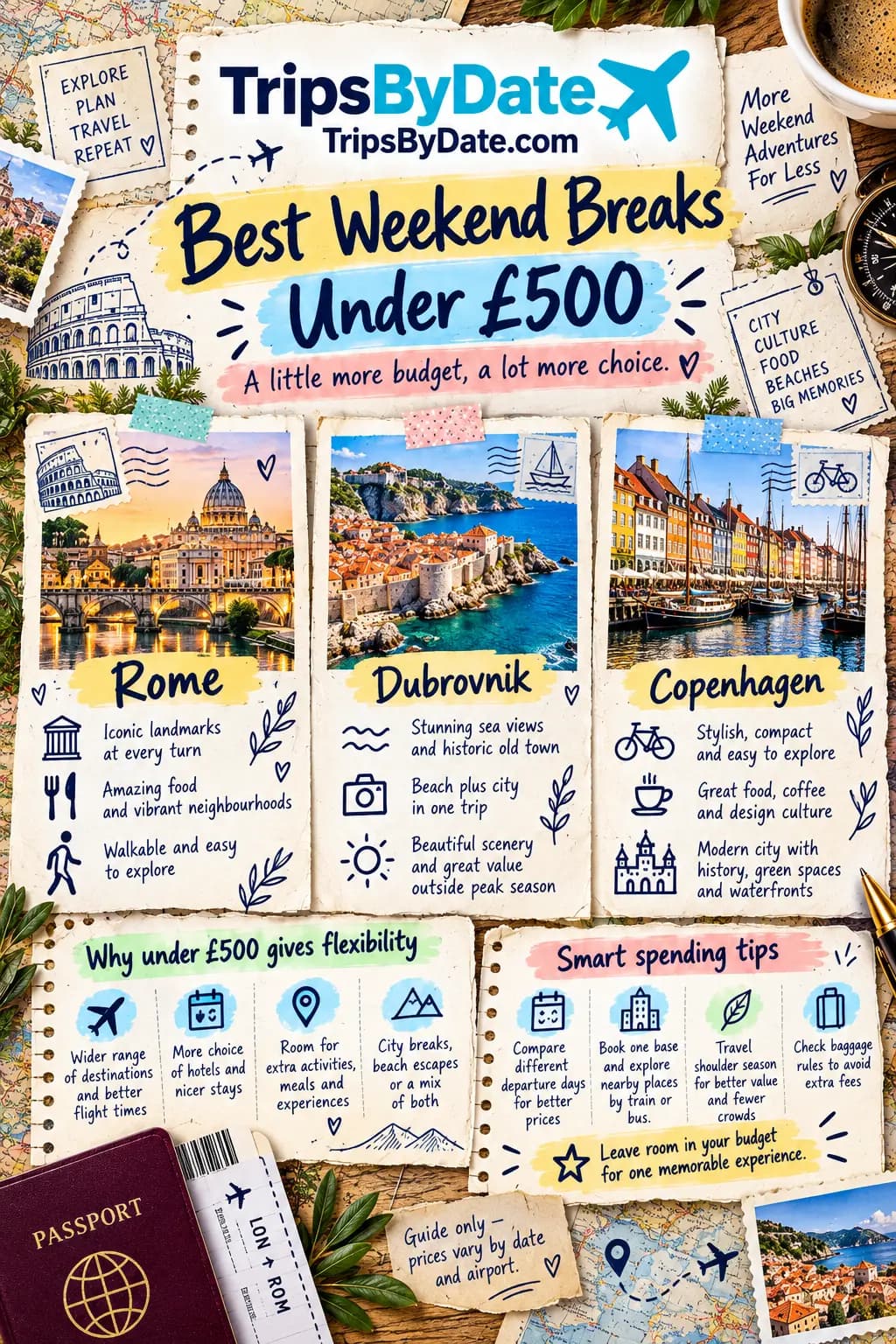
There is a delightful danger in having a slightly bigger weekend budget: suddenly your brain starts calling every optional upgrade an essential investment in happiness. A £500 ceiling can offer more flexibility than £200 or £300, but it also creates more ways to waste money. Nobody has ever come home saying, "The greatest part of Rome was the mysterious hotel supplement." The trick is to use your budget to buy more of the holiday you actually want: better arrival times, an appealing place to stay, one memorable experience and enough room to enjoy dinner without studying the bill like an archaeological inscription.
Quick answer: Rome, Dubrovnik and Copenhagen are three exciting destinations worth checking for a European weekend when your budget is up to £500 per person. Rome is brilliant for history and food, Dubrovnik for coastal drama and a historic old town, and Copenhagen for design, waterfront neighbourhoods and family-friendly exploring. None is guaranteed to have flight-and-hotel availability below £500; dates, UK departure airport, room sharing and flight schedules determine the actual cost. This guide helps you choose what to pay for and what to enjoy for less.
We use £500 per person for return travel and two nights of accommodation as a useful starting comparison, often based on two adults sharing. A total-trip budget including meals and activities is a different calculation. Unlike our under-£200 ideas and under-£300 guide, this article is about upgrading the experience intelligently, not simply chasing the lowest possible headline price. If a cheaper offer works perfectly, there is no obligation to spend the difference.
What should a £500 weekend budget actually buy you?
The best improvement is rarely the most photogenic one. Before upgrading the hotel room, compare the timings and locations of two complete trips. An arrival that lets you enjoy Friday dinner and a return that leaves Sunday morning free may beat a bigger bedroom with a view of an industrial roundabout. But if the early flight requires an airport hotel or exhausting travel, the calculation changes again.
- More usable hours: better flight times can turn a nominal two-night stay into a genuinely rewarding weekend. Count arrival at the hotel, not just the scheduled landing.
- A more useful base: a central or well-connected room may save repeated taxis and free up time. A fashionable postcode is not worth paying extra for if it is nowhere near what you want to do.
- One standout experience: a major attraction, concert, boat outing or food experience can be worth budgeting for, provided the booking is genuine and fits your timings.
- Comfort that actually matters: good sleep, workable family bed arrangements, quiet surroundings and accessible transport may matter far more than a decorative hotel lobby.
- Breathing space: do not spend the entire allowance before accounting for local transport, food, insurance and an unexpected change of plan.
Our three-upgrade test: for any extra cost, ask whether it saves time, removes stress or creates a lasting memory. If it does none of those, it may be an upgrade in name only. Use our total weekend cost checklist and flight-time comparison guide before paying.
See where your free dates could take you
These are four changing examples from the broader TripsByDate package-holiday inventory, shown by departure date. They are not filtered to under £500, a two-night stay or the cities in this guide. Choose your own UK airport and dates to browse more options, then confirm the final price, nights, luggage, transfers and availability with the operator.

 SEN • 7 nights
 Skiworld


 LHR • 7 nightsAI · Skiline
 GLA • 7 nightsB&B · Skiline
 GLA • 7 nightsHB · Skiline
1. Rome: spend on one unforgettable experience, not twelve tickets
Best for: couples who love atmospheric evenings, history enthusiasts, friends with enthusiastic appetites and families whose children enjoy ancient stories. Rome gives you a great deal before you buy a single attraction ticket: fountains, squares, extraordinary architecture and neighbourhoods where the walk between sights is entertainment in itself.
For a short stay, the real decision is which Rome you want. Spend one morning exploring the Colosseum, Roman Forum and Palatine Hill if ancient history is the reason for going; or devote the day to the Pantheon area, streets around Piazza Navona and a long lunch. Doing both at sprinting speed is an excellent way to remember very little except your step count.
The paid experience worth checking: the official Colosseum Archaeological Park explains the ticket types, timed-entry rules and options for different archaeological areas. Book through the official channel when availability permits. Some enhanced tickets cover experiences you may not need on a two-night trip. A more expensive ticket is not automatically a better day.
One clever date trick: Italy's state museums and archaeological sites have a first-Sunday free-entry initiative. Rome's tourism office explains the initiative and warns that certain sites have their own arrangements. Free admission can mean substantial queues, and Colosseum tickets for those dates are collected in person rather than reserved in advance. If your stay is short, it may be smarter to pay for a timed visit on another day.
A genuinely unusual Rome detour: visit Centrale Montemartini, where classical Roman sculpture stands among the machinery of a former power station. It is glorious visual nonsense in the best possible way: marble gods apparently supervising industrial engines. It requires an intentional journey, so make it your chosen indoor highlight, not something you squeeze in between the Vatican and dinner.
Another option is the extraordinary Quartiere Coppedè, a fantasy-like pocket of Rome mixing Art Nouveau, Gothic and other styles. It is not beside the Colosseum, so plan it as a neighbourhood outing. For a couple who has seen the famous sites before, this can feel fresher than paying for a repeat guided tour.
Where to direct the budget: a good location near the areas you plan to explore, a comfortable room for a midday reset and perhaps one pre-booked highlight. Where to save: neighbourhood walks, fountains, the atmosphere of Trastevere, relaxed picnics where permitted and scenic evenings that do not require a ticket. Compare European city-break ideas if your main goal is culture.
2. Dubrovnik: pay for a view, but understand what your ticket buys
Best for: coastal scenery, couples, photographers, history lovers and friends who want a swim and an old town in the same short escape. Dubrovnik has a dramatic setting that makes simply arriving feel like the opening scene of a film. The challenge is enjoying it without booking every spectacular-looking excursion advertised to visitors.
Start with the Old Town and its limestone streets. Walking the city walls is a celebrated experience, but it is not the only way to admire the city. If you choose a paid walls visit, plan the time of day carefully around sun exposure and crowds, and use a legitimate ticket source. See the city's official destination information for practical context and current attractions.
The smart choice that surprises visitors: Lokrum island is an excellent nature-and-history excursion, but the ticket rules matter. The Lokrum Reserve website explains that its official return boat-and-admission ticket differs from independent travel arrangements; arriving by water taxi does not avoid the reserve entrance charge. Check current schedules and prices directly, especially outside the busiest season. A cheap-looking boat ride can become the less economical choice once you add everything.
Once there, look for botanical planting, historic ruins, coastal viewpoints and the island's famously confident peacocks. The reserve's nature information describes the protected landscape. Its visitor rules prohibit feeding wildlife, so let the peacocks keep their own catering arrangements. For families, this is a useful combination of walking, discovery and fresh air, but assess paths, heat and accessibility first.
An unexpected alternative: if the old town feels crowded, enjoy a slower waterfront walk, locate a pleasant swimming spot where conditions are suitable or explore one neighbourhood rather than adding a long island tour. Sea conditions, access and beaches vary, and a stunning photograph of a rocky shore is not proof it is safe for children to swim there.
Where to direct the budget: a well-located room and one genuinely memorable walls, island or sunset experience. Where to save: a scenic picnic, self-guided old-town exploring and simple local food away from the most heavily trafficked squares. Our weekend beach holiday ideas explain when a city-plus-sea escape makes sense.
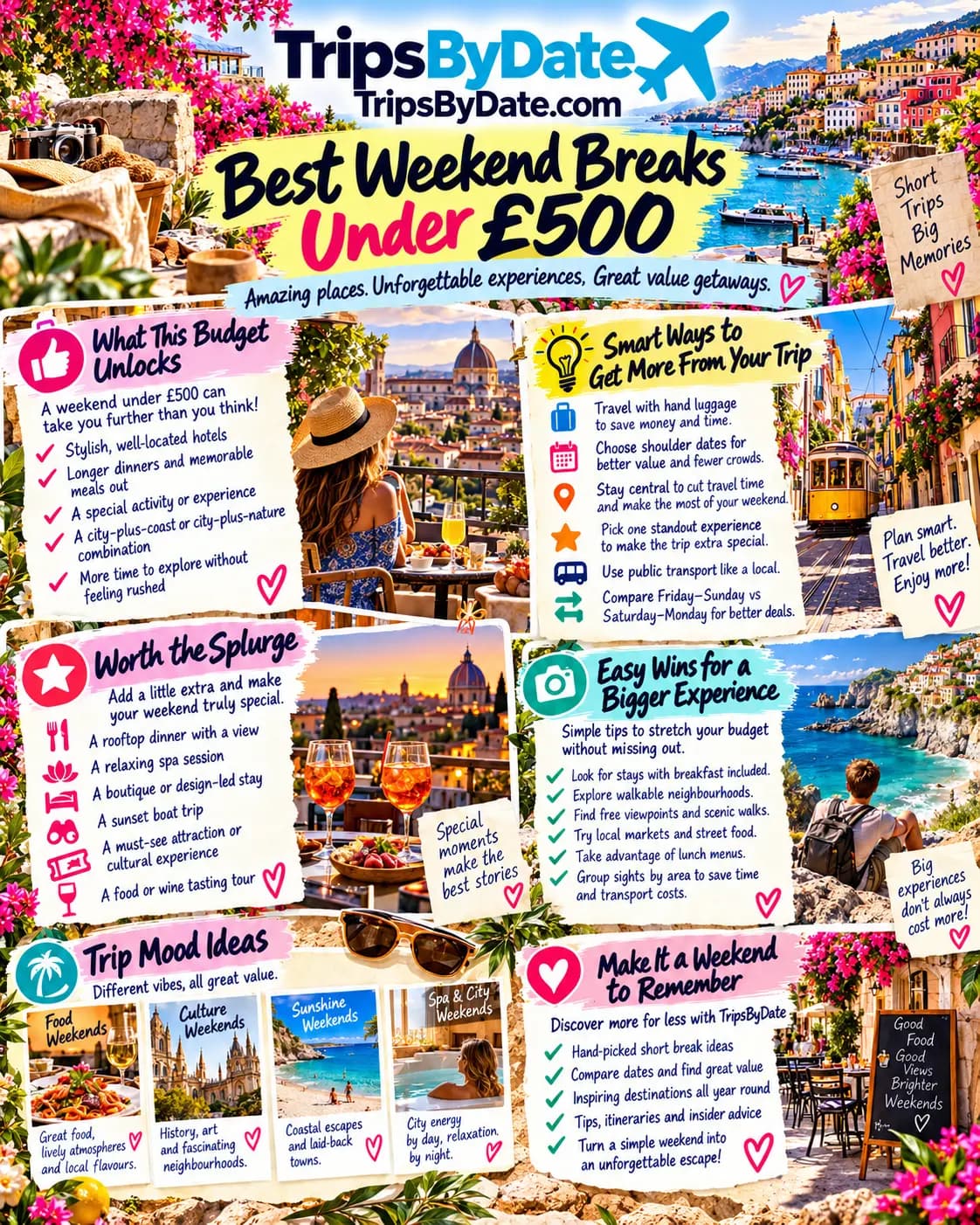
3. Copenhagen: the city that proves expensive does not mean every experience costs money
Best for: design fans, friends seeking unusual neighbourhoods, couples who love beautiful waterfronts and families who prefer easy urban exploring. Copenhagen has a reputation for high prices, which makes it an interesting test of a £500 ceiling. The answer is not to pretend restaurants and accommodation are always cheap. It is to find the experiences that are genuinely worth paying for, and enjoy the city generously between them.
Spend time around the harbour, Nyhavn and nearby streets, then move beyond postcard territory. The city's official free-experiences guide highlights parks, the Changing of the Guard, free cultural spaces and even an unusual rooftop activity area in Nordhavn called Konditaget Lüders. A great afternoon need not include a museum admission and a costly guided tour.
One extraordinary low-cost idea: the guide also mentions artist Thomas Dambo's Forgotten Giants, wooden sculptures hiding around green areas outside central Copenhagen. They make a fun family treasure-hunt concept, but the sculptures are spread out. On a two-night stay, select an accessible one rather than attempting the whole collection and spending a day commuting between imaginary trolls.
Culture without an expensive pass: the official tourism guide lists institutions with free admission or selected free days, including the David Collection. Check the specific day and current conditions. A pass is only a saving if you will realistically visit enough included places.
VisitCopenhagen's budget-planning guide describes the Copenhagen Card and its calculator, transport options and free harbour experiences. That leads to a valuable test: are you visiting attractions that cost enough to justify the card, or would individual tickets plus long neighbourhood walks be cheaper? Buy the pass for your real itinerary, not the itinerary you imagine an impressively energetic tourist might manage.
Families can investigate the family activity guide, which includes playgrounds, science activities and other experiences. Tivoli Gardens operates during selected seasons, so verify opening dates before planning an entire short holiday around it. Harbour swimming is only appropriate in designated locations under current local safety guidance.
Where to direct the budget: a well-connected hotel, a distinctive dinner or one chosen paid attraction. Where to save: parks, waterfronts, playgrounds, design spotting and free museum opportunities. For extra destination inspiration, browse our European weekend guide.
Three types of £500 weekend that feel genuinely different
The food-first weekend
Choose a destination where food is part of the experience rather than an added complication. Save room for one carefully chosen dinner, then use bakeries, markets and casual neighbourhood lunches the rest of the time. The real luxury is time to enjoy the meal instead of rushing to another attraction. In Rome, that might be an unhurried pasta lunch; in Copenhagen, a distinctive food hall or informal supper.
The city-plus-coast weekend
Dubrovnik shows how a city break can offer sea views, historic streets and, in the right conditions, swimming. But a coastal view does not guarantee a beach day in every season. Consider where you will stay, what transport is necessary and whether you would prefer one excellent boat outing or several smaller activities. Compare beach-led short breaks before booking.
The comfort-and-culture weekend
Sometimes the best use of extra budget is a hotel that makes the trip less tiring, particularly for families, older travellers or anyone with accessibility requirements. Spend more for genuinely useful room arrangements, reliable step-free transport or breakfast that fits your flight time. Then pick one memorable museum, concert or cultural experience. It is a holiday, not a test of how many tickets one person can carry.
The upgrades worth paying for, and the ones that often are not
- Pay for convenience where it saves real time: a central hotel, sensible arrival flight or direct airport connection may be worth more than an upgraded room category.
- Pay for one moment you will remember: a concert, memorable dinner, guided archaeology visit or scenic boat excursion can become the story you tell afterwards.
- Be sceptical of airport transfers sold as essential: compare official trains, buses and taxis for your exact hotel and arrival time.
- Check the breakfast arithmetic: included breakfast may be useful, but not if your flight leaves before it starts or the neighbourhood has excellent cafés.
- Do not assume attraction passes save money: compare the current price with your realistic number of visits and transport journeys.
- Buy luggage you actually need: check cabin dimensions, total allowance and the price of adding bags to the original booking.
- Compare room types properly: a family room may be better value than two standard rooms, but check bed layouts, capacity, accessibility and whether the quote truly covers everyone.
For flight and transfer choices, the airport-transfer guide explores the hidden time cost. If you are choosing between an easier local airport and a cheaper fare farther away, also read our nearby UK airports comparison.

£500 budget? Start with the dates you actually have.
Choose your UK departure airport and the days you can travel. TripsByDate makes it easy to browse upcoming package-holiday possibilities across destinations, then compare the operator's real price and inclusions.
Find holidays by dateHow to keep the full weekend under control without a fictional budget table
There is a difference between a package advertised at less than £500 per person and a complete weekend costing less than £500 per person. Decide which one you mean before browsing. Travel insurance, meals, sightseeing, onward transfers, UK airport transport and baggage can all change the real total. We avoid pretending flights and hotels have stable prices that can be locked into an evergreen article.
Instead, take the actual quote for your dates and ask these five questions:
- How many people is the advertised price based on? Check room sharing, child ages, occupancy and whether solo travellers face a supplement.
- What are the exact travel hours? Count the time available after airport transfers and before your return journey, not just hotel nights.
- What is missing? Bags, breakfast, transfers, local taxes, attraction tickets and city transport can affect the comparison.
- What would we pay separately? Compare an equivalent flight-and-hotel package with independent bookings using the same room, luggage and timings.
- What money should remain unspent? Set aside a sensible contingency for unexpected costs, rather than using the entire budget on the booking alone.
If a deal looks suspiciously generous, read the conditions. The UK air passenger guide explains important booking and consumer considerations, while ATOL's official check helps you verify protection where applicable. A qualifying flight-inclusive package may provide useful protections, but ATOL is not travel insurance. See our package versus separate-booking guide for a fuller comparison.
For couples, friends and families: spend on what matters to your group
Couples: choose one thoughtful splurge, not a luxury checklist
A romantic weekend does not require expensive add-ons at every stage. Perhaps the best choice is a quiet hotel near atmospheric streets, a sunset viewpoint and one dinner you have been looking forward to. If a balcony or spa truly matters, compare its extra cost against the experiences it replaces. A romantic evening walk is difficult to improve by upgrading your bathroom tap. More options are in our couples' short-break guide.
Friends: agree what the group values before the booking chaos begins
Set a per-person ceiling, agree on flight times and decide whether the priority is culture, food, nightlife or simply hanging out. Check whether twin beds are truly separate and whether everyone can cancel under the same conditions. Pooling funds for a shared experience can be great; paying for six individual transport apps and three unexpected taxis is less romantic. The friends' weekend guide covers the planning side.
Families: check the total family price and reduce logistical friction
Do not multiply a two-adults-sharing headline by the number of family members and assume it is accurate. Child flight fares, room rules, bed layouts, baggage and school-holiday availability differ. A central hotel near parks and public transport can be more valuable than a remote resort with an attractive headline price. Book one age-appropriate attraction and leave enough time for food, rest and the fascinating mystery of how children lose a sock in a hotel room they entered twelve minutes ago.
For younger children, Copenhagen's playgrounds and green spaces can be as valuable as ticketed attractions. Rome works well for children interested in ancient history if you pace the visits. Dubrovnik can be wonderful for sea views and gentle exploration but its steps, stones and summer heat may require extra consideration for pushchairs or mobility needs.
A brilliant two-night itinerary without expensive over-planning
Friday: arrive and become a person who is on holiday
Travel to a well-chosen base, check in and explore a compact area nearby. Choose somewhere pleasant for dinner without booking a non-refundable attraction straight after landing. Take one scenic walk. This is a perfectly respectable amount of achievement for a Friday evening.
Saturday: one headline experience, plenty of good in-between moments
Enjoy one pre-booked attraction, special activity or memorable guided visit in the morning. Build lunch into the same neighbourhood, then choose something free or low-cost for the afternoon: a waterfront, public garden, architectural wander or viewpoint. Leave the evening for the meal, performance or sunset experience you decided mattered most.
Sunday: a satisfying finale rather than an airport obstacle course
Have breakfast, browse a local market if it is actually open, take a final walk and get back with a sensible transfer margin. Check departure-day luggage storage with the hotel. For later return flights, add one more simple activity near your route rather than crossing the city for a final must-see. For the timing trade-offs, read how to make the most of a three-day holiday.
Ten slightly unusual ways to make £500 feel like a bigger holiday
- Buy the first evening: a better outbound time can provide an extra dinner and stroll without adding a hotel night.
- Choose a hotel for your evening neighbourhood: stay where you want to eat and wander after dark, not only near the famous daytime sight.
- Follow a theme: architecture in Copenhagen, antiquity in Rome or coast-and-history in Dubrovnik will create a more satisfying weekend than twelve unrelated stops.
- Use one free museum day intelligently: a free admission day is only a bargain if the queue does not consume half your weekend.
- Trade a rooftop bar for a public viewpoint: when the view is the attraction, you may not need the expensive drink.
- Do a market-to-picnic lunch: where permitted, collect local produce and find a scenic park. Check food restrictions and avoid fragile or heat-sensitive ingredients.
- Pick one design-led experience: a Copenhagen architectural walk or Rome's unusual industrial museum can feel more original than a standard tourist checklist.
- Price the journey from your actual front door: parking or overnight airport hotels can overturn an attractive advertised fare.
- Leave a flexible slot: unexpected neighbourhoods, local recommendations and weather changes often create the best travel memories.
- Keep one luxury and simplify the rest: a special dinner with casual lunches beats trying to make every coffee stop an elaborate event.
Frequently asked questions about weekend breaks under £500
Can I find a European weekend break under £500 from the UK?
It is possible to find offers within different budgets, but availability varies significantly with departure airport, travel dates, number of nights and number of travellers. Treat Rome, Dubrovnik and Copenhagen as destinations to compare, not guaranteed prices.
Does under £500 mean per person or per booking?
It depends on the advertisement. This guide mainly compares a ceiling of £500 per person for flights and two hotel nights, usually when sharing accommodation. Always check the quoted occupancy and final total before buying.
What can £500 improve compared with a £300 weekend?
It may make room for more convenient flights, better-located accommodation or a memorable experience. The best upgrade depends on actual availability. Spending more is not worthwhile when a lower-priced trip already matches your needs.
Is £500 enough for two people to travel together?
£500 total for two travellers is not the same as £500 each. Compare the complete combined fare and room cost for your chosen dates, then allow for food, local transport and other essentials.
Can Rome be good value for a weekend?
Yes, if the specific flights and accommodation suit your budget. Much of Rome can be enjoyed on foot, and free-entry initiatives exist for certain cultural sites. However, popular attractions, central hotels and busy dates can increase costs.
Is Dubrovnik a good place for a two-night break?
It can be if arrival times and transfers are practical. It offers a historic centre and coastal scenery close together, but some popular attractions and boat excursions have additional charges. Check opening dates and conditions, especially outside summer.
Can Copenhagen work without expensive attraction tickets?
Yes. Copenhagen has public parks, waterfront walks, design-rich streets and free or reduced-admission cultural options. The overall trip still depends on transport, food and accommodation costs, so do not assume it is a low-price destination on every weekend.
Should I book a package or arrange flights and hotel separately?
Compare both for exactly the same dates, traveller details, baggage and room type. Some packages offer convenience and legal protections, but they are not automatically cheaper. Check the organiser, booking terms and appropriate ATOL documentation where relevant.
What is the best way to use a £500 budget for a romantic break?
Prioritise an enjoyable location, convenient flights and one memorable shared experience, then keep the rest of the itinerary flexible. A well-placed hotel and relaxed dinner can deliver more than an expensive list of upgrades.
How do families check whether an under-£500 deal is realistic?
Start with the exact family size and children's ages, then compare the total booking cost, room layout, luggage, transfers and school-holiday availability. Per-person promotional prices may not reflect the cost for your group.
How does TripsByDate help me find weekend breaks under £500?
TripsByDate lets you start with your departure airport and the dates you can travel, then browse upcoming package holidays across destinations. The listings are not automatically filtered to £500 or a weekend stay, so check the exact operator price and duration before deciding.
Find a better break, not just a bigger bill
The cleverest use of £500 is personal. For one traveller it buys more convenient flight times; for another it makes a properly located hotel possible; for somebody else it creates room for a special meal or a once-in-a-trip experience. Decide what will make your weekend memorable, check the real costs and keep space for the unexpected.
For another angle, browse cheap weekend breaks from the UK or our flight-and-hotel weekend guide. To discover where your dates might take you, return to TripsByDate's date-first holiday search. Choose the days you are free, explore different destinations and let the operator confirm what is genuinely available to book.
‹ BACK TO SHORT BREAKSA little more flexibility. A much better weekend.
Enter your UK airport and free dates on TripsByDate to browse upcoming holiday possibilities across destinations. Check actual prices, nights and inclusions directly with each operator. Less searching. More choosing.
Find holidays by date