

Winter Sun Holidays in Cape Verde
Ten Atlantic islands, golden beaches, volcanoes, soulful music and one very important question: which Cape Verde are you actually going to visit?
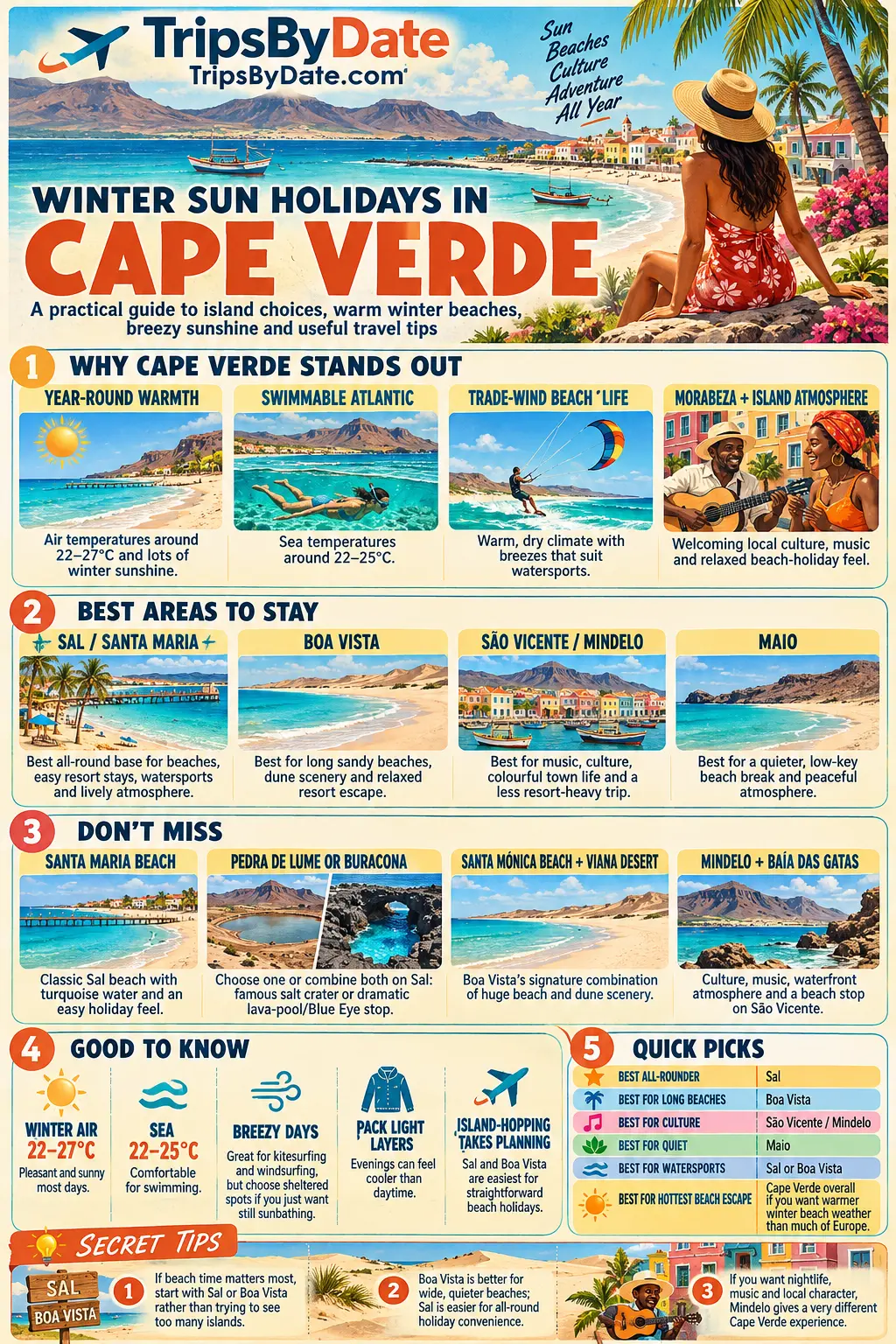
Cape Verde sounds like the sort of place someone recommends at a dinner party and then refuses to explain properly. Is it African? Portuguese? Tropical? Full of beaches? Yes, yes, sort of, and emphatically yes. But winter sun holidays in Cape Verde are not all the same. You could spend a week on Sal alternating between turquoise-water views and long seafood lunches, discover Boa Vista's sweeping dunes, listen to live music in Mindelo or hike between dramatic green valleys on Santo Antão. The surprising part is just how different these islands feel.
Quick answer: For most first-time UK visitors seeking a straightforward winter beach holiday, start with Sal for Santa Maria's restaurants, beaches and excursion choice, or Boa Vista for quieter resort holidays and huge sandy landscapes. Choose São Vicente for music and culture, Santo Antão for serious scenery and walking, Santiago for history and local life, and Fogo for an extraordinary volcanic adventure. Cape Verde offers warm, often dry winter days, but wind, strong currents and island logistics are the details that turn a good choice into a great one.
Our two illustrated guides show the accessible beach islands and the more adventurous alternatives. Below, we'll explain what they actually feel like, which trips are realistic, how to taste the local culture and why a holiday here deserves more thought than simply booking the first photograph featuring a palm tree. For broader comparisons, see our winter sun islands guide and winter beach-holiday recommendations.
Where is Cape Verde, and what is a winter holiday really like?
Cabo Verde, also widely known as Cape Verde, is an Atlantic archipelago off the west coast of Africa. It has ten islands, nine inhabited, and a history shaped by African and Portuguese influences. Portuguese is the official language, while Cape Verdean Creole is central to everyday life and culture. The islands use the Cape Verdean escudo; resort businesses may also accept other payment methods, but do not assume every café or village shop will accept a card.
The climate is a big part of the appeal. The official destination tourism website highlights winter as an important season for both sunshine and wind-powered sports. Daytime conditions are typically warm enough for outdoor lunches, beach walks and lounging, while evenings and exposed beaches can feel cooler. The flatter eastern islands are generally arid; western mountainous islands offer dramatic elevation changes and distinct local conditions.
- For sunbathing: Sal and Boa Vista are popular because of their broad beaches and resort infrastructure, but exposed sand can be breezy.
- For swimming: the Atlantic is often relatively warm, yet currents and surf can be fierce. Warm water does not make an unsafe beach safe.
- For walking: the cooler-season weather is attractive for Santo Antão's valleys and Fogo's volcanic landscapes, subject to local conditions and guides.
- For turtles: do not assume winter is nesting season. The tourism board generally places nesting on several islands between June and October.
The crucial distinction: Cape Verde is often a stronger bet for winter beach warmth than the Mediterranean, but it is not an endless summer with no weather hazards. For a useful comparison of actual swimming expectations, read where is hot enough to swim in winter?.
See where your available dates could take you
These are four varied upcoming package-holiday examples from TripsByDate's wider inventory, displayed by departure date. They are not filtered specifically to Cape Verde, winter dates or the islands in this guide. Select your departure airport and dates, explore the possibilities, then confirm prices, flights, nights, transfers and availability with the actual holiday operator.


 SEN • 7 nights
 AI · easyJet holidays

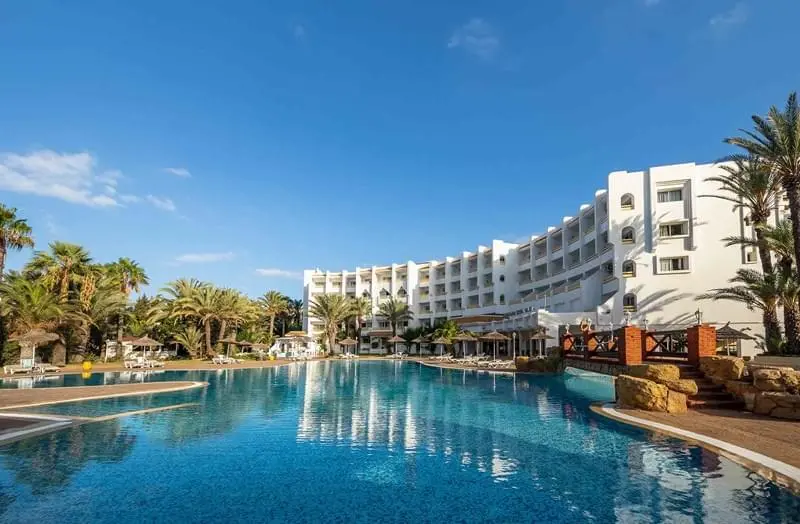 LGW • 7 nightsAI · easyJet holidays
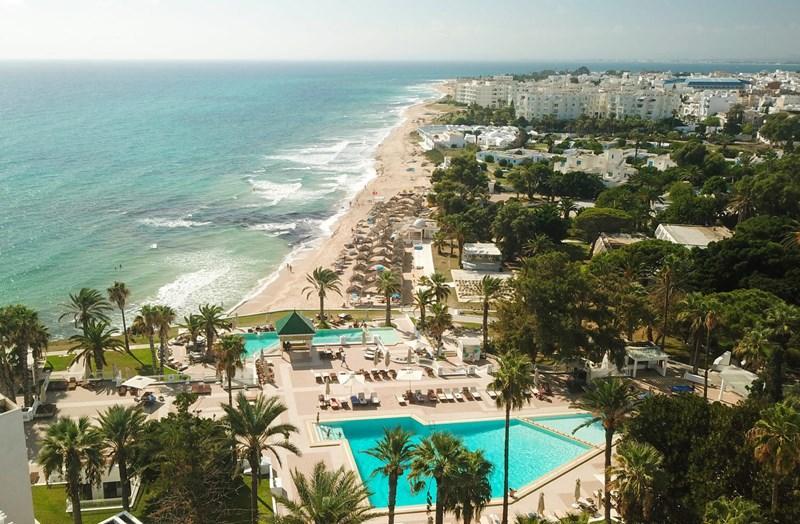 NCL • 7 nightsAI · easyJet holidays
 MAN • 7 nightsHB · First Choice
Which Cape Verde island should you book for winter sun?
Sal: the easiest first-time beach holiday
Best for: couples, friends and families who want an accessible beach base with restaurants, organised excursions, watersports and a choice of package hotels. Santa Maria is the centre of much of Sal's holiday activity. Its beach and pier are ideal for watching fishing boats, strolling in the evening and finding a table where someone else can do the cooking.
Beyond the resort, there is a very different landscape. Pedra de Lume has salt pans within an extinct volcanic crater, while Buracona is known for its rocky coastline and famous Blue Eye phenomenon, which depends on lighting and conditions. Organised island tours commonly include both, but the Blue Eye is an optical effect, not a guaranteed hourly performance. Check conditions and permitted access before thinking the natural pools are a free-for-all swimming attraction.
Better than the standard excursion: make a little time for local Santa Maria life rather than doing nothing but resort-to-bus-to-resort. Visit a proper local café, compare grilled-fish dishes and watch everyday activity around the pier from an appropriate, safe vantage point. Then, if the wind picks up, sit back and admire the kitesurfers who have chosen to treat the Atlantic like an airborne obstacle course.
The trade-off: Sal is convenient, but large parts are dry and sparsely vegetated. If your dream is rainforest-green mountain scenery, you've booked the wrong island. If your dream is sand, sun and a genuinely easy week, that sparseness may be part of the charm.
Boa Vista: long beaches, dunes and space to slow down
Best for: couples seeking a peaceful resort, families happy with a well-chosen hotel, photographers and anyone who considers an empty stretch of sand a proper attraction. Boa Vista's famous Santa Mónica beach has the sort of vast coastline that makes a person feel tiny in the best possible way. The island also has Viana Desert dunes and more arid landscapes than its name might suggest.
Visit Sal Rei, the main town, to see more of ordinary island life than a resort buffet can reveal. A local lunch and an unhurried walk around its streets offer a change from organised excursions. Excursion routes vary, and some beaches and inland tracks require a suitable vehicle and experienced driver. A photograph of an empty beach does not tell you anything about safe swimming or whether a taxi can get you back.
A wildlife note: sea-turtle conservation is important here, but winter visitors should not expect active nesting tours. Ask about reputable conservation projects and avoid activities that disturb protected habitats. The destination tourism board's seasonal guidance is a better starting point than outdated social-media videos.
The trade-off: Boa Vista may feel more remote and hotel-centred, with fewer easily accessible independent restaurants than Santa Maria. For a resort-first week, splendid. For nightly town-hopping, Sal may suit you better.
São Vicente and Mindelo: Cape Verde with the volume turned up
Best for: live-music lovers, culture-minded friends, curious couples and travellers more interested in neighbourhoods than sunlounger availability. The port city of Mindelo is associated with Cape Verdean music, colourful buildings and café culture. It is a brilliant reminder that this country has a personality extending far beyond all-inclusive resorts.
The soundtrack matters. Morna, known for its poetic themes of love, longing, departure and home, is recognised by UNESCO as intangible cultural heritage. Seek out live performances through local venues rather than assuming every bar offers an authentic programme every evening. Spend time around Praça Nova and the historic centre; the beach around Baía das Gatas offers another side of the island.
Culture tip: if you hear the word morabeza, it refers to the warmth and hospitable spirit often associated with Cape Verdean identity. It's not an invitation to treat local people like props in a travel advert. Be curious, polite and interested in their lives; a meaningful conversation may become the best memory of the trip.
Maio: quiet is the whole point
Best for: independent travellers seeking a slower pace, simple coastal pleasures and time away from busy resort strips. Maio has sweeping, relatively undeveloped beaches and low-key towns, but less package-holiday infrastructure. Its appeal is the lack of a packed itinerary, not the availability of endless entertainment.
Before falling in love with a secluded beach photograph, work out accommodation standards, island transport, flight or ferry connections and which restaurants actually operate during your stay. The quieter the destination, the more important the basics become. That is especially true for families with young children and anyone who needs particular medical or accessibility facilities.
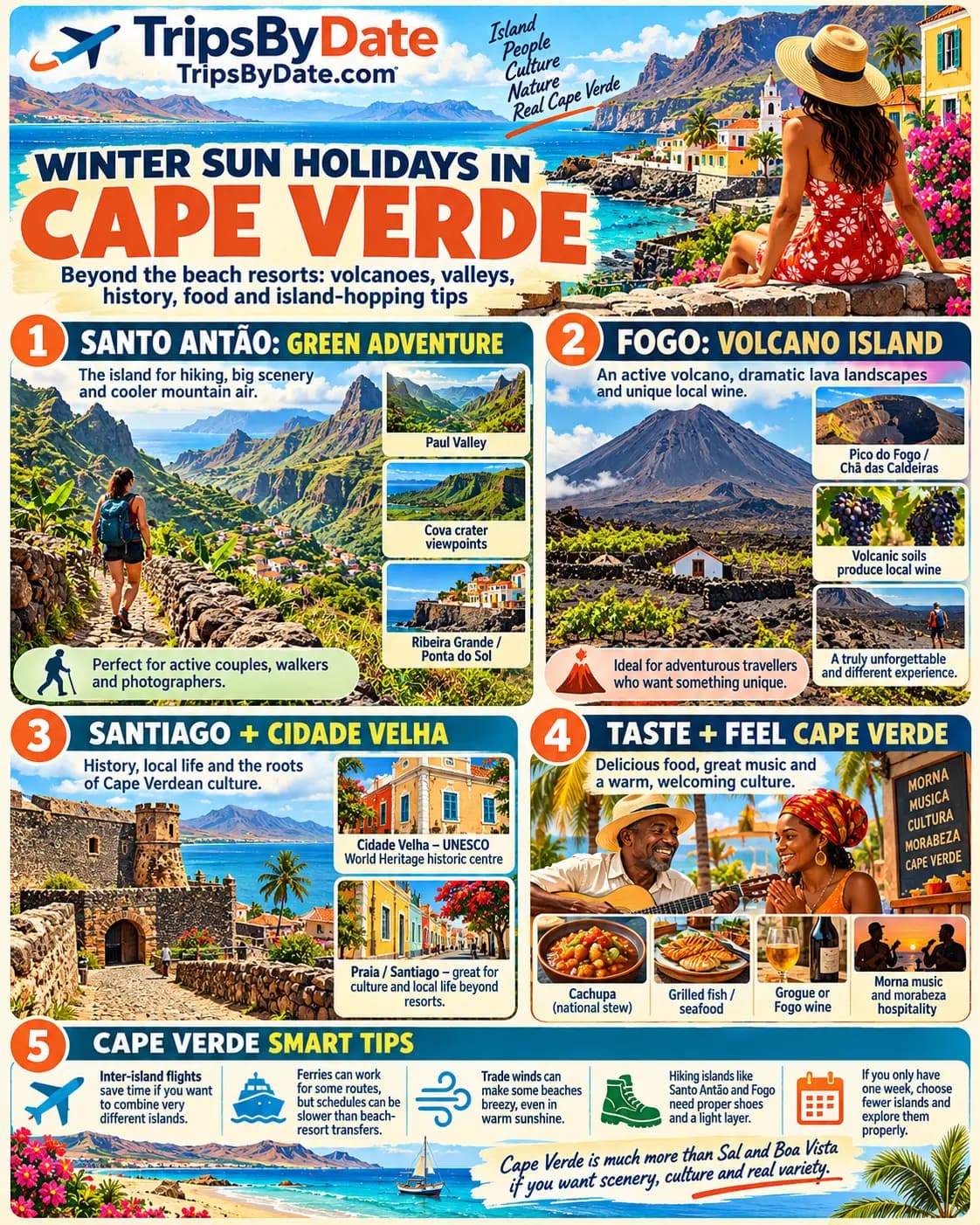
Beyond the resorts: four experiences that change the whole story
Santo Antão: the island that looks like another country
Imagine steep, lush valleys, ridgelines above the clouds, villages tucked into mountainsides and footpaths threading past terraced farms. This is Santo Antão, and it is almost comically different from the flat beaches of Sal. The Paúl Valley, Cova crater area and settlements around Ribeira Grande offer some of the archipelago's most rewarding scenery.
Walking is the big draw, but routes can be steep, exposed or uneven. Use a knowledgeable local guide for demanding trails, check weather and route conditions, and choose hikes to match the slowest member of your group. Santo Antão is normally reached by sea from São Vicente, which means it makes more sense as a planned island combination than a casual afternoon outing from Sal. You won't improve the scenery by trying to see it in an impossible hurry.
Fogo: an active volcano, vineyards and extraordinary resilience
There are scenic vineyard holidays, and then there is Fogo, where grape growing takes place amid volcanic landscapes in and around Chã das Caldeiras. The Cape Verdean Institute of Cultural Heritage describes the extraordinary human settlement within an active volcanic crater landscape. The villages and vineyards reflect generations adapting to a powerful natural environment.
Pico do Fogo is the headline adventure, but this is serious mountain terrain, not a flip-flop excursion. Arrange an experienced local guide, confirm volcanic and access conditions, carry proper equipment and allow time for travel and recovery. The island is better treated as a separate short stay rather than a quick detour from a beach resort. You may come home with wine stories and volcanic dust rather than tan lines alone.
Santiago: where the islands' difficult history deserves your attention
The island of Santiago is home to the capital, Praia, and to Cidade Velha, whose historic centre is Cape Verde's UNESCO World Heritage site. It has immense significance in Atlantic history, including Portuguese expansion and the transatlantic trade in enslaved people. Approach sites such as the old fortress, streets and religious remains with the seriousness that history deserves; this is more than a picturesque backdrop.
Alongside the history, Santiago offers markets, music, local cuisine and mountainous landscapes unlike those on Sal. Explore with a local guide where practical and give the island more than a hurried checklist. A day here can connect the beaches and music of modern Cape Verde to the much bigger story of how its communities developed.
São Nicolau or Brava: the wildcard for people who hate obvious holidays
If the first three alternative islands still sound too well known, consider the hiking landscapes of São Nicolau or the slower village atmosphere of Brava. These are trips requiring more independent planning and flexible transport, not standard bolt-ons to a package beach week. They can be deeply rewarding for experienced travellers, but some islands have limited transport and medical infrastructure. Check the official transport and safety advice before committing.
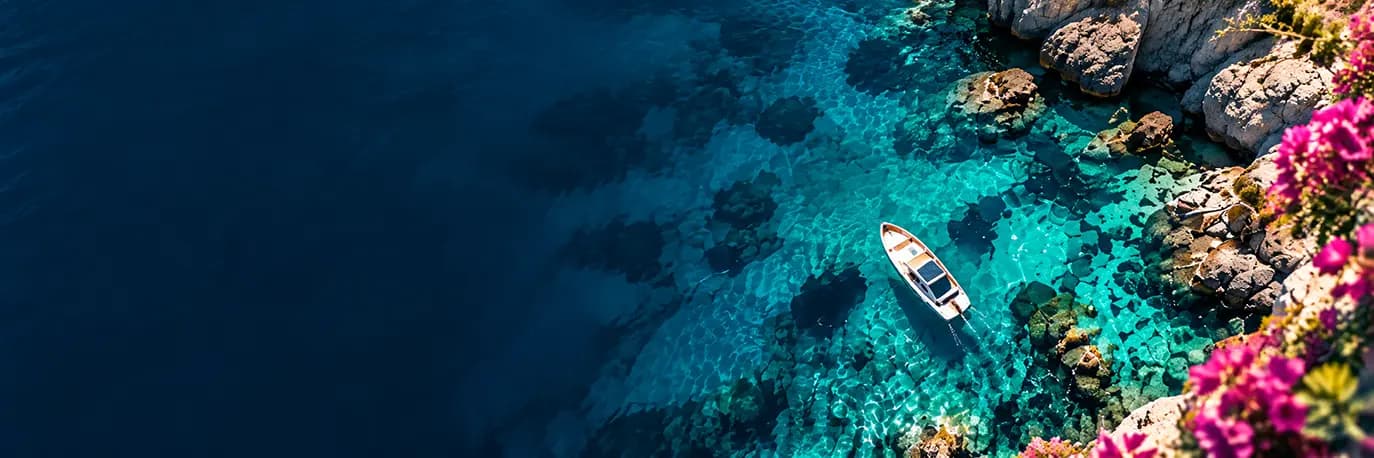
Your next holiday might not be the island you expected
Browse changing package-holiday ideas from your UK airport by departure date. Sal, Boa Vista or somewhere entirely different: explore first, decide second.
Find holidays by dateWhat should you eat in Cape Verde? Start here
Forget the idea that the local food is just what happens when you grow bored of a hotel buffet. Cape Verdean cooking reflects African and Portuguese influences, with island-specific variations and a strong role for corn, beans, fish and locally grown produce.
- Cachupa: the signature slow-cooked stew made with corn, beans and varying vegetables and meats or fish. Versions differ by household and island; leftovers may be fried for breakfast as cachupa refogada.
- Fresh grilled fish: look for the day's catch in a well-regarded local restaurant, with rice, potatoes or vegetables. Ask the price and preparation before ordering.
- Pastéis and other local snacks: different islands have savoury pastries and fried bites worth seeking out in everyday bakeries and cafés.
- Grogue: locally produced sugar-cane spirit associated particularly with agricultural communities; it is strong, alcoholic and not the same thing as a sweet holiday cocktail.
- Fogo wine: an unusual product of the volcanic landscape and a rewarding discovery for adult visitors interested in local agriculture.
A small food challenge: eat one traditional breakfast, one market snack and one proper local dinner away from the hotel's main dining room, choosing places with good hygiene. Ask what is typical here, not merely what is typical in Cape Verde generally. That one word can turn a generic meal into a much better conversation.
Winter sun secrets that make a real difference to your trip
The wind is part of the destination, not a surprise defect
The same trade winds that make the islands brilliant for kitesurfing can make a beach less comfortable for someone who wants to read a novel without holding every page down. Winter conditions particularly favour wind sports, according to official Cape Verde tourism guidance. Check whether your hotel has sheltered pool areas and seating, and compare the beach's exposure rather than assuming two resorts on the same island feel identical.
A turquoise beach isn't necessarily a swimming beach
The UK Foreign Office explicitly warns about strong tides, currents and unpredictable waves around Cape Verde. Swim at beaches with lifeguards, follow flags and never assume clear water means safe conditions. With children, ask your hotel which nearby supervised beach is suitable that day. Your bravest holiday achievement should not be ignoring a red warning flag.
Blue Eye photos depend on the sun's timing
Buracona's famous glowing effect is a natural interplay of light, rock and water. Conditions, season and time of day affect what you see. Ask a reputable local guide about viewing conditions before booking a tour purely for an image you saw online. Even without the perfect optical illusion, the coastal geology is impressive.
Winter is not turtle-nesting season
The archipelago is famous for loggerhead turtles, but the main nesting period generally falls outside the core winter holiday months. If somebody is advertising a guaranteed winter nesting spectacle, ask serious questions. Responsible conservation tourism respects seasonal biology and avoids disturbing animals.
Island-hopping sounds easier than it sometimes is
A ten-island country may inspire a ten-island itinerary. Resist. Flight schedules and sea conditions can disrupt connections, and transfers consume real holiday time. The safest plan for a one-week escape is usually one island; a two-island trip makes sense when the transport pairing is reliable and you allow buffers. São Vicente plus Santo Antão is a more coherent culture-and-hiking pairing than attempting Sal, Fogo, Santiago and Boa Vista in a handful of days.
Who will love Cape Verde — and who might prefer somewhere else?
Couples: choose a sheltered resort on Sal or Boa Vista for quiet beach days; consider a São Vicente and Santo Antão pairing if you prefer music, local restaurants and dramatic walks. A romantic trip does not need a sunset photo session scheduled every twenty minutes.
Families: Sal often makes the simplest first introduction, with established hotels and manageable resort amenities. Compare pool facilities, supervised swimming, children's clubs, meal arrangements and transfer times. Boa Vista can work brilliantly for families who want a resort-led week, but do not assume independent outings are always easy.
Groups of friends: Santa Maria offers a practical base for watersports, dinners and organised excursions. Mindelo suits travellers who put music and local culture ahead of sprawling hotel pools. Book appropriate accommodation rather than expecting every resort to have the same nightlife.
Active travellers: Santo Antão and Fogo offer memorable challenges; choose guided hikes and realistic itineraries. Travellers seeking lush tropical jungle: Cape Verde's drier resort islands are unlikely to deliver it. Consider our warm-weather alternatives guide or broader destination comparison before deciding.
How to plan your first Cape Verde holiday from the UK
- Choose your island before your hotel. A luxurious beachfront room on Boa Vista is not interchangeable with a music-filled stay in Mindelo or a hiking trip on Santo Antão.
- Compare complete packages. Include your chosen UK airport, flight times, baggage, board basis, transfer length, excursions and local taxes. The lowest headline figure is not the total experience.
- Check entry requirements early. For ordinary short visits, British citizen passport holders can generally enter visa-free for up to 30 days, but must meet passport rules and complete pre-registration with the airport security fee as applicable. UK guidance currently says to register at least five days before arrival; tour operators may assist. See official UK entry requirements and the Cape Verde government's TSA guidance.
- Get appropriate insurance. Check activities such as diving, kitesurfing, quad biking and volcano hiking, plus potential medical evacuation. A UK GHIC is not valid here; medical facilities are limited.
- Prepare for sun and wind. Sunscreen, a hat, a light evening layer and proper footwear are more useful than packing six different outfits for identical resort dinners.
- Choose safe swimming conditions. Follow lifeguards and beach flags. A heated or sheltered pool may be more dependable for children than the open Atlantic.
- Respect the place. Ask before photographing people, use responsible guides, respect local communities and buy crafts or food from genuine local businesses when possible.
One worthwhile warning for UK travellers: the Foreign Office highlights gastrointestinal illness risks and limited local medical resources. Follow sensible food and water hygiene, check current health guidance and get appropriate cover. You can be adventurous without making a stomach bug the main event of your trip.
Three realistic ways to spend a week
The classic beach week: Sal
Spend the first couple of days discovering Santa Maria, its pier, the beach and local restaurants. Pick one organised island excursion for Pedra de Lume and Buracona, schedule a suitable watersport or beach walk, then leave genuinely free days for the hotel and seaside. A holiday with empty space in the timetable is still a holiday. In fact, some would argue it is the point.
The quiet beach week: Boa Vista
Stay in a resort whose facilities you actually like, explore Sal Rei and arrange one well-planned dunes-and-beach excursion. Make time for a local meal, but don't feel guilty if most days involve reading, swimming where safe and remembering what uninterrupted conversation sounds like.
The culture-and-mountains trip: São Vicente and Santo Antão
Spend several nights in Mindelo enjoying its streets, markets and music before travelling by ferry to Santo Antão for walking and village stays. Allow a practical buffer before your return flight, as sea conditions may affect connections. This is a different proposition from the standard beach package, but it could be your most memorable Cape Verde holiday.
Frequently asked questions about Cape Verde winter sun holidays
Is Cape Verde hot in winter?
Cape Verde is generally warm and often sunny in winter, particularly on popular beach islands such as Sal and Boa Vista. Wind can affect how warm it feels, and individual weather conditions vary. It is a strong option for outdoor winter holidays, not a guarantee of perfect weather every day.
Which is better for a first visit, Sal or Boa Vista?
Sal is usually the easier all-round choice if you want Santa Maria's restaurants, town life and excursion options. Boa Vista suits travellers prioritising quieter resorts, vast beaches and dunes. Choose on the basis of your hotel and preferred daily routine, not only the island's average temperature.
Can you swim in the sea in Cape Verde in winter?
Sea temperatures can be inviting, but the Atlantic often has strong currents, waves and undertow. Swim only in suitable supervised areas when conditions allow. Warm water does not equal safe swimming.
Is Cape Verde good for families?
Yes, particularly established resorts on Sal and Boa Vista, if you choose accommodation with appropriate facilities and safe, supervised swimming options. Check medical access, transfer details and whether excursions suit children's ages.
Is Cape Verde just beaches and all-inclusive hotels?
No. São Vicente is known for music, Santo Antão for spectacular hiking, Santiago for historic towns and cultural heritage, and Fogo for volcanic landscapes and wine. These islands need more planning, but offer experiences very different from the resorts.
Is it easy to visit several islands in one week?
Not necessarily. Inter-island transport can be affected by weather, changing schedules and connections. For most one-week first visits, one island is simpler. If you want two, consider a practical established pairing such as São Vicente and Santo Antão and allow transfer buffers.
Do UK visitors need a visa for Cape Verde?
British citizens visiting for up to 30 days generally do not need a visa, but passport validity, mandatory traveller pre-registration and the airport security fee must be checked. See the current official rules before departure.
Find the Cape Verde that suits your kind of winter
The most exciting thing about Cape Verde is that the brochure beach is only the opening chapter. One traveller finds their perfect holiday on the sand at Santa Maria. Another falls in love with the music of Mindelo, the valleys of Santo Antão or Fogo's vineyards on volcanic slopes. There is no single perfect island, only the right one for the trip you want.
That's where TripsByDate comes in. Instead of endlessly filling in traditional destination-first search forms, start with your available dates and UK departure airport, then browse upcoming package-holiday ideas in a more relaxed, scrollable way. You may find Cape Verde, or another destination you hadn't even thought to search for. Less searching. More choosing. For more inspiration, see our January winter sun ideas and February holiday guide.
Could your next winter escape start on an island?
Choose your departure airport and browse upcoming package holidays by date. Discover Cape Verde or an unexpected new adventure, then check the live holiday details with the operator.
Find holidays by date