

Best Short Breaks in Croatia
Roman streets, island adventures, remarkable food and a seaside instrument played by the waves.
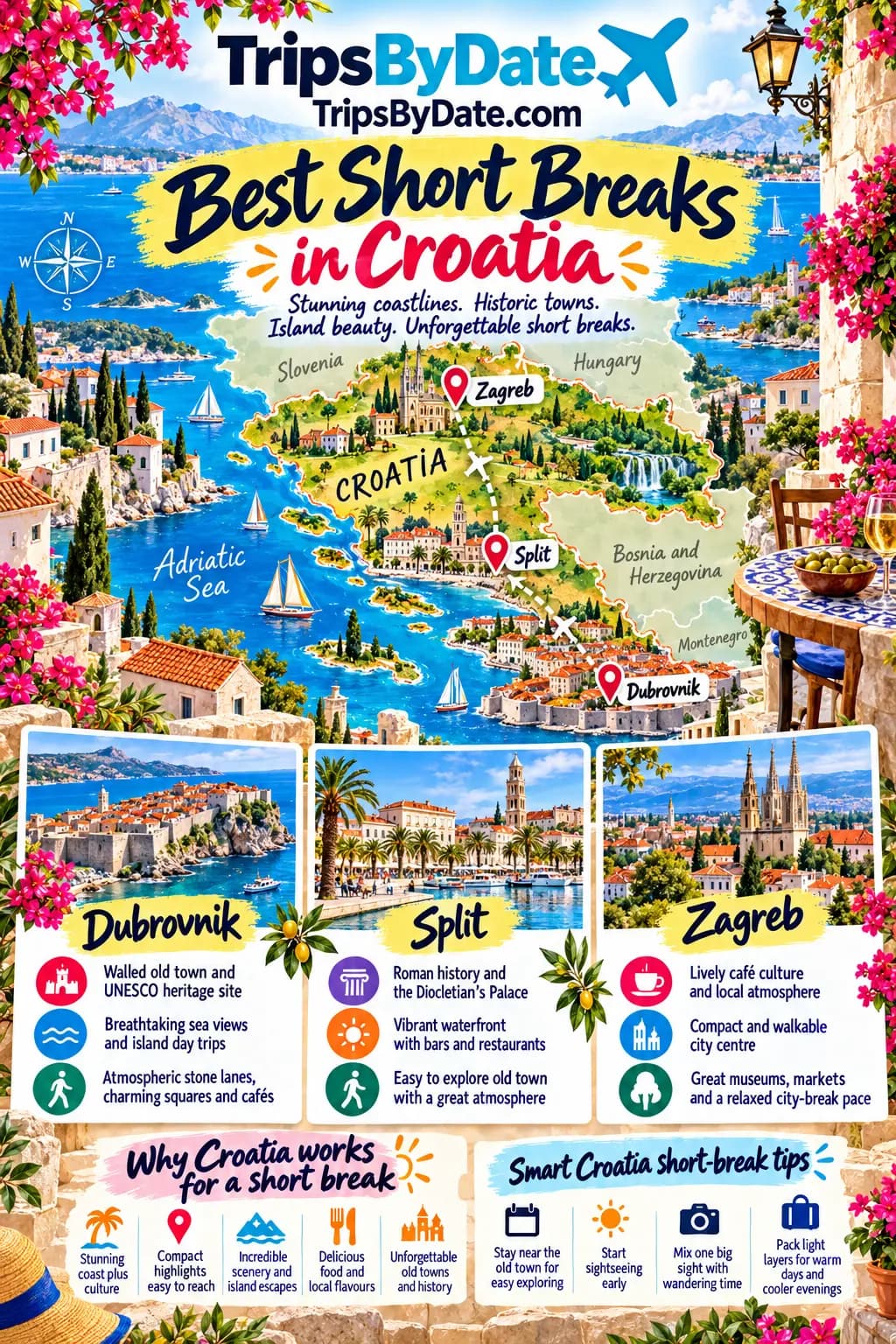
Croatia has a peculiar talent for making a weekend feel like several different holidays. You can drink coffee beside a medieval harbour, have lunch inside a Roman palace that people still live in, escape to a botanical island, or hear the Adriatic Sea play an enormous musical instrument. And that is before anyone has mentioned the food. The best short breaks in Croatia combine one brilliant base with a handful of discoveries, not an exhausting attempt to conquer the entire coastline by Sunday lunchtime.
Quick answer: pick Dubrovnik for dramatic city walls and island views, Split for living Roman history and easy coastal energy, Zagreb for cafés, museums and a year-round city break, Rovinj for romantic Istrian lanes, or Zadar for sunsets, art and an easy-going old town. Šibenik is another strong wildcard for stone streets, fortresses and distinctive architecture. The right choice depends on flight availability, season, what you want to do and how much travel time you can afford.
There is more to Croatia than the image of a perfect turquoise cove, although that image is doing an excellent job of selling the holiday. The country stretches far along the Adriatic and its inland capital has an altogether different personality. For ideas across Europe, explore our European weekend guide and three-day holiday planning tips. Croatia is especially rewarding when you begin with the time you actually have.
Which part of Croatia is best for a short break?
- Classic first visit: Dubrovnik for old-town drama and spectacular viewpoints, or Split for history with everyday coastal life all around it.
- Couples: Rovinj for candlelit harbour evenings; Dubrovnik for unforgettable scenery; Zagreb for creative dates and atmospheric cafés.
- Friends: Split for a lively waterfront and food scene, Zagreb for neighbourhood bars, or Zadar for sunset drinks and relaxed wandering.
- Families: Split's extraordinary palace streets, Zagreb's interactive museums and parks, or a carefully planned boat outing from Dubrovnik.
- Food lovers: Istria around Rovinj for truffles and regional wines; Dalmatia for seafood, black risotto and slow-cooked dishes.
- Unexpected choice: Zadar for sea-powered art, or Šibenik for fortresses and a more intimate historic centre.
The big geographical trap: Split, Dubrovnik and Zagreb are not three neighbourhoods of one convenient resort. Nor is Rovinj just around the corner from Dubrovnik. For two or three nights, choose a single base, with at most one well-planned nearby excursion. Our best three-night breaks guide explains how a sensible plan beats a frantic checklist.
How long does it take to fly from the UK to Croatia?
Allow roughly two to three hours for a direct flight from many UK airports, depending on your starting point and the Croatian airport. Croatia Airlines describes its London direct flights to Zagreb and Split as approximately two hours and fifteen minutes, while direct London-to-Dubrovnik journeys are often around two hours forty-five minutes. These are indicative flight times, not door-to-door travel times or a promise of a flight from every UK airport. Consult Croatia Airlines' route information and compare actual departure and return schedules.
Airport choice really matters. Dubrovnik (DBV) is the natural gateway for Dubrovnik and nearby Cavtat. Split (SPU) is convenient for Split and much of central Dalmatia. Zagreb (ZAG) serves the capital; Pula (PUY) can suit Istria, including Rovinj; and Zadar (ZAD) is useful for the northern Dalmatian coast. Direct flights to coastal airports can be highly seasonal, so an itinerary that looks wonderfully straightforward in summer may involve a connection in winter. Our UK airports guides and airport-comparison advice can help you look beyond the nearest departure point.
For a proper weekend, calculate the time between arriving in your hotel and leaving it, not simply the time in the air. A cheaper late arrival plus a remote hotel can quietly devour the first evening. If possible, compare packages using a well-chosen extra day of annual leave.
See where your free dates could take you
These are four changing examples from the wider TripsByDate package-holiday inventory, ordered by departure date. They are not necessarily holidays to Croatia, the places described here or for a particular number of nights. Choose your UK airport and travel dates on the homepage, then confirm the destination, actual duration, flight times, baggage, transfers, price and availability with the operator.
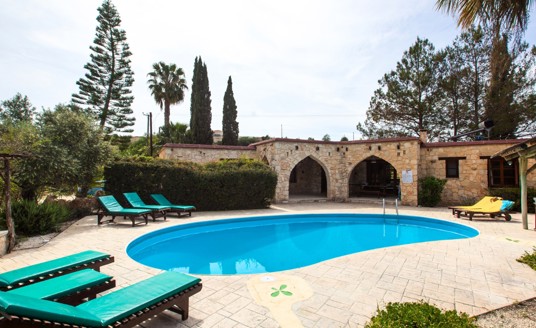


 STN • 7 nights
 SC · Olympic Holidays

 STN • 7 nightsSC · Thomas Cook
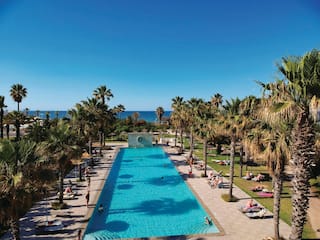 BHX • 7 nightsAI · TUI
 SEN • 7 nightsAI · Thomas Cook
1. Dubrovnik: the walled city with an island escape next door
Dubrovnik announces itself rather dramatically. The old city sits beside the sea inside enormous stone walls, with narrow lanes, church towers and glimpses of blue water appearing between the buildings. It is no surprise that this UNESCO-listed city attracts attention. Yet the secret to enjoying it over a short break is discovering when to step away from the busiest streets.
Explore the limestone-paved Stradun and the smaller lanes climbing away from it. The city walls offer unforgettable views, but the route has exposed steps and little shade, so early or later in the day can be more comfortable in warm weather. Check the official Dubrovnik destination information before building a schedule around individual attractions or excursions. An evening wandering among quieter side streets and finding a good local restaurant can be every bit as memorable as the headline ticket.
The island escape you can actually fit in: Lokrum lies just offshore, with botanical gardens, peacocks, woodland and places to explore away from the Old Town crowds. The official boat normally makes a short crossing from Dubrovnik's old harbour when services are running. More importantly, the reserve has its own entrance fee even if you travel on a private boat. An independent water taxi is not a loophole. Check the official Lokrum tickets, transport and opening information before booking, since schedules are seasonal.
A quieter alternative: Cavtat, south of Dubrovnik, has a picturesque waterfront, pleasant walks and a much gentler pace. It can make a lovely independent short break if the goal is coffee by the water rather than a marathon of city-wall photography. Be realistic about transfers and local connections before using it as a base for Dubrovnik sightseeing.
Best for: couples who want spectacular scenery, friends who appreciate history and food, and families comfortable with steps and warmer-weather sightseeing. For a beach-and-city comparison, see our weekend beach holiday guide.
2. Split: dinner inside an ancient Roman palace
Split offers one of Europe's more improbable urban experiences: the old town is woven through the remains of Diocletian's Palace. This isn't a distant ruin behind a fence. Everyday life happens among Roman walls, narrow alleyways, cafés, homes and shops. It is wonderfully odd to turn a corner from an ancient courtyard and encounter someone carrying shopping home. The emperor might have questions about the gelato menu.
Begin at the Peristyle, the palace's ceremonial heart, then wander without trying to memorise every stone. Explore the atmospheric underground halls where accessible, find smaller courtyards beyond the main routes, and stroll the palm-lined Riva waterfront. The adjoining neighbourhoods make a good contrast to the palace: quieter lanes, everyday cafés and opportunities to eat away from the busiest squares. For local attractions and events use the official Split tourism website.
A green escape: Marjan Hill's woodland routes and viewpoints offer a welcome counterpoint to the stone old town. You do not need to reach every summit or cove to enjoy it; choose a manageable walk suitable for your group and the weather. Friends can spend an afternoon discovering smaller bars and restaurants; families can combine palace exploration with a park or waterfront stop; couples should leave room for a leisurely dinner.
Want an island day? Split has ferry and catamaran connections, but not all islands or sailing schedules suit a short trip. Compare total time including port check-in and your return sailing, and beware itineraries that advertise multiple islands without explaining how little time is spent on each. Jadrolinija's official timetables are a sensible first check. Some services operate more frequently in summer; island day trips should be treated as options, not guaranteed features of any weekend.
Best for: first-time visitors, food-loving groups and travellers who want history and a Mediterranean waterfront in one compact base. There is a reason Split features in our longer short-holiday guide, but you can still enjoy its character in two or three nights.
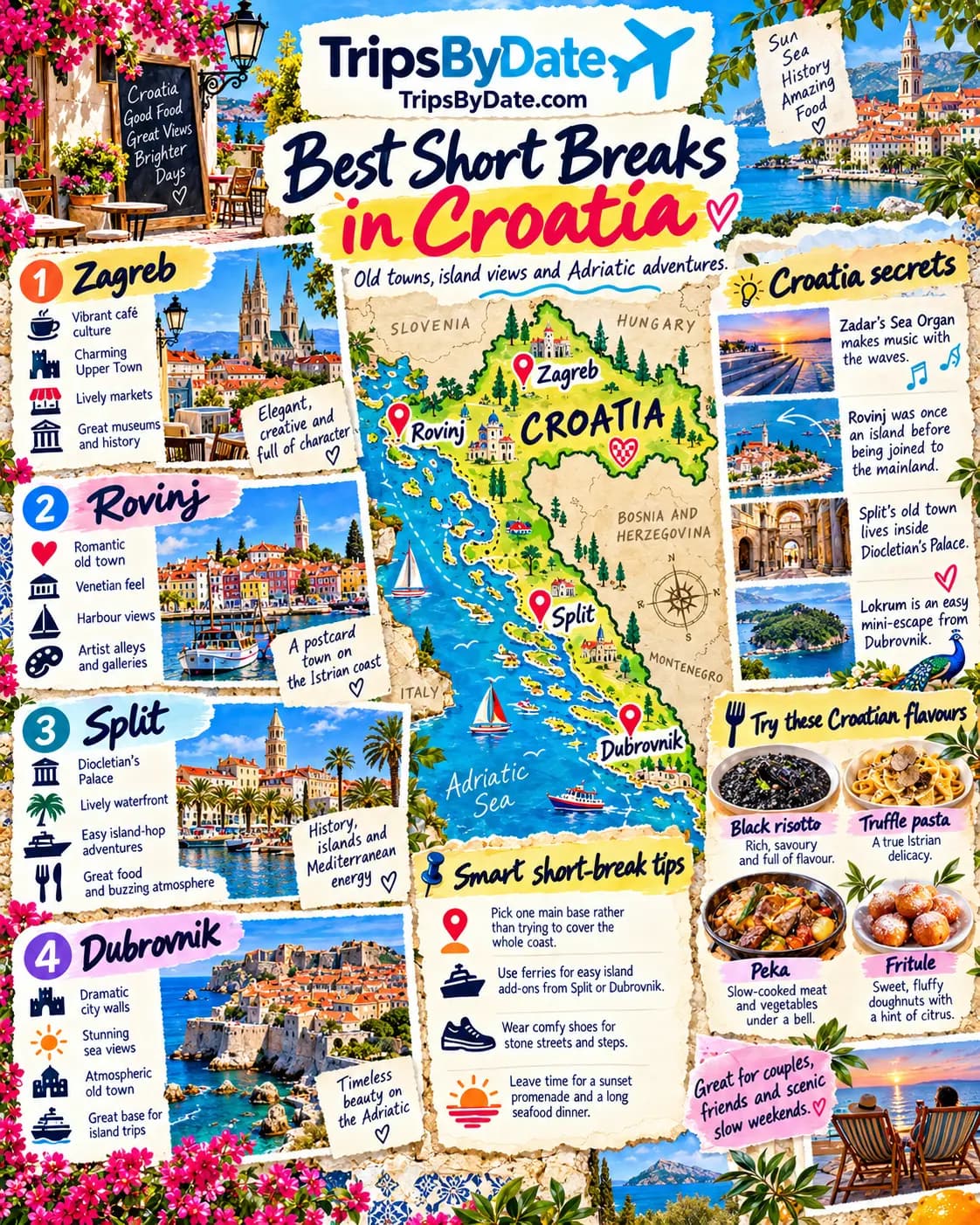
3. Zagreb: Croatia's capital does not need a beach to be brilliant
If the coast has convinced you that Croatia only comes with a swimsuit, Zagreb has a surprise. The capital is a lively place of café terraces, food markets, parks, galleries and wonderfully idiosyncratic museums. It also makes a strong year-round option when seasonal coastal flights become less convenient. Stay close enough to explore the central districts on foot or by tram rather than spending your break commuting between landmarks.
Start around Ban Jelačić Square and Dolac Market, where local produce, market stalls and everyday rituals make excellent people-watching. Walk towards the Upper Town's older streets and viewpoints, and enjoy a slow coffee in Tkalčićeva or the surrounding neighbourhoods. Zagreb's official 72-hour city itinerary is an excellent source for planning by area.
The world's most relatable museum? The Museum of Broken Relationships displays personal objects accompanied by stories of relationships that ended. Some are hilarious; others are unexpectedly touching. It is a remarkably original experience, although not the most tactful choice if you are trying to announce a surprise engagement.
Look out for the city's distinctive Saturday coffee culture, known as špica, when central cafés and streets become social gathering places. Zagreb also has parks, independent design, interesting food and an array of unusual museums. For families, choose something interactive; for friends, combine a gallery, a market and an evening of bar-hopping; for couples, follow a gentle walking route through Upper Town and its leafy surroundings. The official city guide explains Zagreb's local café traditions.
Best for: winter and shoulder-season city escapes, lovers of food and culture, and anyone who wants to discover the country beyond its coastline. It also makes a strong candidate for a three-night European city break when the total trip cost and flight schedule align.
4. Rovinj: a romantic old town that used to be an island
Rovinj, on the Istrian peninsula, may be the most charming argument in favour of doing absolutely nothing for an afternoon. The old town rises from the harbour in a cluster of colourful buildings, narrow cobbled streets and little galleries. The houses look as though someone tried to arrange the perfect postcard and accidentally built a town.
Here is the secret: the historic centre really was an island until the channel separating it from the mainland was filled in during the eighteenth century. Follow Grisia Street through the old town, browse artists' workshops and climb towards St Euphemia's church for sweeping views. You can learn more about the town's island history and architectural details from the official Rovinj tourism portal.
Rovinj is also a good doorway into Istrian food, including regional olive oils, truffles, fresh seafood and local wines. Do not assume everything described as truffle-flavoured has the same quality or content; ask what is actually included, and explore local producers or specialist shops. The Golden Cape woodland area is another good option for a walk or bike ride when you want a break from picturesque harbour streets.
The logistical catch: Rovinj does not have its own commercial airport. Pula can be a convenient arrival point when suitable flights operate, but you need to factor in ground transport, and schedules are not identical year-round. This is a beautiful couples' escape and a relaxed option for friends, though families should think about cobbles, slopes and whether they would prefer a base closer to a beach.
5. Zadar: where the sea plays music
Zadar is an inspired short-break choice for people who want Roman and Venetian history but also enjoy something genuinely unusual. Its compact old town has attractive squares, waterfront walks and easy opportunities for relaxed meals. You can visit historic churches, enjoy cafés and still save the highlight for sunset.
On the seafront, the Sea Organ is built into broad stone steps and uses waves to push air through pipes beneath them. It creates unpredictable tones as the water moves. Beside it, the Greeting to the Sun is a large light installation that becomes especially atmospheric after dark. Yes, the sea really is providing the soundtrack. The official Zadar tourism guide explains the installation's unusual engineering and location.
Make a memorable evening: arrive before sunset, take time to listen, then stay to see the lights after dark. On a calm night the musical effects can be gentler; after waves and wind, they may be more dramatic. Either way, you are watching a public artwork that is continually changing rather than a predictable show with a fixed starting time.
The wider region offers islands, beaches and natural scenery, but be cautious about adding ambitious boat trips to a very short break. For families, the waterfront installations make an entertaining accessible idea, while couples and friends can turn the whole evening into a slow food-and-sea outing. The regional tourist board has additional ideas for sightseeing and nearby excursions.

Have a free weekend? See where Croatia could fit
Dubrovnik, Split, Zagreb or somewhere you had not considered? Start with your departure airport and available dates on TripsByDate, explore the changing package-holiday selection, and check the operator's full trip details.
Find holidays by date6. Šibenik: a wonderful wildcard between the obvious names
Šibenik is a rewarding option for visitors who prefer compact historic centres, coastal views and fewer headline-city expectations. Stroll through stone lanes and small squares, admire the celebrated Cathedral of St James, and look towards the town's historic fortresses for a different view of the coastline. Its UNESCO-listed cathedral is particularly notable for its architecture and sculpted stone details.
Why it works: you can enjoy a genuine old-town atmosphere without feeling obliged to do a huge list of blockbuster sights. Depending on where you land, Šibenik may involve a longer transfer than simply staying in Split or Zadar. Check the actual journey before promising a group that everything is ten minutes away. For nature lovers, the wider area also provides access to national parks, but an organised day trip can consume a large portion of a two-night holiday.
About those waterfall photos: Krka and Plitvice are wonderful natural attractions, yet both have park rules, ticketing arrangements, transport considerations and seasonal variation. They are not interchangeable quick diversions, and Plitvice in particular should not be assumed to be an easy afternoon detour from every coastal base. See the official Plitvice Lakes National Park site when considering a visit. Planning carefully is considerably more fun than racing against the closing time of a car park.
What to eat in Croatia: five delicious reasons to leave the hotel
Every Croatian region has its own culinary identity. The coast has strong Mediterranean influences, inland areas offer heartier dishes, and Istria has distinctive Italian connections. You will get a much richer impression of the country if you ask what is local to the particular town instead of just ordering the same generic holiday menu three nights running.
- Crni rižot: black risotto, usually made with cuttlefish or squid ink. Delicious, dramatic and not recommended immediately before a close-up holiday selfie if you're worried about your teeth.
- Peka: meat or seafood with vegetables slow-cooked beneath a bell-shaped lid, often requiring advance ordering. Ask whether the restaurant serves it and how much notice is needed.
- Istrian truffles: often served with pasta, eggs or local specialities. Confirm whether you're getting fresh truffle, preserved truffle or flavouring.
- Fritule: small fried sweet treats, especially welcome after a chilly or festive evening of walking.
- Regional seafood, olive oil and wine: a simple lunch at a genuine local restaurant can be more memorable than a complicated dinner with an enormous sea-view surcharge.
Try a different kind of souvenir: a local olive oil, handmade product or small food speciality can be a lovely reminder of Croatia. Check cabin-baggage liquid restrictions before buying that beautiful bottle of oil on the first afternoon. Our weekend total-cost guide is useful if you're deciding which experiences deserve the budget.
For couples, friends and families: three very different Croatian escapes
For couples: try Rovinj for intimate evening strolls and Istrian food, or Dubrovnik for dramatic coastal scenery. One memorable experience, one excellent dinner and time to explore together beats forcing seven ticketed attractions into a romantic weekend. There is absolutely no romance in arguing over which bus stop serves your fourth museum.
For friends: Split makes a lively combination of markets, history, bars and an optional boat adventure. Zagreb is excellent for cafés, unusual museums and neighbourhood evenings. If the group has different budgets, agree the big shared expense in advance and leave meals flexible. Our friends' weekend guide has more advice for keeping everyone happy.
For families: choose a manageable base with easy transfers, a hotel location that suits small legs and one activity everyone will enjoy. Split's palace, Zagreb's interactive attractions or Zadar's waterfront art all offer excellent conversation starters. Allow for weather, swimming conditions, sun protection and rest time. A child who has spent the afternoon looking for the Sea Organ may not appreciate a spontaneous three-hour history lecture on the way back to dinner.
When is the best time for a short break in Croatia?
Late spring and early autumn often strike a helpful balance for city walking and coastal sightseeing, while summer brings more beach weather, longer evenings and typically more flight and ferry options, along with busy attractions and heat. Winter is different again: Zagreb remains a compelling city destination, but many coastal tourism services, direct flights and boat routes reduce their schedules.
None of this means that Croatia has a single perfect month. Consider your actual interests: for swimming, check sea conditions and beach facilities; for sightseeing, assess likely temperatures; for island excursions, check ferry operations; and for a city break, focus on flight times and whether the things you want to see will be open. You can also browse our holiday ideas by month or compare the trade-offs in September weekend breaks.
A sensible three-night Croatia plan
- Arrival evening: transfer to one well-chosen base, take a gentle neighbourhood walk and enjoy a local meal. Resist the urge to book a complicated excursion before you have even found the hotel entrance.
- First full day: do the main city or old-town sights earlier, then choose a slower food, waterfront or museum experience in the afternoon.
- Second full day: add one worthwhile contrast, perhaps Lokrum from Dubrovnik, a Marjan walk from Split, a relaxed seaside outing from Rovinj or a museum-and-market day in Zagreb.
- Departure day: enjoy a bakery breakfast or final scenic walk, allowing enough time for the real transfer, airport formalities and possible transport disruption.
For two nights, omit the excursion unless it genuinely fits. For four nights, you can add a day trip without eating into the best parts of the city. These differences may sound obvious, but the single most useful short-break secret is that a satisfying trip has more usable time than transport time. Our four-night break suggestions offer ideas if you can extend your escape.
Ten practical Croatia short-break tips worth remembering
- Check seasonality: direct UK flights to coastal cities and island boat trips may operate on different schedules outside summer.
- Pick one base: Dubrovnik, Split, Rovinj and Zagreb are each different holidays, not an easy single-weekend itinerary.
- Read the complete package details: airport, hotel location, board basis, baggage, transfers and flight times can change the value dramatically.
- Use proper footwear: polished old-town stone, steps and uneven lanes are charming until you try them in slippery shoes.
- Protect the hottest hours: outdoor walls, viewpoints and steep stone lanes can become uncomfortable in midsummer.
- Check island admission as well as boat fares: Lokrum is the classic example where a private boat does not remove the reserve entrance requirement.
- Confirm return ferries: check the final sailing and whether tickets reserve a particular departure before leaving the mainland.
- Don't assume beaches are sandy: many Croatian swimming spots are rocky or pebbly; check access, shade and facilities before promising a perfect family beach day.
- Try local food: Istria, Zagreb and Dalmatia have distinct culinary personalities worth exploring.
- Leave unscheduled time: the best Croatian memory might be a quiet harbour at sunset, not the attraction you queued for.
For broader UK travel checks, review the official FCDO advice for Croatia before booking and again before travelling. Croatia uses the euro, but travel and entry requirements should always be checked for your own circumstances rather than copied from an outdated travel blog.
Frequently asked questions about short breaks in Croatia
Is Croatia good for a weekend break from the UK?
Yes, especially when a direct flight and convenient airport transfer give you two or three usable days. Dubrovnik, Split and Zagreb all work as single-base breaks. Check the route's seasonal availability before choosing.
How many nights do you need in Croatia?
Two nights can work for a focused city break, while three or four nights allow more space for food, viewpoints and one carefully selected nearby excursion. An extended coastline tour needs substantially longer.
Is Dubrovnik or Split better for a short break?
Dubrovnik is particularly good for dramatic city-wall scenery and a compact historic atmosphere; Split combines Roman heritage, waterfront cafés and connections towards islands. Choose based on flights, transfer, interests and season rather than a universal winner.
Can you visit Croatian islands on a weekend?
Sometimes, yes. Lokrum is a straightforward seasonal excursion from Dubrovnik, while Split serves multiple islands. Always check the full ferry timetable and return sailing, not just the outward journey.
What is the best Croatian destination for couples?
Rovinj offers romantic Istrian streets and food; Dubrovnik excels in memorable views; Split offers evening atmosphere; and Zagreb suits couples who prefer culture, galleries and interesting cafés.
Where should families go in Croatia for a short holiday?
Split, Zagreb and Zadar offer rewarding, varied activities without demanding complicated island transfers. The best option depends on ages, mobility, beach preferences, hotel location and flight timing.
Is Croatia expensive for a short break?
Costs vary significantly by place, date and inclusions. Popular coastal areas during summer can be costly, while travelling outside peak demand or choosing a city base may improve value. Compare total costs, not just the first advertised flight or hotel rate.
Can I visit Dubrovnik and Split on the same short break?
It is possible with enough time, but generally not a good use of just two or three nights. The road journey and any transport connections consume hours better spent discovering one city properly.
Do I need a car for a Croatia city break?
Usually not for a compact city-focused stay in Dubrovnik, Split, Zagreb or central Zadar. For remote coves, countryside or some Istrian itineraries a car may help. Parking and restricted old-town access can also create inconvenience.
Is Croatia worth visiting outside summer?
Definitely for culture-focused breaks, especially Zagreb and quieter coastal sightseeing. However, flight patterns, island excursions, attractions and seasonal restaurants may differ, so check the specific experience you want rather than assuming a summer programme runs all year.
What are some unusual things to do in Croatia?
Listen to Zadar's wave-powered Sea Organ, explore Zagreb's Museum of Broken Relationships, discover how Rovinj was once an island, visit Lokrum's botanical reserve or dine among the living remains of Diocletian's Palace in Split.
Find your next Croatia escape the TripsByDate way
Here's the enjoyable problem with Croatia: there are many excellent choices. Rather than filling in endless destination-first searches, start with the UK airport you can actually reach and the dates you can get away. TripsByDate lets you browse changing package-holiday options by departure date, making it easier to notice destinations you might otherwise have overlooked. If a Croatian getaway catches your eye, check the package's exact flights, duration, hotel, transfers and price directly with the provider. It is about less searching and more choosing, with the final booking made through the operator.
A final thought before completing the Short Breaks collection: Croatia is a splendid reminder that a memorable holiday needn't include twelve hotels and a spreadsheet of ferry connections. Sometimes it is a Roman doorway, a plate of local food and an evening by the sea that stay with you longest. And if the sea starts playing music in Zadar, you may finally have found a destination with better holiday entertainment than your own playlist.
Less searching. More choosing.
Your next short break starts with the dates you have free. Browse upcoming package-holiday ideas from UK airports on TripsByDate, then confirm availability and details with the operator.
Find holidays by date