

Best Package Holidays Under £300: More Holiday for Your Money
A realistic guide to turning a tight budget into beaches, city adventures, delicious food and a holiday that actually feels like a holiday.
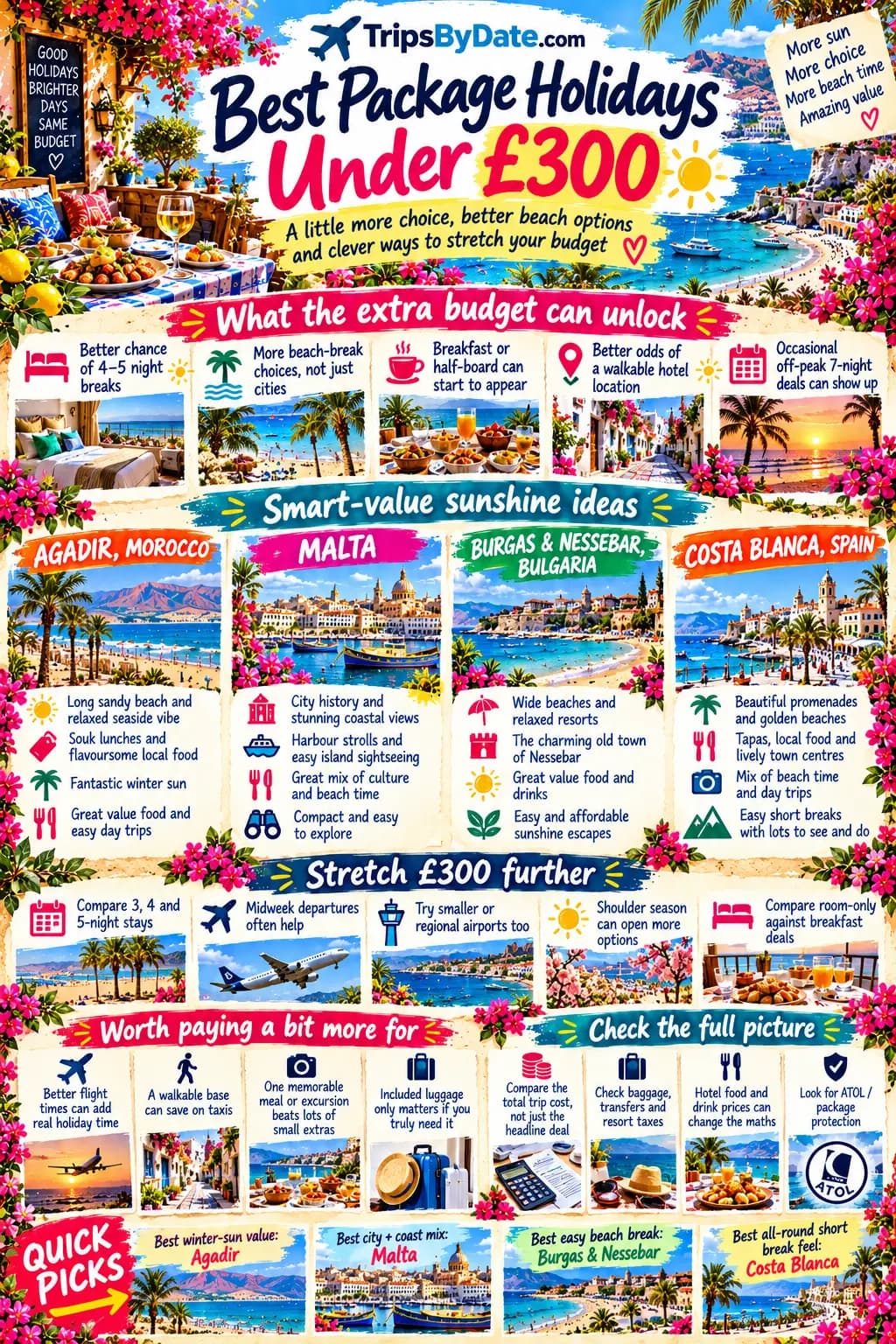
A holiday under £300 per person can sound like the sort of bargain that vanishes as soon as you click on it. But the interesting part of this budget is not simply finding somewhere to sleep abroad. It is working out whether you can get enough time, a decent location and a little room for adventure without a cheap-looking deal becoming an expensive mistake. Think breakfast in a Maltese square, a Black Sea beach followed by a medieval old town, or a Moroccan market where the most memorable souvenir might be the lunch. The challenge is finding the right package holiday under £300 for your actual dates, not chasing a fantasy offer that exists for somebody else's airport.
Quick answer: Package holidays under £300 per person are worth looking for in places such as Malta, mainland Spain, Bulgaria's Black Sea coast and Agadir in Morocco, particularly when dates and trip lengths are flexible. At this budget, a short flight-and-hotel break is generally a more realistic starting point than a peak-season week at a high-end beach resort. None of these destinations is guaranteed to be available below £300: the real test is the live package total for your departure airport, dates, travellers and inclusions.
This guide focuses on what £300 changes compared with £200, the holiday experiences worth prioritising, and a few clever ways to make a modest budget feel surprisingly generous. If you are trying to squeeze the absolute lowest price from a trip, start with our package holidays under £200 guide. Here, the aim is something slightly different: a better holiday, not merely a cheaper receipt.
What does a £300 package holiday actually buy?
A proper comparison starts with the definition. A flight-and-hotel package generally combines transport and accommodation in one protected arrangement, but what is included varies. Breakfast, airport transfers, checked luggage and even the type of room should never be assumed. ABTA explains the difference between a package and other travel arrangements.
At the £300 level, think in terms of opportunities, not entitlements:
- Two or three nights in a city: potentially enough for a proper neighbourhood, food and sightseeing break if flight times work.
- Four or five nights by the coast: worth hunting for outside the busiest travel periods, particularly if you can travel midweek.
- A week away: an occasional possibility on selected dates and less sought-after combinations, not something to assume will be available.
- Breakfast or a better hotel location: sometimes a more valuable upgrade than extra nights in a remote property.
- A hotel with a pool: possible, but check whether it operates in your season and whether the room price is genuinely for the travellers in your party.
The phrase “under £300 per person” also matters. A headline based on two adults sharing is not a £300 holiday for two people, and a solo traveller may see a different price. A family of four should compare the actual total, including children's ages and room arrangements, rather than multiplying a tempting advertised figure.
The £200 versus £300 question: what is worth the extra money?
An extra £100 per person does not automatically buy another star on the hotel sign. It may instead buy something more useful: better flight timings, a room in a walkable district, an extra afternoon abroad or a meal plan that genuinely suits you. Conversely, if the £200 package already has convenient flights and a comfortable central hotel, paying another £100 just because the brochure uses the word “premium” is probably not a victory.
Try comparing both options using the same three questions: How much of the trip will I actually enjoy? What will I have to spend once I arrive? What problem does the more expensive package solve? A balcony is lovely. A balcony overlooking a dual carriageway, while the hotel is a taxi ride from dinner, is a less convincing upgrade.
First, find the holidays that actually fit your dates
Most budget searches become frustrating because travellers choose a perfect destination and then try to force an imperfect budget around it. With TripsByDate, you can reverse that process. Start with the UK airport and departure dates that suit you, browse the holiday possibilities, then get curious about destinations you might otherwise have ignored.
Visit the TripsByDate holiday browser regularly when you have flexibility. An interesting package may appear on a departure day you hadn't thought of, or from an airport you can reasonably reach. Treat the listings as discovery leads, then check the booking provider's current price, room, flight details and availability. TripsByDate does not guarantee that any particular holiday is available for under £300, and the examples below are not filtered to that budget.
Explore the available holidays, then check the real total
These changing examples are drawn from TripsByDate's broader package listings. They are not guaranteed to cost under £300 or match the destinations in this guide. Use them to discover where your dates might take you, then verify every detail directly with the provider.


 SEN • 7 nights
 AI · easyJet holidays

 LGW • 7 nightsAI · easyJet holidays
 LGW • 7 nightsAI · easyJet holidays
 BOH • 7 nightsB&B · First Choice
Four destinations worth checking, for four very different holidays
The images give you four sensible starting points. They are places to investigate, not verified £300 offers. A destination can be good value once you're there and still have expensive flights from your local airport. Your dates decide whether it belongs on the shortlist.
1. Agadir and Taghazout, Morocco: sunshine, surf culture and a completely different lunch break
Agadir can make an appealing package-holiday base if your ideal escape involves a long Atlantic beach, outdoor cafés and a few hours of wandering beyond the hotel. It is especially worth investigating when you want a change of atmosphere without choosing a resort entirely for the swimming pool. The nearby surf-oriented area around Taghazout has a different feel, but check your hotel location carefully: accommodation marketed under the broad Agadir area may not be near Agadir's promenade.
For a memorable low-cost day, explore the atmosphere of Souk El Had, where shopping is about everyday goods as well as gifts. Try a bowl of harira, a traditional tagine or amlou, a Moroccan almond-and-argan spread, where available. A guided cultural outing or food experience can be worth saving for, but an ordinary market wander followed by a good local lunch may be plenty of adventure.
The budget trap: picking a secluded surf hotel and then paying for transport into town every evening. Another is treating “winter sun” as a promise of hot swimming water. Agadir can be attractive for winter walks and outdoor lunches while the ocean is distinctly less cooperative. Check weather, hotel heating or pool facilities, and current UK advice for Morocco before booking.
An unusual angle: instead of spending the entire trip on the promenade, find a reputable local excursion with cultural or nature interest. Check journey time, operator standards and what's included. If you only have three nights, one well-chosen outing beats spending half the holiday in a minibus.
2. Malta: a holiday where the old streets do most of the entertaining
Malta offers an attractive alternative to the classic inexpensive beach break: you can spend a few days exploring Valletta, the Three Cities, Mdina and harbourfront neighbourhoods without needing an enormous entertainment budget. A proper lunch can be followed by a walk through centuries of architecture. For a simple food mission, compare bakeries serving pastizzi, small savoury pastries, and make an excuse to stop for another one.
Choose your base with transport in mind. Valletta and Sliema offer different styles of stay, but both can be practical starting points for sightseeing. Malta's compact appearance on a map is misleading when traffic and transfers are involved. Plan fewer stops and give yourself time to enjoy them.
The budget trap: staying at the cheapest isolated hotel and discovering you need expensive taxis to enjoy the places you came to see. Also, not every attraction is free. Check opening hours and admission charges through Heritage Malta. The spectacular view from a street or harbour doesn't need an admission ticket, but some of the interiors and archaeological sites do.
A better trip idea: combine a harbour crossing, an old-town wander and a street-food lunch in one day. It feels like three different experiences without three different excursion prices. In cooler months, choose Malta for culture, walks and food rather than expecting tropical beach weather. For more seasonal context, see our Malta winter sun guide.
3. Burgas and Nessebar, Bulgaria: Black Sea beaches with a medieval plot twist
Bulgaria's coast is worth exploring if you like the idea of a traditional seaside holiday with something genuinely distinctive nearby. The ancient town of Nessebar occupies a small peninsula, with layered history, old churches, narrow lanes and sea views that make even a casual wander feel like an outing. UNESCO lists the Ancient City of Nessebar as a World Heritage Site. That is a considerably more interesting afternoon than comparing three identical souvenir magnets.
Packages might list broad resort areas rather than Burgas or Nessebar itself. Check the exact hotel address, journey from the arrival airport and travel options to the old town. The coast's holiday atmosphere is highly seasonal, so a cheap room outside the summer season may come with reduced resort services, quieter streets and weather unsuitable for a beach holiday.
The budget trap: thinking a low local restaurant bill automatically means the entire holiday is cheap. If suitable package flights are scarce on your dates, the total may fail the £300 test. If you are travelling with children, check whether pools, entertainment and food outlets will be operating rather than relying on peak-season photographs.
Make it memorable: choose one afternoon to explore Nessebar slowly, look for regional Bulgarian dishes such as shopska salad and banitsa, and leave room for the beach if conditions suit. This is the kind of holiday where a cultural detour can become the highlight rather than an expensive organised excursion.
4. Costa Blanca, Spain: a beach break with more than one personality
The Costa Blanca is a useful search area because the holiday experience varies considerably between towns. Benidorm can suit people who want a lively, highly developed resort; Alicante combines a city centre with the sea; Altea offers a different old-town atmosphere; and Villajoyosa brings colourful buildings and a distinctive coastal character. These aren't interchangeable places merely because they share a stretch of coastline.
If you find a convenient package, try mixing a beach morning with a historic neighbourhood or local market afternoon. A town where you can walk to food and attractions may beat a cheaper hotel with a grander pool but an awkward journey every time you leave it. The area's transport options can make exploration possible without hiring a car, but check the actual routes, timetable and last return service for your specific base.
The budget trap: the ultra-cheap room that is miles from the beach, a board basis that encourages expensive dining, or airport transfers that erase the package saving. If you're tempted by a popular resort, ask what you want out of the evenings: nightlife, family meals or peace and quiet. The best bargain is not necessarily the one in the loudest location.
A small adventure: make one day about the contrast between coast and old town. Eat somewhere away from the most obvious seafront strip and see a different side of the region. The wider Spanish coastline is worth comparing too, but start with the arrival airport, the hotel neighbourhood and what you can do without a car.
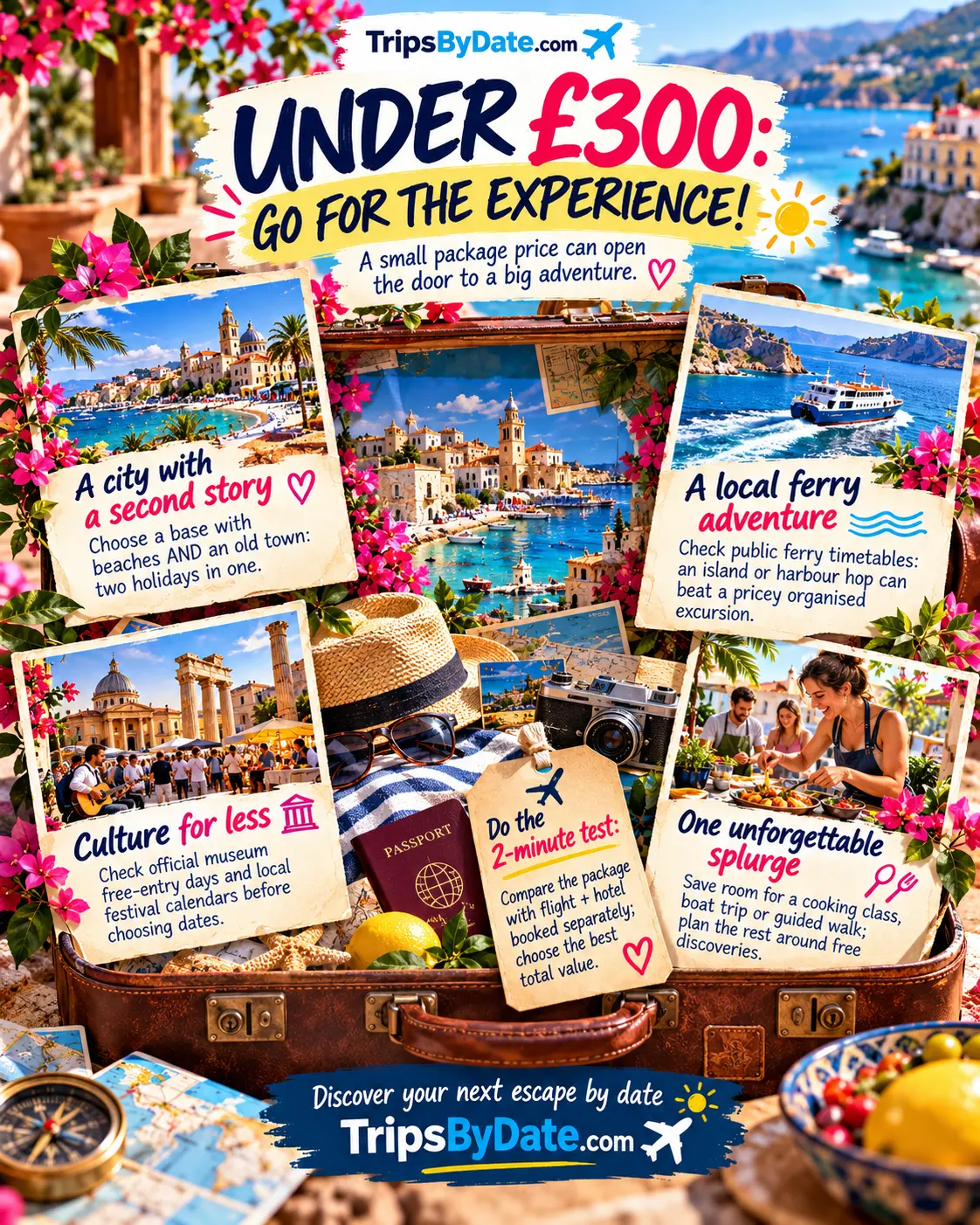
The surprisingly effective strategy: choose a holiday with a second story
A package holiday can feel much bigger than its budget if your base gives you two experiences in one. A beach resort beside a fascinating town, a historic city near a coastline, or a walkable harbour with an affordable public transport connection can turn three nights away into something you will talk about for months.
Think about the free or low-cost experiences you want before choosing the hotel:
- Beach plus old town: ideal if one traveller wants a sunlounger and the other gets restless after seventeen minutes.
- Harbour plus heritage: an atmospheric walk, an ordinary ferry crossing where available, then cafés and architecture.
- Market plus cooking: enjoy a local food market and choose a simple lunch built around regional specialities.
- Coast plus nature: walk coastal paths where access and conditions allow, rather than buying a boat trip automatically.
- City plus neighbourhood: explore two districts with different personalities instead of racing between ticketed attractions.
There's also a nice financial benefit: a hotel in the right location can reduce the amount you spend trying to manufacture entertainment. You are paying for access to a place, not only a bed.
How to spend your £300 intelligently, rather than using every penny on the booking
The £300 in the title is the package price target per person, not a promise that meals, drinks, transport, insurance and activities can all be included. If £300 is your entire available holiday budget, that's a different and much harder calculation. Work out what you can afford to spend in total before clicking through to any offer.
Work backwards from the experience
Imagine two packages. One offers an extra night in a remote hotel. The other costs a little more per night, but it is near restaurants, the beach and public transport. If the remote hotel adds a taxi journey every evening, you may get more holiday for your money from the shorter, central stay.
A useful comparison is:
True trip cost = package price + UK airport travel + luggage and seating extras + transfers not included + meals and drinks + local charges + activities + appropriate insurance.
Don't double-count anything that is already included. Equally, don't mistake an optional upgrade for a compulsory charge. The purpose is to compare like with like, not invent costs to frighten yourself out of a holiday.
Make one thing special
A wonderful holiday doesn't require a paid experience every day. Choose one outing, one memorable meal or one small indulgence that genuinely matters to you, then build the rest of the stay around beaches, parks, streets, markets and viewpoints.
You might choose a guided food walk in Morocco, a historic attraction in Malta, a coastal trip in Spain or a properly planned cultural outing in Bulgaria. The goal isn't to spend for the sake of spending. It's to buy a story you couldn't have had at home.
Question the breakfast upgrade
A breakfast-included package can be excellent value if you enjoy a big breakfast and expect to spend the day exploring. But it isn't automatically cheaper than a room-only stay near cafés and bakeries. Compare the package difference with what you would actually eat, not with an imaginary daily three-course breakfast that nobody needs.
The same goes for half board. If your holiday dream involves sampling local restaurants, paying extra to eat every evening at the hotel may defeat the entire point. If you want to stay beside the pool and relax, a well-chosen meal arrangement might save money and decisions. The best board basis matches the holiday you intend to have.
When to book: the research doesn't support a magic day
You will see confident claims about the perfect weekday, booking hour or number of weeks before travel. Be sceptical. Package prices depend on demand, available flight seats, accommodation and the specific dates you want. An empty hotel room is not a bargain if getting there costs a fortune.
MoneySavingExpert's package-holiday guide explains why late discounts can occur when operators need to fill capacity. But Which?'s package-price research demonstrates why early-versus-late rules can change: the best booking point varies with the market, dates and destination. Don't treat either as a guaranteed formula.
A stronger tactic is to compare a real set of dates and act when the package meets your budget and quality tests. Check nearby departure days, but don't move the holiday so much that it creates an expensive or impossible airport journey. School holidays tend to constrain the search, especially for families needing specific rooms. If your dates are genuinely flexible, use that advantage rather than relying on a supposed secret Tuesday.
Is a shorter holiday always cheaper?
No. A three-night city package is a logical starting point under £300, but package pricing is not necessarily proportional to the number of nights. Flight inventory, hotel contracts and departure days can make a longer stay unexpectedly competitive. Compare three, four, five and seven nights where your available dates allow, then calculate how many full days you actually get.
An early outward flight and late return can make a short break feel substantial. A late arrival and dawn departure can make a longer trip feel strangely brief. A holiday isn't won by the number printed next to “nights” if you're spending the useful daylight hours at an airport.
The £300 checklist that catches the sneaky costs
Before paying, run through the unglamorous details. They are where budget holidays most often stop being budget holidays.
- Price for the actual travellers. Check the total for adults, children and the room you will occupy. Per-person advertising often assumes two sharing.
- Flight times and both airports. An inexpensive departure from a distant UK airport can require a hotel the night before. A cheaper return that lands after public transport stops is another trap.
- Luggage rules. Check the dimensions and allowance for your fare. Don't assume everyone gets a checked bag, or pay to add one before deciding whether it is necessary.
- Airport-to-hotel journey. Is the transfer included? If not, price the real journey. If public transport is an option, check it operates when your flight lands.
- Food and location. Is breakfast useful? Can you walk to somewhere enjoyable to eat? Is the hotel a peaceful base or a long way from anything you want to do?
- Seasonal reality. “Beach hotel” does not mean warm sea, open outdoor pools or full resort facilities throughout the year.
- Local compulsory costs. Check any applicable accommodation or tourist charges and whether they are included in the quoted total.
- Cancellation and protection. Understand what you are buying and your cancellation rights before payment. A cheap non-refundable deal is not ideal if your plans are uncertain.
- Travel documents and insurance. Confirm entry conditions and appropriate cover. Saving on the holiday should never mean skipping protection you need.
For flight-inclusive ATOL-protected packages, the UK Civil Aviation Authority explains the ATOL Certificate and what it covers. ATOL is not a replacement for travel insurance. The FCDO foreign travel checklist is worth consulting before booking, including passport, entry and health requirements.
Clever ways to make a £300 holiday feel more expensive than it was
Follow the locals at lunchtime, not the tourists at sunset
The busiest waterfront restaurant is often selling the view as well as the food. That might be worth paying for once, but there is no obligation to make every lunch a front-row performance. Wander a little farther into an ordinary neighbourhood, read the menu before sitting down and look for regional dishes. Not every backstreet restaurant is cheap, of course. Check posted prices rather than assuming a romantic alleyway guarantees a bargain.
Use public transport as the adventure
A local ferry or bus ride can be a proper outing if you have somewhere interesting to go at the other end. The secret is not pretending public transport is always easier. Check the route, payment method, service frequency, accessibility, and the return journey before you set off. The cheapest day trip stops being clever when the last ferry departed an hour ago.
Check the calendar for genuinely free culture
Some public museums, galleries and community festivals offer free admission at particular times; others charge throughout the year. Search official venue websites for free-entry days and current opening arrangements. Build a trip around what is really available rather than generic “free things to do” lists copied from years ago.
Don't assume the cheapest part of a destination is the best base
The cheapest accommodation can be far from transport or attractions. Before booking, open a map and identify the three places you most want to visit. If all three require taxis, the hotel may be cheap but the holiday won't be. A central location may be worth more than a poolside upgrade.
Swap a long shopping list for a memorable afternoon
Souvenirs are fun, but the stories tend to be better. Spend an afternoon discovering an old harbour, trying a regional sweet, visiting a viewpoint or exploring a historic market. Take photographs and enjoy the place. Your future self probably won't mind that you didn't buy the fourth fridge magnet.

Your £300 could take you somewhere unexpected
Start with your UK departure airport and the dates you can travel. Browse changing package-holiday possibilities on TripsByDate, then check the provider's full price and details.
Find holidays by dateWho should look for which sort of break?
Couples: An old-town and beach combination makes sense if you want both exploring and relaxed evenings. Spend your upgrade money on location and one special experience, not automatically on a bigger room. Compare short European breaks when the trip length is flexible.
Friends: Agree on the true per-person ceiling before sharing hotel photos. Check the number of proper beds, extra-room charges and everyone's departure-airport costs. A cheap package is a remarkably efficient way to discover that four friends mean four different definitions of “central”.
Families: A £300-per-person headline may not translate to a good-value family total. Price the actual room, children and dates. Short transfers, suitable beds, reliable food options and useful facilities often matter more than squeezing an extra night out of the budget. If you're tied to school holidays, don't build the entire plan around a late discount appearing.
Solo travellers: Search using one traveller from the start. Two-sharing prices can be misleading, and a well-connected city base may give you a richer few days than an isolated resort. If a solo supplement makes the package poor value, compare other dates or the cost of arranging transport and accommodation separately, while understanding the difference in protection.
People who need accessible facilities: Never trade essential accessibility for a headline bargain. Confirm the specific room, transfer vehicle and hotel access directly with the provider before paying. Accessibility requirements are not an optional upgrade.
Three wildcard ideas that deserve a place in your search
Not every memorable cheap holiday belongs to a top-ten beach resort list. Consider these types of escape when browsing actual offers:
A beach holiday where you barely visit the beach
Alicante or Malta can offer coastal scenery alongside markets, historic streets and cafés. Even if the water is chilly, the trip can be excellent because the beach is a backdrop rather than the sole attraction. This is especially useful outside high summer.
A city that gives you an inexpensive day out by boat
Harbour or island crossings, where practical, can turn a short trip into a memorable miniature adventure. Malta is a particularly interesting example because the water is part of the landscape and the history. Don't confuse a public ferry with a tourist cruise: routes, frequency and pricing serve different purposes, and you'll need to check the current timetable.
A resort with a UNESCO site nearby
Nessebar offers a striking contrast between seaside holiday and centuries of history. If the hotel and transport work, it can be a much more distinctive choice than a resort you book solely because the brochure shows a swimming pool. The important caveat is seasonality: choose this for a suitable travel period, not just because the accommodation is cheapest when everything around it is shut.
The two-minute comparison that can save a disappointing booking
Find a package you genuinely like. Before buying it, do two comparisons:
Comparison one: same holiday, another seller. Match the exact flights, hotel, room type, board, baggage, transfer arrangements and travel dates. If another agent or the operator quotes a different total for the same holiday, compare the booking terms and protection as well as the price. MoneySavingExpert explains why different sellers can quote differently and how to check for a better offer. Discounts aren't guaranteed.
Comparison two: package versus separate bookings. Check the same flight and accommodation booked independently, including all the extras. Sometimes the package wins by enough to be surprising; sometimes separate bookings may be better value for a traveller who wants a particular hotel or schedule. But the legal and financial protection can differ, so don't compare only the number on the payment screen. ABTA's explanation of packages and linked travel arrangements is a useful starting point.
The rule is simple: compare identical trips and understand what you are buying.
How TripsByDate makes a £300 search more enjoyable
The attraction of this budget is the possibility of finding a trip you hadn't planned. The difficulty is that conventional destination-first searching can tempt you to keep adjusting filters until every remaining offer looks the same.
TripsByDate approaches the discovery stage differently. Select a UK departure airport, look at the dates you could leave, then browse the packages that catch your attention. It gives you an excuse to check back when you're free, not because there's a guaranteed daily bargain, but because availability and offers change. One day you might notice a city break; another day an unexpected coastal destination could be more appealing.
Keep your own simple shortlist: date, airport, destination, nights, total package price, flight timings, location and one thing you'd love to do there. Then use the booking provider for the live details and final purchase. If something doesn't meet the budget or the quality test, keep browsing. Finding inspiration is supposed to be the fun part, not a form-filling endurance event.
Frequently asked questions about package holidays under £300
Can I really get flights and a hotel for under £300 per person?
It is possible to encounter flight-and-hotel packages at this price, but it depends on the departure airport, dates, destination, number of travellers and what's included. We are not claiming a live, bookable offer is available today. Check the current provider total before planning around any advertised price.
Are seven-night package holidays under £300 realistic?
Occasional offers may appear, but a full week is a more demanding target than a short break, especially at popular times. Compare different lengths instead of assuming a longer stay must cost proportionally more. If seven nights is essential, consider whether a larger budget gives you a more enjoyable and realistic choice.
Is £300 per person or per couple?
In this guide, £300 means per person. Advertised package prices may assume two adults sharing one room. Always enter your real party size to see the correct total and confirm any single-occupancy or family-room differences.
Which destinations are worth searching first?
Malta, Costa Blanca, Agadir and Bulgaria's Black Sea coast provide four different types of trip worth investigating. None is guaranteed to cost less than £300. A departure from your actual airport matters more than a destination's reputation for being cheap.
Do packages under £300 include baggage and transfers?
Not necessarily. Inclusions vary by provider and individual package. Verify baggage allowance, airport transfers, board basis and room type before comparing prices. Also check any local accommodation taxes or compulsory charges.
Is it better to travel in the middle of the week?
Sometimes a different departure day opens up a better package combination, but midweek is not automatically cheapest. Compare actual available dates and remember any extra travel costs or time off work.
Should I book early or wait for a last-minute bargain?
Neither approach is guaranteed to be cheapest. Prices can move in both directions. If you need fixed dates, a specific family room or accessibility arrangements, prioritise confirmed suitability. If you're very flexible, comparing later departures may reveal opportunities, but it also reduces choice.
Would an all-inclusive holiday save more money?
Possibly, if the total is competitive and you will use the included food and drink. But budget all-inclusive offers can have limits, and a centrally located bed-and-breakfast package may be better for someone who loves local restaurants. Compare the total cost of the holiday you actually want.
Does ATOL protection mean I don't need insurance?
No. ATOL financial protection and travel insurance cover different risks. Check the provider and ATOL Certificate where applicable, and buy suitable insurance for your trip. UK government guidance explains travel insurance.
The best £300 holiday is the one you'll remember, not the one with the biggest discount
Perhaps your favourite moment will be a warm pastry in a Maltese square, a first glimpse of Nessebar across the water, the hum of a Moroccan market or an evening walk through an old Spanish town after the beach crowds have gone. None of these experiences needs a luxury hotel to be memorable.
Set the real budget, choose the sort of break you'd enjoy, and stay curious about where your available dates could take you. The point of finding a low-priced package isn't to win an argument with a booking website. It's to come home with a good story and enough money left that you don't regret going.
See where your next free dates could take you
Browse package-holiday ideas by date and UK airport on TripsByDate. Discover somewhere interesting, compare the full details and make your budget go further.
Find holidays by date