

Winter Sun Holidays in Malta
A little Mediterranean sunshine, an extraordinary amount of history and the delicious possibility of a pastry-based sightseeing itinerary.
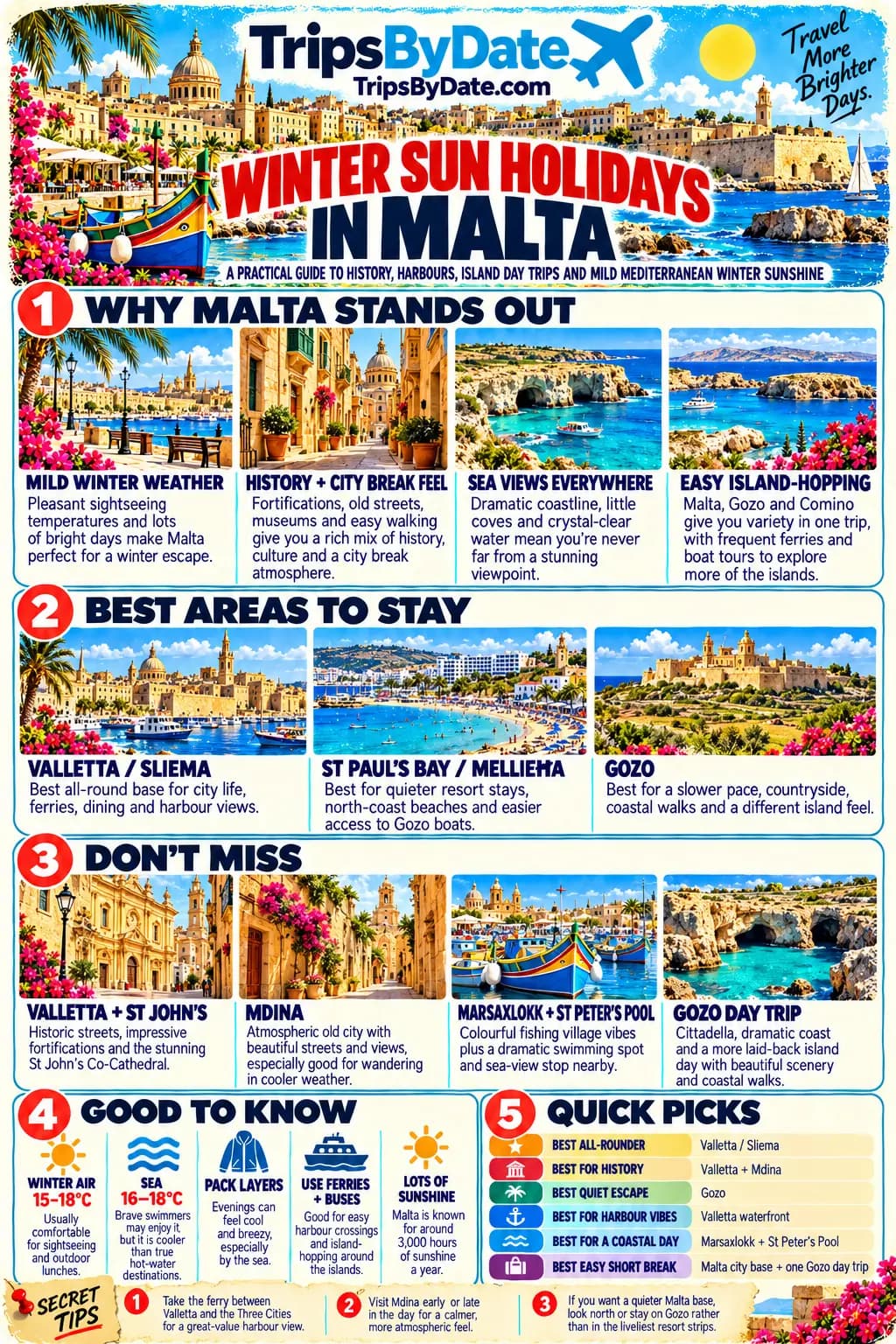
Imagine a winter holiday where you can have breakfast overlooking a harbour, explore a prehistoric underground monument, take a little ferry between fortified cities and finish the afternoon with a warm, flaky pastizz. Malta has an unusual talent for making a modest-sized island feel like several holidays squeezed into one. Winter sun holidays in Malta work best when you come for bright days, spectacular history, excellent food and wandering, not a promise of tropical beach weather. There is enough to do that a rainy afternoon barely has time to become annoying.
Quick answer: Choose Valletta or Sliema for cafés, museums, transport and harbour views; St Paul's Bay or Mellieħa for a quieter hotel-based break; and Gozo for countryside, villages and a slower rhythm. Expect generally mild but changeable winter weather, with some sunny, comfortable walking days and others that are wet, windy or chilly. Malta is particularly rewarding for couples, culture-loving friends and families who like doing things together rather than spending every daylight hour beside a pool.
The two images introduce the essentials: Valletta, Mdina, Marsaxlokk, Gozo, the Hypogeum, Popeye Village and Maltese food. Here we go further, into candlelit fortresses, strange underground stories, Roman mosaics, wind-sculpted coastal walks and where to find the island's best little edible souvenirs. For a comparison with warmer beach destinations, start with our winter sun destinations guide or winter swimming guide.
Is Malta actually good for winter sun?
Yes, if your definition of winter sun is lighter days and the freedom to explore outdoors in comfortable temperatures. Malta is not the Canary Islands, and certainly not the Caribbean. Its Mediterranean winters bring a mix of sunny spells, showers, breezy days and cooler evenings. A temperature printed on a holiday graphic is not a forecast for your week: wind beside an exposed harbour can make a sunny afternoon feel very different from one in a sheltered square.
The sea is often cool in midwinter, so do not book Malta expecting a guaranteed seven days of swimming. Take a light waterproof layer, comfortable shoes with grip and something warmer for evenings. The island's compact size makes it easy to switch from a cliff walk to a museum when weather changes. Malta's official tourism board promotes its winter walks, cultural attractions and island experiences, which is a better foundation for planning than a brochure showing an empty turquoise cove on a perfect summer day.
What makes Malta different from a typical winter beach resort?
Layers of civilisation in a tiny area. Neolithic temples, Roman remains, medieval alleys, Knights of St John fortifications, British maritime history and modern Maltese life all sit remarkably close together. You can spend a morning looking at art in Valletta, take a short harbour crossing, and spend the afternoon on the very walls built to defend it. If your family's idea of a perfect beach holiday is doing nothing, perhaps don't tell them about all the museums until after breakfast.
See where your next free dates could take you
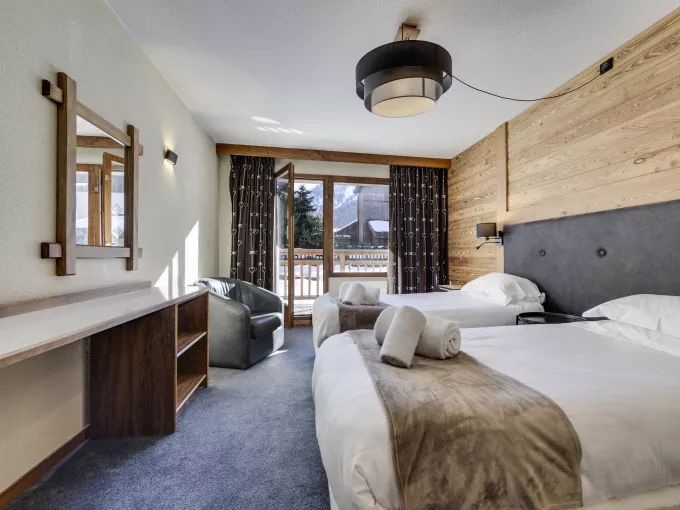
These four varied upcoming package-holiday examples are drawn from the wider TripsByDate inventory and ordered by departure date. They are not filtered specifically to Malta, winter or the places discussed in this guide. Browse by UK departure airport and available dates, then check actual destinations, nights, baggage, transfers, prices and availability with the operator.


 LHR • 7 nights
 AI · Ski Line

 BHX • 7 nightsHB · Skiline
 MAN • 7 nightsHB · Neilson
 GLA • 7 nightsB&B · Skiline
Where should you stay in Malta in winter?
Valletta: choose the capital when history is the main attraction
Valletta is made for travellers who would rather step out of their accommodation into remarkable streets than spend half an hour getting there. Its compact grid of limestone buildings, church domes and sea views invites wandering. St John's Co-Cathedral is a magnificent contrast between its relatively restrained exterior and lavish interiors. It also houses Caravaggio's dramatic Beheading of St John the Baptist. The cathedral's official visitor information describes the accompanying Caravaggio interpretation spaces.
Make time for Upper Barrakka Gardens and the Grand Harbour, but resist the temptation to treat Valletta as a checklist. Follow a side street downhill, look up at the enclosed wooden balconies and pick somewhere to sit with coffee. Winter advantage: a city packed with indoor attractions is a useful place to stay when weather is mixed. Winter catch: those picturesque hills and stepped streets can be tiring with pushchairs or mobility difficulties.
Sliema and Gżira: harbour views and a practical everyday base
These areas work well for friends, couples and travellers who value restaurant choice, waterfront walking and transport connections. Sliema's promenades are lovely for a sunny morning, and ferries make a visit to Valletta feel like a miniature boat trip rather than a commute. Confirm ferry operations and the last return when weather turns windy. Choose your hotel carefully: a sea-view balcony facing an exposed winter breeze is not always the suntrap it appears in photographs.
Mellieħa and St Paul's Bay: hotel comfort and a quieter pace
If a pool, spacious hotel and easier access to north-coast scenery matter most, investigate these areas. Mellieħa gives access to sandy beaches and Popeye Village, while St Paul's Bay and neighbouring Buġibba have a more developed resort atmosphere. Check the exact hotel location: a package described as Malta's north coast does not automatically mean you can walk to Valletta or reach every attraction without long bus journeys. Ask whether the pool is heated and which restaurants and hotel facilities operate during your travel dates.
Gozo: slow days, village squares and wonderfully different scenery
Gozo rewards people who are happy to swap nightlife and major shopping centres for sea cliffs, rural roads and an unhurried lunch. You could base yourself here for a few nights, or take a day trip from Malta. The Gozo Channel timetable is worth checking before planning around a ferry; sea conditions and departure arrangements matter. If you only have a long weekend, changing accommodation between Malta and Gozo may eat time better spent watching the sea with a pastry.
Malta's famous sights are genuinely worth the fuss
Mdina and Rabat: silent streets, secret corners and a Roman surprise
Mdina, the old fortified capital, is famous as the Silent City, though the soundtrack may include enthusiastic visitors explaining how quiet it is. Its narrow honey-coloured lanes, courtyards and elevated views are magical, especially on a winter day when the sun is lower and streets are less crowded. Walk outside the gate into nearby Rabat and you discover a different layer of history: Domvs Romana, a museum preserving astonishing mosaics from an ancient Roman aristocratic house. Heritage Malta explains that the site was accidentally discovered and developed as a museum to protect its mosaics.
If you like atmospheric history, consider St Paul's Catacombs too. Winter is ideal for pairing a slow outdoor walk with one sheltered attraction. For families, alternate ancient streets with a proper snack stop rather than promising small children an entire afternoon of tombs.
Marsaxlokk, the Three Cities and the little harbour crossings
Marsaxlokk's colourful fishing boats, seafood restaurants and waterside setting are justifiably famous. A pleasant visit combines a walk around the harbour, an unhurried lunch and perhaps a look at the nearby St Peter's Pool from safe, designated paths. Do not assume that an attractive swimming photograph means the rocky coast is safe in winter swell. On a different day, cross Valletta's Grand Harbour to the Three Cities, especially Birgu (Vittoriosa), for stone alleyways, maritime history and quiet waterfront corners.
At Fort St Angelo, the views help make sense of Malta's long strategic importance. The fort even served as a Royal Navy establishment. And the journey over can be half the pleasure: choose a ferry or water taxi if operating and conditions are suitable. This is an excellent low-fuss plan for a group with different interests, because one person gets a fort, another gets cafés, and everybody gets an actual boat ride.
Gozo's Ċittadella and the landscapes beyond
Gozo's walled Ċittadella above Victoria/Rabat is a rewarding history stop with far-reaching views. Continue towards coastal villages or the north coast's geometric salt pans for an experience utterly different from Valletta's busy waterfront. Gozo is not just Malta with fewer people; it has its own rhythms, rural flavours and quieter landscapes.
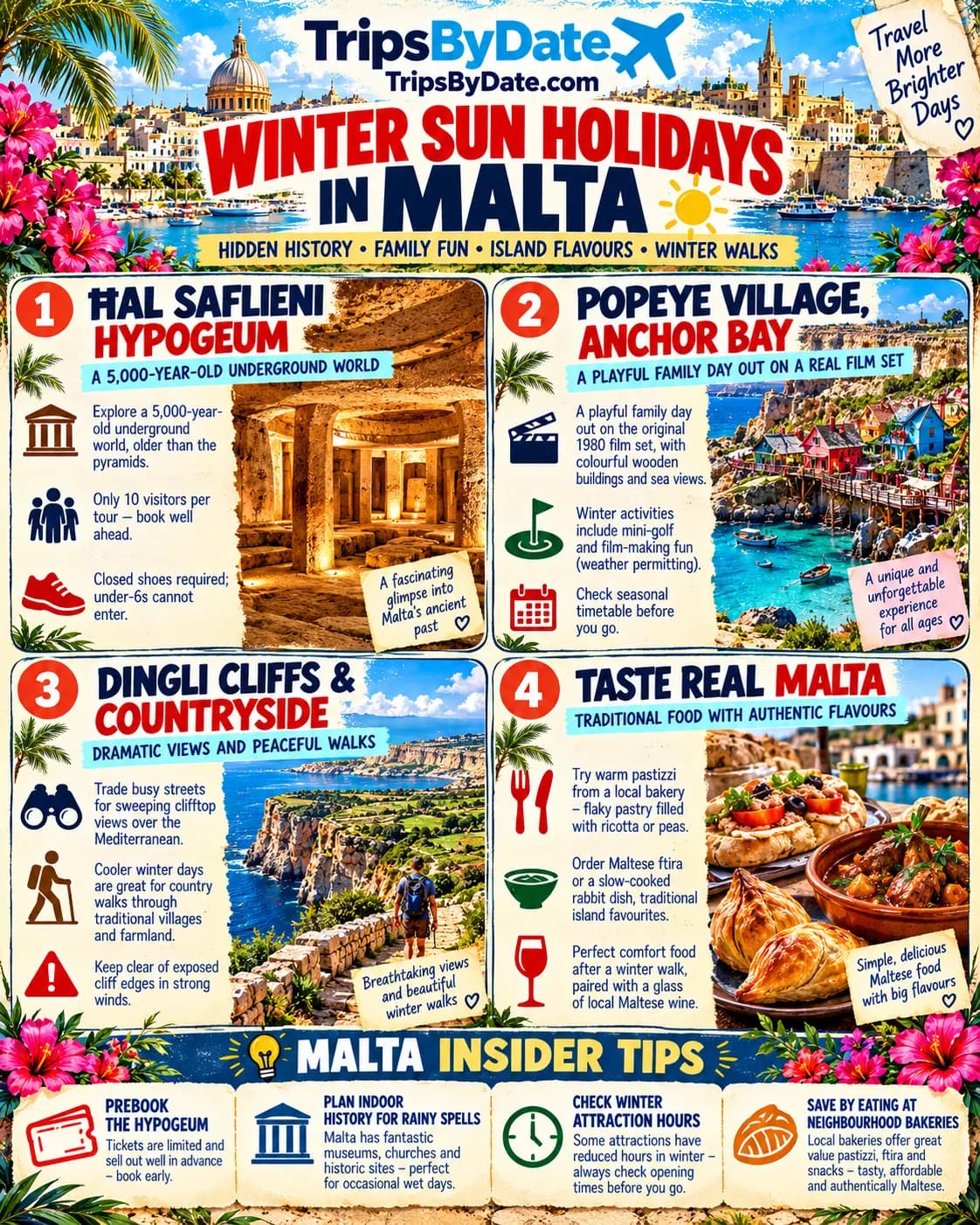
Five less-obvious Maltese experiences worth leaving your hotel for
1. Go underground at the Hypogeum: a visit that begins before you fly
The Ħal Saflieni Hypogeum is one of Malta's most extraordinary places: a prehistoric underground burial complex carved into rock thousands of years ago. Its evocative chambers can feel almost unreal. However, this is not an attraction to squeeze into your last free afternoon without preparation. Places are limited, entry is timed and children under six cannot enter. Visitors need closed shoes, and parts are unsuitable for people with mobility limitations. The official Heritage Malta booking page sets out the requirements and is essential reading before arranging your day.
A useful alternative: if you cannot secure Hypogeum tickets, investigate the Tarxien prehistoric complex, Ħaġar Qim and Mnajdra, or the archaeology museum in Valletta, checking which sites are open. You still get a remarkable prehistoric story without pretending a sold-out ticket will somehow appear through sheer optimism.
2. Birgu's Inquisitor's Palace: the strangest house tour in town
A very different way to experience Malta's history is the Inquisitor's Palace in Birgu. Imagine a grand residence with an official tribunal and prison complex built into the same institution. Heritage Malta describes the juxtaposition of elegant rooms, a historic kitchen and austere areas associated with the Roman Inquisition. It is a fascinating place for adults and older teenagers interested in history beyond royal portraits and cannon displays. Pair it with Fort St Angelo and Birgu's winding lanes for a wonderfully atmospheric day.
3. Gozo's salt pans: a shoreline that looks like a giant chessboard
On Gozo's northern shore near Xwejni, rows of rock-cut salt pans form an extraordinary chequered landscape. They are part of a long-running local salt-making tradition, passed down through families. You can explore the scenery in winter, but salt harvesting itself is seasonal and generally takes place in warmer months. Admire the pans without walking on or damaging them. For couples who love photography or families curious about how everyday things are made, this is an excellent stop. You may never look at a salt shaker with quite the same indifference again.
4. The dramatic Dingli Cliffs and a different kind of winter beach day
Trade sand for huge horizon views at Dingli, where the coastal cliffs create an impressive walking backdrop. Choose a sensible route, check the forecast and stay well back from edges, especially in strong wind. A winter coastal day can be better spent hiking, photographing the sea and eating in a nearby village than sitting on a beach waiting for the Mediterranean to become a heated pool.
For a quieter natural curiosity on Gozo, consider Wied il-Mielaħ, a striking limestone sea arch. It is a reminder that the island's scenery extends far beyond the famous vanished Azure Window. Keep to safe viewpoints and do not approach unstable cliffs or rough water.
5. Popeye Village: a genuine film set with a very improbable second career
At Anchor Bay, the colourful wooden village built for the Popeye film has become a family attraction. It is delightfully odd: a make-believe village that survived its movie and became a real day out. Check the attraction's own seasonal programme before promising the children a particular activity, as offerings can differ during winter. Families with younger children may love the playful setting; couples may prefer to admire the colourful bay from a viewpoint and head off to their next café.
Your next sunny discovery might surprise you
Start with the days you can travel and your nearest UK airport. Scroll through possibilities on TripsByDate instead of filling in endless destination forms.
Find holidays by dateEat Malta properly: a delicious plan beyond the hotel buffet
Malta's food is a wonderful mix of Mediterranean influences, with Italian, North African and local traditions meeting around the same table. Official tourism guidance highlights local bread, cheese, olive oil and pastries. Try these with a little curiosity rather than attempting to order everything at once:
- Pastizzi: flaky, savoury pastries commonly filled with ricotta or mushy peas. Perfect for a snack, and alarmingly easy to turn into an unofficial tasting tour.
- Ftira: traditional Maltese bread, often served with tomato, olives, capers, tuna or other fillings; Gozitan versions can be a meal in themselves.
- Stuffat tal-fenek: slow-cooked rabbit stew, a traditional dish for travellers who want to try the local classics.
- Bragioli: beef olives, made with rolled and filled meat in a rich sauce. The name is a reminder not to make assumptions based on the English word.
- Imqaret: date-filled fried pastries for those who believe a holiday should end at least one afternoon with dessert.
- Local cheeselets and seafood: look for ġbejniet and well-sourced fish in neighbourhood eateries rather than only the most prominent waterfront menus.
A useful food mission: have breakfast in a neighbourhood bakery, lunch in a family-run restaurant and an early-evening stroll with another small snack. For friends, choosing a different Maltese speciality each day is much more memorable than finding the same international menu in three resort restaurants. And check opening times, especially on quieter winter evenings.
Three good ways to spend a winter holiday in Malta
For couples: old streets, cosy food and romantic harbour views
Stay near Valletta or Sliema, spend one evening exploring Valletta's quiet side streets and take a harbour crossing to Birgu. Visit Mdina when the day-tripper rush is quieter, linger over a leisurely meal and add a Gozo day if conditions are suitable. This is romance with comfortable walking shoes, not a formal dinner reservation every evening.
For friends: a bit of everything, without the itinerary becoming homework
Mix culture with coastal wandering: one excellent museum, one seaside lunch, a trip to Gozo and a free afternoon for markets, cafés or shopping. Valletta and Sliema make sensible bases if different people want different things after dark. A short stay should not involve three hotel moves and a military-grade spreadsheet.
For families: boats, forts, colourful film sets and regular pastry breaks
Put a ferry or harbour boat trip on the agenda if weather allows. Try Popeye Village, a fortress, and one indoor museum suited to the children's ages. The Hypogeum is unsuitable for under-sixes, and Malta's stepped streets and rocky coast require attention when travelling with pushchairs or younger children. Choose accommodation for convenience and an indoor or heated-pool option if swimming is a priority.
A flexible five-day Malta winter itinerary
- Day 1 — Valletta: explore the capital, choose a major landmark and finish with harbour views and Maltese food.
- Day 2 — Three Cities: take a crossing to Birgu, explore Fort St Angelo or the Inquisitor's Palace, then linger by the waterfront.
- Day 3 — Mdina and Rabat: enjoy atmospheric lanes, Roman mosaics and perhaps the catacombs, depending on interests.
- Day 4 — Gozo: see the Ċittadella, village scenery and the Xwejni salt pans; check the ferry and weather.
- Day 5 — Choose your mood: Popeye Village for playful family fun; Dingli Cliffs for walking; Marsaxlokk for a harbour lunch; or a museum if the weather turns.
This is a menu, not a mandatory obstacle course. A shorter trip deserves fewer stops and more lingering. Our Malta short-break guide offers another angle, and our total-cost guide explains why transport and usable holiday hours matter so much.
Six winter booking details that make a real difference
- Make sure the hotel fits the holiday. A beach resort may be peaceful but inconvenient for a history-packed short break; a Valletta hotel may have steps and limited car access.
- Check what is open in winter. Seasonal facilities, excursions, ferry timetables and attraction hours can change. In particular, the official Heritage Malta notices identify temporary closures; do not assume every museum mentioned in an old blog is open.
- Prebook the truly limited experiences. Hypogeum entry is controlled. Secure your visit before fixing an entire day around it.
- Budget for more than the advertised package. Consider baggage, airport transfers, island travel, museum admissions and meals. Package value depends on the total, not the first number on the screen.
- Plan for weather flexibility. A sunny cliff walk and an indoor palace museum are a better pair of options than five outdoor activities that all require calm seas.
- Check your UK travel documents. Malta is in the Schengen Area. Review current passport and entry requirements well before departure, as rules and border procedures can change.
And if you can travel flexibly, browse several departure dates. TripsByDate is built around a more relaxed, scroll-and-discover way of finding package holidays: choose the dates and UK airport first, then see which destinations catch your eye. You might start looking for Malta and discover somewhere entirely unexpected. That is half the fun.
Winter sun in Malta: frequently asked questions
Is Malta warm enough for a beach holiday in winter?
Malta can have pleasant, sunny coastal days, but it is not a reliably hot winter beach destination. The sea is generally cool in midwinter, and wind and rain are possible. Choose Malta primarily for sightseeing, food and varied experiences, with beach walks as a bonus rather than a promise of warm-water swimming.
Where is best to stay in Malta for winter sun?
Valletta or Sliema work particularly well for sightseeing, restaurants and transport; Mellieħa or St Paul's Bay for quieter resort stays; and Gozo for countryside and slower days. Pick according to what you want to do, not simply the hotel's sea-view picture.
Is Gozo worth visiting in winter?
Yes, especially for villages, coastal scenery, history and unhurried exploring. Check ferry conditions and avoid overpacking the day. Summer boat tours and outdoor facilities are not all available year-round.
What can families do in Malta when it rains?
Try museums and historic attractions suitable for their ages, or a relaxed café-and-city day. Popeye Village can be fun, but check its seasonal programme. The Hypogeum does not admit children under six.
Can you visit Malta without hiring a car?
Yes. Buses and harbour ferries can make a Valletta- or Sliema-based holiday practical, and the Gozo ferry gives another option for exploring. Allow extra travel time and confirm routes and timetables; renting a car may be useful if you want remote countryside and multiple villages in one day.
Is Malta better than the Canary Islands for winter sun?
For consistently warmer resort-style winter beach days, the southern Canaries generally have the advantage. Malta is an excellent alternative if you would rather explore fortified cities, prehistoric sites, local food and the coast in milder conditions. See our European winter warmth comparison for more context.
Ready to discover your own Maltese adventure?
Malta is at its best when you give it permission to surprise you. Come for a sunny harbour and find yourself inside an ancient underground world, following the history of an extraordinary fortress or eating pastries in a square you never planned to visit. A winter holiday here is not about pretending it is August. It is about discovering how much you can enjoy while the UK is busy being grey.
Use TripsByDate to start with the days you can actually travel and the UK airport that suits you. Browse package holidays across destinations in one easy feed, rather than filling out the same old search forms over and over. Less searching. More choosing. Then follow the interesting little detours.
Find your next winter escape the easier way
Your dates first. Your departure airport next. Then scroll through holiday ideas on TripsByDate and see where your free days could take you.
Find holidays by date