

Winter Sun Holidays in Gran Canaria
Sunny dunes, proper city life, mountain villages and a surprisingly serious food scene. One island, several very different holidays.
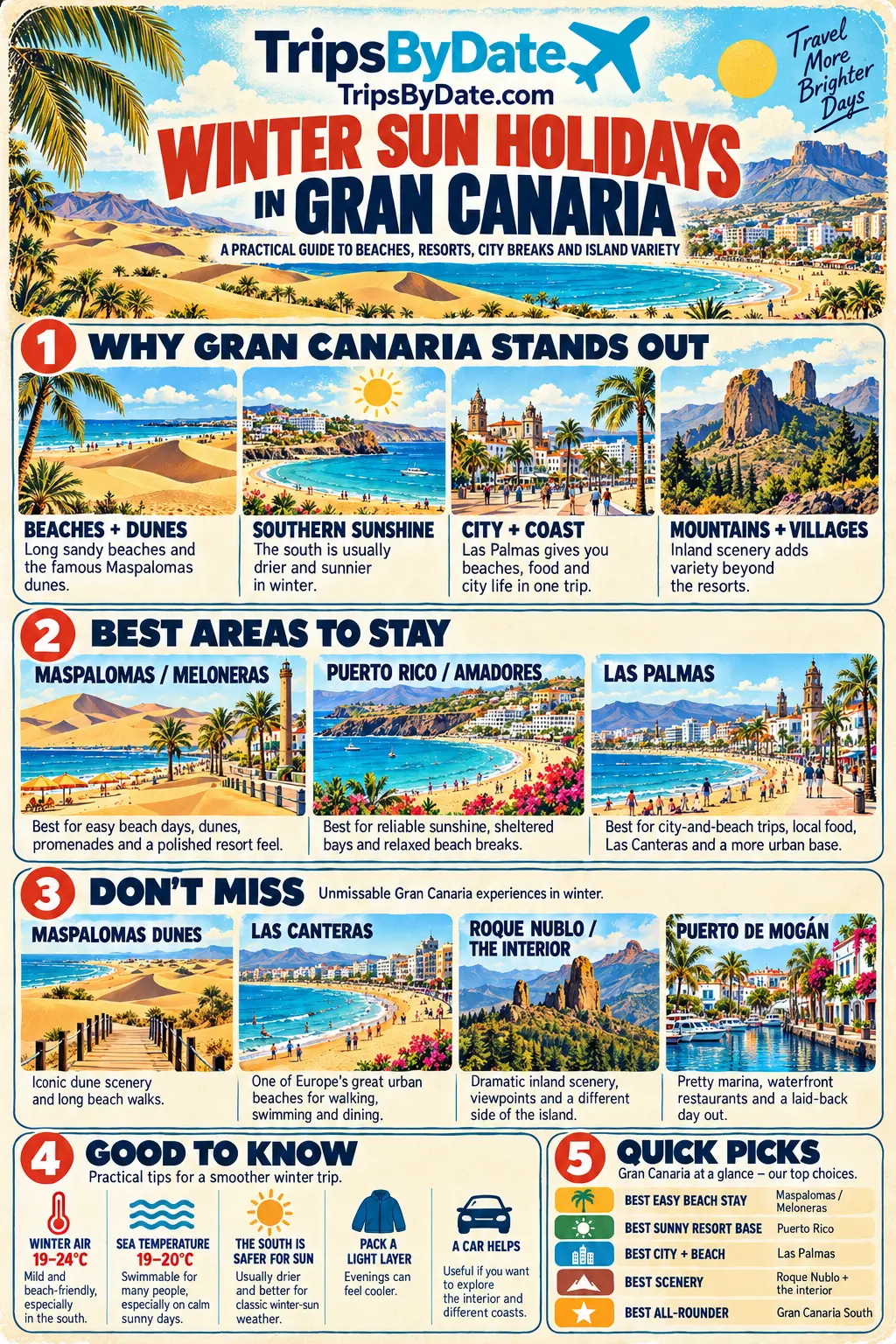
Imagine a winter morning spent walking across golden dunes. By lunchtime you are eating fresh fish beside a harbour; another day you are climbing through pine-covered mountains or discovering a village famous for coffee, rum or a very enthusiastic Sunday sausage market. Gran Canaria is not merely somewhere to escape the British weather. It is an island where you can have a different sort of holiday every day. The trick is knowing which part of it to book.
Quick answer: for the most dependable winter beach weather, start with Puerto Rico, Amadores, Maspalomas or Meloneras on the south and southwest coast. Choose Las Palmas if you want museums, local restaurants and an excellent city beach; Puerto de Mogán for an attractive harbour and an unhurried pace; and the mountain interior for villages, viewpoints and walking. Families often appreciate a sheltered south-coast resort, while couples and friends can combine sunshine with a city or countryside adventure.
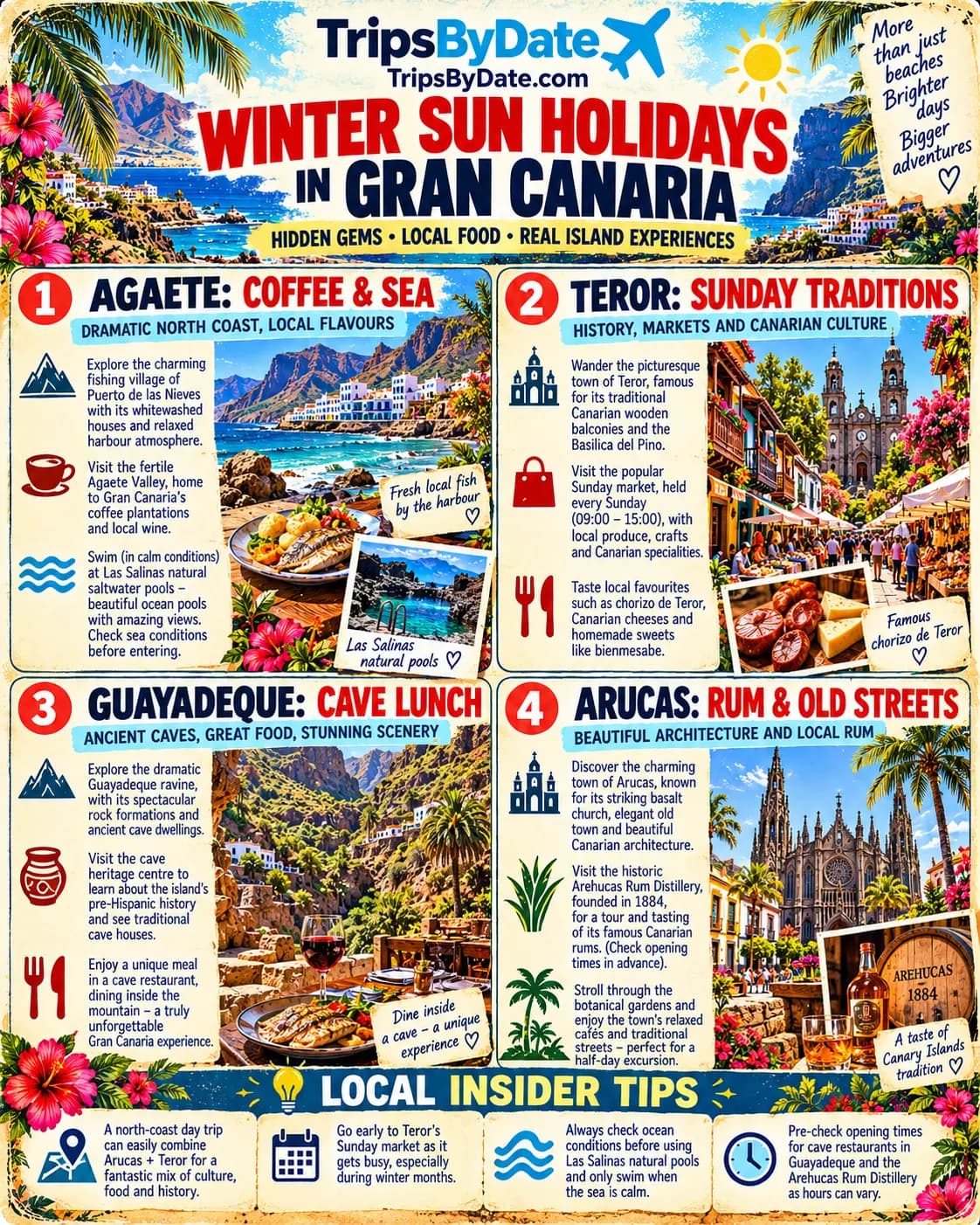
Our first image gives you the practical resort choices and signature landmarks; the second reveals Agaete, Teror, Guayadeque and Arucas. We are going further: ancient painted caves, a grain store carved into a cliff, a proper Canarian food trail and the booking decisions that separate a wonderful winter break from seven days of wondering why your hotel balcony faces the wrong direction.
Is Gran Canaria actually warm enough for a winter sun holiday?
Yes, particularly if you choose the south, but do not confuse pleasantly warm with tropical heat. Gran Canaria’s official tourism authority explains that the island’s mountains and trade winds create dramatic microclimates: the southern coast is generally drier and sunnier, while higher areas and parts of the north can be cooler, greener or cloudier. The sea is typically much cooler than the Caribbean. Read the official island climate explanation.
Why that matters: a sunny afternoon in Puerto Rico does not tell you what to wear for a visit to Roque Nublo. Take swimwear, comfortable shoes and an actual jacket. Yes, all three may see use on the same holiday. The southern coast is a good bet for daytime pool and beach time, but evenings can feel cool, especially if the breeze picks up.
Can you swim? Some visitors comfortably swim in the Atlantic during winter; others find the sea brisk. The first image’s 19–20°C sea temperatures are useful as a rough indication, not a promise for every beach or month. A heated hotel pool can matter more to a young family than one extra degree on the weather forecast. For a wider comparison, see where is hot enough to swim in winter.
See where your available dates could take you
These are four varied upcoming package-holiday examples from TripsByDate’s wider inventory, shown in departure-date order. They are not filtered specifically to Gran Canaria, winter dates or the resorts discussed here. Choose your UK departure airport and travel dates, then verify the destination, hotel, nights, baggage, transfers, price and availability with the operator.


 LTN • 7 nights
 AI · On the Beach


 MAN • 7 nightsHB · Skiline
 MAN • 7 nightsHB · Neilson
 GLA • 7 nightsHB · Skiline
Where to stay in Gran Canaria in winter: choose your holiday, not just your hotel
Maspalomas and Meloneras: dunes, promenades and the easy-going resort choice
Best for: couples wanting relaxing walks, families wanting familiar resort facilities and travellers who like restaurants near the hotel. Maspalomas has those extraordinary sand dunes, while Meloneras offers a polished waterfront feel. You can spend a memorable morning along the coastline without needing to organise a grand expedition. But check your hotel’s exact position: a room described as being in “Maspalomas” need not be beside the beach.
Do not treat the dunes as a giant free-for-all. They are a protected natural area with fragile habitats and designated access routes. Enjoy the scenery from authorised paths and viewpoints and follow local signs. The official Gran Canaria beach guide places the dunes among the island’s defining landscapes. For little ones, choose a manageable promenade and a beach stop rather than a lengthy sand march. The dunes are wonderful, but they are not especially interested in your pushchair wheels.
Puerto Rico and Amadores: the classic winter sunshine combination
Best for: families, sun-seeking couples and people who want to spend most of their holiday by a sheltered beach or pool. This southwest area is especially popular for winter trips, with resort facilities, excursions and appealing coastal views. Amadores has a curved bay and beach-day feel; Puerto Rico offers a busier resort base with a marina and plenty of holiday infrastructure.
The detail to inspect before booking: hillside accommodation. An inexpensive apartment with an amazing sea view might involve a steep climb or lots of steps. Look at the actual walking route, lift access, beach distance and transfer arrangement. If travelling with a buggy or somebody who finds hills difficult, this is more important than whether the pool photographs include a perfectly positioned inflatable flamingo.
Las Palmas: a city break that happens to have a remarkable beach
Best for: food-loving friends, independent travellers, couples who like neighbourhood life and families who do not want a week devoted entirely to swimming. The capital pairs Las Canteras, a long urban beach, with markets, museums, restaurants and the atmospheric historic district of Vegueta. The promenade is ideal for a slow afternoon, while nearby streets provide tempting excuses to stop for lunch.
Las Canteras is over three kilometres long according to the official tourism guide. Different stretches offer different water conditions and moods, so choose a spot that suits your group and respect lifeguard flags. Winter weather in the city can be less consistently sunny than the sheltered south. If weather is your only priority, the capital is not automatically the best hotel base; if you like culture and independent restaurants, it may be your favourite part of the island.
Puerto de Mogán: picturesque harbour, colourful lanes and a relaxed pace
Best for: couples, photographers, easy-going family outings and people who prefer a small harbour to a sprawling nightlife district. The waterfront and flower-filled streets are enjoyable for a wander and a seafood lunch. It is lovely, but not a secret untouched fishing village: visitors come here for precisely those attractive scenes. Go earlier if you prefer a quieter stroll, and consider visiting for a day before committing to an entire week.
For a broader island comparison, our winter sun islands guide explains how Gran Canaria differs from Tenerife, Lanzarote and Madeira.
The famous Gran Canaria sights that genuinely deserve your time
Maspalomas dunes: the unusual landscape you came to photograph
Yes, they really look impressive in person. Walk the designated routes, appreciate the dunes’ shape and changing light, then enjoy the nearby coast. Families may prefer the shorter viewpoints; keen walkers can plan a longer outing without wandering into protected areas. A windy day changes both the atmosphere and how comfortable a long exposed stroll feels, so bring sunglasses and a little common sense.
Roque Nublo: the dramatic rock with a less obvious booking trap
The island’s great inland icon rises above a landscape of ravines and mountain ridges. Hiking towards Roque Nublo is a dramatic counterpoint to beach holidays, but access is managed. The island authority states that reservations are required during busier daytime access periods, with transport arrangements linked to designated parking and shuttle options. Check the official Roque Nublo reservation guidance before setting off; restrictions and routes can change.
The highland climate is not the coast’s climate. Bring layers, walking shoes, water and a weather-aware plan. If clouds obscure the view, there is no shame in switching to a mountain village and a very respectable cake.
Vegueta: Gran Canaria’s historic side hides in the capital
Explore the old streets around the cathedral and squares, where historic architecture and museums make the island feel far more layered than its resort adverts suggest. For families with older children, a short neighbourhood walk followed by a museum can work beautifully on a cloudier day. Combine it with a market or traditional lunch rather than turning it into a sightseeing endurance competition.
Beyond the beach: six discoveries that give Gran Canaria its personality
1. Agaete: a coastal lunch followed by island-grown coffee
The northwest coast looks and feels different from the resort belt. At Puerto de las Nieves, whitewashed buildings meet a dramatic backdrop of steep cliffs. Have fish beside the harbour, then investigate the inland Agaete Valley, known for coffee cultivation and wine. Gran Canaria’s tourism board highlights the island’s distinctive coffee tradition in its northern-route information and wider gastronomy material.
The clever combination: make coffee the afternoon activity rather than planning three distant attractions. Research whether a plantation offers visits or tastings on your day. Finish with views along the coast. Nearby Las Salinas natural pools can look irresistible, but winter swell and sea conditions decide whether they are suitable for bathing; never enter rough water just because somebody posted a beautiful photograph.
2. Teror: a Sunday market, wooden balconies and famous chorizo
Teror is a wonderfully different day out: traditional Canarian houses, picturesque wooden balconies, a basilica and food stalls. The official Teror guide describes the Sunday market around the basilica, where local produce, pastries, crafts and chorizo de Teror are among the attractions. Check the current timetable before travelling, particularly around holidays.
Here is a culinary surprise: chorizo de Teror is traditionally a soft, spreadable speciality, not necessarily the firm slices you might expect from the word “chorizo”. Try it with bread and follow it with something from a local bakery. This is the kind of holiday that makes you return home excited about a sausage. There are worse outcomes.
3. Guayadeque: dine inside a cave, then learn whose landscape it really is
Barranco de Guayadeque is a dramatic ravine with an important Indigenous Canarian history. You can see cave dwellings and visit an interpretation centre before seeking out one of the restaurants built into the rock. It makes a striking lunch outing, particularly for families with curious older children. The official Guayadeque visitor centre explains the area’s archaeological significance.
Respect the place: these are not fantasy caves built as restaurant décor. The ravine has a long human history and living local communities. Book a restaurant if needed, check its hours, stay on public access routes and avoid treating homes or heritage sites as unsupervised photo sets. In winter, the surrounding highlands can feel cooler than your sunny breakfast terrace.
4. Arucas: rum, architecture and an unexpectedly grand church
Arucas is worth visiting for its striking dark-stone church, old streets and the island’s rum-making heritage. Its famous Arehucas distillery is a possibility for adults interested in local production, but tours, tastings and access arrangements should be checked directly before travelling. Non-drinkers and children have plenty of reasons to enjoy the architecture and surrounding town; a distillery visit should not be treated as the whole point of the day.
Combine Arucas with another northern stop rather than assuming every pretty town is fifteen minutes away. The island is compact on a map, yet winding roads and mountainous routes have a talent for making that map look wildly optimistic.
5. Gáldar’s Painted Cave: the history missing from most beach itineraries
For one of the island’s most rewarding cultural visits, head to Museo y Parque Arqueológico Cueva Pintada in Gáldar. Its decorated cave, surrounding archaeological remains and exhibitions introduce the Indigenous communities who lived here before the Castilian conquest. The official Gáldar visitor guide explains why the site is so important.
It is a particularly good way to balance a family holiday: one morning of real discovery, then a relaxed lunch or short coastal stop. Check guided-visit arrangements and opening times. Unlike a beach, archaeological heritage does not generally improve when visitors climb over barriers for a better angle.
6. Cenobio de Valerón: ancient grain storage hidden in a cliff
This is the sort of place that makes people stop scrolling. The Cenobio de Valerón is an extraordinary collective granary, with numerous chambers excavated into a steep rocky site. It was used by Gran Canaria’s Indigenous population to protect and store harvests. The official introduction to native Canarian culture gives background to the granaries and the island’s agriculture.
Visit for the landscape and the story rather than merely counting holes in the rock. Anyone interested in archaeology or unusual architecture should put it on the shortlist. Review site access, terrain and opening details before deciding whether it suits smaller children or visitors with mobility restrictions.

What if your next free week looked like this?
Choose your UK airport and travel dates on TripsByDate, then scroll through upcoming package holidays across destinations. Let a great departure date lead you somewhere unexpected.
Find holidays by dateEat Gran Canaria: seven flavours worth leaving the hotel buffet for
Gran Canaria’s culinary traditions deserve an excursion of their own. The official island gastronomy guide documents a world of local produce, fresh fish, stews and sweets beyond standard international resort menus.
- Papas arrugadas and mojo: wrinkled potatoes with a punchy sauce. They may look modest; they have no need for your approval.
- Chorizo de Teror: a soft spiced sausage speciality, especially satisfying with bread.
- Gofio: roasted grain flour with deep roots in Canarian cuisine, appearing in different savoury and sweet preparations.
- Sancocho canario: a traditional salted-fish dish often accompanied by potatoes, sweet potato, gofio and mojo.
- Fresh fish in Agaete: ask about the day’s catch rather than ordering the safest-looking item on the tourist menu.
- Queso de flor and local cheeses: explore the island’s cheesemaking traditions, particularly around the north.
- Bienmesabe: a rich almond-based sweet whose name roughly means “tastes good to me”. An unusually reasonable name for dessert.
For friends: set yourselves a small food trail, with a café, a market or bakery and one proper Canarian lunch. For couples: make the journey part of the experience with a harbour stop or vineyard visit. For families: share unfamiliar dishes alongside familiar favourites. Not every discovery needs to involve a four-hour hike or something served with tentacles.
How to plan an enjoyable seven-night Gran Canaria winter holiday
Rather than collecting fifty attractions, give each day a purpose. Here is a flexible outline, not a timetable that requires military discipline:
- Day one: settle into your chosen base and take a gentle beach or promenade walk.
- Day two: enjoy Maspalomas dunes or a south-coast beach; confirm tide and weather conditions.
- Day three: head to Las Palmas for Las Canteras, Vegueta, shopping or a museum.
- Day four: plan a mountain outing to Roque Nublo or a scenic village, with transport and permits sorted.
- Day five: choose a relaxed day near your hotel or a harbour lunch at Puerto de Mogán.
- Day six: explore Agaete, Gáldar or Teror, depending on your interests and the day of the week.
- Day seven: protect one deliciously unscheduled day. Holiday relaxation is an activity, even without an entrance ticket.
If you have a shorter trip, stay near the area you most want to enjoy. Crossing the island repeatedly is not always a clever use of four nights. Our guide to comparing the full cost of a break explains why transport and usable time matter as much as headline hotel prices.
Seven winter booking details that make a surprisingly big difference
- South-facing does not mean every hotel is sheltered: check location, building orientation and recent guest descriptions of wind exposure.
- Sea views can involve stairs: particularly around hillside resorts such as Puerto Rico. Check accessibility properly.
- Ask whether the pool is heated: and which months the heating operates, rather than assuming a blue pool photograph means warm water.
- Compare the actual UK airport and flight times: your convenient departure may give you more usable holiday than a cheaper flight from farther away.
- Check excursions before booking a remote hotel: nature trips, buses and organised tours may not fit your preferred departure time.
- Allow for mountain weather: sandals and a beach towel are not a hiking plan, especially at altitude.
- Compare total package costs: board basis, baggage, transfers, room facilities and operator terms, not just the promotional figure.
For UK entry documents, check current official Spain travel requirements before departure. Rules and border systems can change. Travel insurance should cover any hiking, diving or other activities you plan.
Gran Canaria or Tenerife for winter sun?
Both have resort infrastructure, dramatic inland landscapes and useful microclimates, so there is no universal winner. Gran Canaria is especially appealing if you want Maspalomas dunes, a major beach city in Las Palmas and a mixture of compact resort days with varied inland trips. Tenerife may suit you better if Mount Teide, its northern forests and its particular mix of south-coast resorts are the main attraction. Read our detailed Tenerife winter sun guide and compare the actual available packages for your dates rather than choosing on stereotypes.
For an even more volcanic, architectural and art-focused break, our Lanzarote winter sun guide takes a different route again. Each island is a proper destination, not a slightly rearranged collection of swimming pools.
Frequently asked questions about Gran Canaria winter sun holidays
Which part of Gran Canaria is warmest in winter?
The south and southwest coasts are generally the safest starting point for drier, sunnier winter conditions. Puerto Rico, Amadores, Maspalomas and Meloneras are popular bases, but temperatures and wind still vary by day and location.
Is Gran Canaria good for families in winter?
Yes, particularly if you choose a resort with a sheltered beach, heated pool, suitable hotel facilities and easy transfers. Puerto Rico and Amadores can be convenient options; check the gradients and steps around hillside accommodation.
Can you swim in Gran Canaria in December, January or February?
Some people do swim year-round, but the Atlantic is not tropical and can feel cool in winter. Water conditions and comfort vary. Follow lifeguard flags, consider a heated hotel pool and never assume a sheltered-looking cove is safe in a swell.
Do you need a hire car in Gran Canaria?
Not necessarily for a resort-based holiday. A car can be useful for remote inland villages and flexible mountain days, but buses and organised tours cover many popular routes. Compare convenience, parking, insurance and whether everyone in the group actually wants a road trip.
How many days do you need?
A short break can work for one resort or a city-and-beach escape. Around a week gives you more flexibility to mix beach time with Las Palmas, mountain scenery and one or two northern villages without spending every day in transit.
Are winter sun holidays in Gran Canaria cheap?
They can be good value, but no season, resort or departure date guarantees a bargain. Compare departure airports, board basis, baggage, transfers and how much you intend to spend locally. Our affordable winter sun guide explains how to compare total value rather than just the price on the first result.
Let Gran Canaria surprise you, then find dates that work
You might arrive dreaming of a sunlounger and leave talking about a cave restaurant, a painted archaeological chamber or the best chorizo sandwich of your life. That is what makes Gran Canaria such an appealing winter escape: you can keep the beach holiday wonderfully simple, or add discoveries when you feel adventurous.
TripsByDate makes the first step refreshingly different. Instead of filling in the same destination form repeatedly, choose your UK departure airport and when you are free, then scroll through upcoming package holidays across places you might not have considered. Compare Gran Canaria with other sunny options and let the departure dates lead the way. Less searching. More choosing.
Ready for a brighter winter?
Choose your UK airport and the days you can travel. Explore package holidays by departure date and discover where your next escape could take you.
Find holidays by date