

Winter Sun Holidays in Egypt
Reef-filled seas, enormous temples, proper Egyptian breakfasts and the important question: which Egypt are you actually booking?
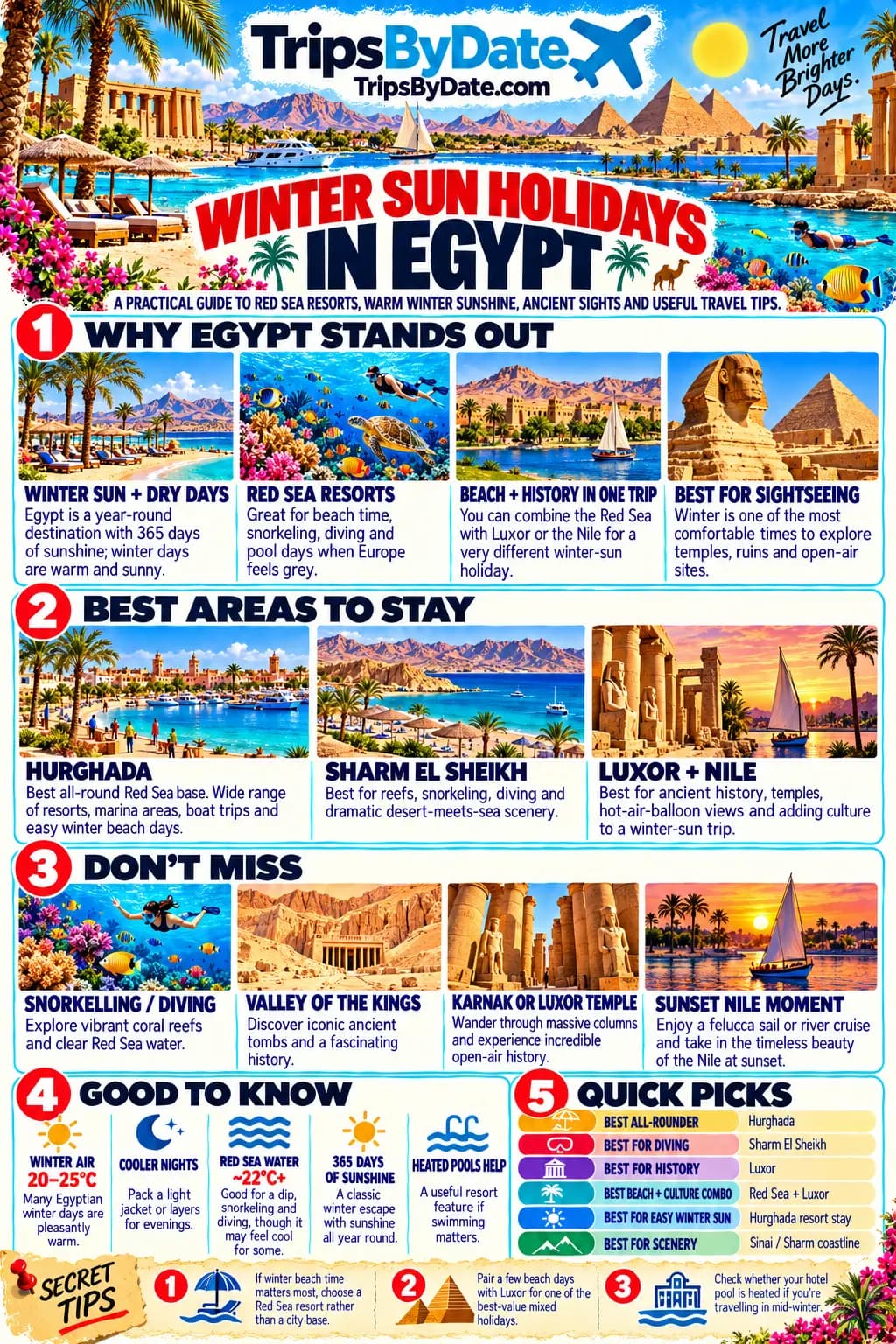
Egypt has a slight problem with its travel brochure: it contains too many different holidays. One photograph shows an enormous ancient temple. The next has someone floating above a coral reef. Then there is a sunset sail on the Nile, a plate of food that looks like six dinners have joined forces, and a hotel pool demanding your immediate attention. Winter sun holidays in Egypt can be all of these things, but not necessarily on the same afternoon. The secret is knowing which part of Egypt to book, what winter really feels like and when to add an adventure without spending half the holiday on a coach.
Quick answer: choose Hurghada for a wide choice of Red Sea resorts, boat trips and an established family-holiday scene; Sharm el-Sheikh for reefs, Sinai mountain scenery and resort relaxation; Marsa Alam for a quieter, nature-focused Red Sea escape; and Luxor for temples, tombs and remarkable ancient history. Aswan makes a fascinating separate cultural addition. Egypt is generally sunnier and drier than Mediterranean Europe in winter, but evenings can be cool, exposed beaches windy and hotel pools surprisingly chilly unless heated.
This guide starts with the essentials and then goes far beyond the images: how to pick a beach hotel with useful reef access, why the Valley of the Kings deserves more than a hurried stop, where to find Egyptian food, and which lesser-known places are genuinely practical. If you're comparing countries first, see our UK winter sun guide and winter beach holiday ideas.
What is Egypt like for winter sun? The beach-versus-history decision
Egypt's Red Sea coast often has pleasantly warm winter afternoons, plenty of bright days and limited rainfall. The exact temperature depends on the month, location and conditions; the approximate figures on our first image are a broad guide, not a forecast. Winds can change how a beach feels dramatically, and a warm afternoon can become a jacket-worthy evening. The Red Sea retains more winter warmth than many Mediterranean destinations, although swimmers still vary considerably in what they find comfortable.
- For beach and pool days: investigate Hurghada, Makadi Bay, Sahl Hasheesh and Sharm el-Sheikh, but verify whether your hotel's pool is actually heated during your stay.
- For snorkelling: choose based on the specific hotel beach, reef-entry rules, currents and licensed excursions, not simply a destination's reputation for marine life.
- For ancient history: Luxor's outdoor archaeological sites can be much more comfortable to explore in winter than in punishing summer heat.
- For a mixture: consider a properly planned multi-centre journey or a suitable organised excursion. Hurghada to Luxor is a serious day out; Sharm to the pyramids is not a casual morning stroll.
The surprising question: do you want to wake up beside the sea, or do you want a holiday where you visit ancient Egypt every day? Both are excellent. They are different bookings. Use our winter swimming guide if warm water is essential rather than an optional bonus.
See where your available dates could take you
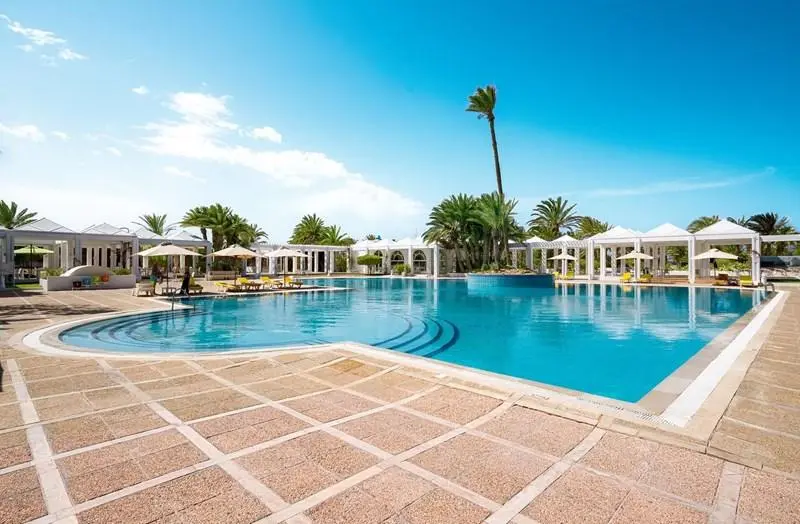
These are four varied upcoming package-holiday examples from the wider TripsByDate inventory, ordered by departure date. They are not filtered to Egypt, Red Sea resorts, winter weather or the specific places in this guide. Choose your UK departure airport and available dates, then confirm destination, hotel, board basis, transfers, flights, total price and availability with the operator.


 LGW • 7 nights
 RO · Broadway Travel

 MAN • 7 nightsAI · easyJet holidays
 LGW • 7 nightsSkiworld
 LTN • 7 nightsSkiworld
Where should you stay in Egypt for a winter holiday?
Hurghada: the versatile Red Sea starting point
Best for: first-time Egypt visitors who want a resort holiday, families, snorkelling-curious couples and groups after beaches without giving up day trips. Hurghada has long stretches of tourist development, a marina district, hotel beaches and excursion departures. But 'Hurghada' on a holiday search can also refer to resorts farther down the coast. Check whether your actual hotel is in central Hurghada, El Gouna, Makadi Bay, Sahl Hasheesh or farther afield. Those aren't interchangeable if you planned to wander to the marina after dinner.
Look beyond the pool: El Gouna has lagoons and a purpose-built holiday-town feel; Sahl Hasheesh offers resort promenades and a quieter atmosphere; Makadi Bay suits travellers prioritising hotel facilities. For a more local day, investigate an appropriately guided visit to Hurghada's older districts and markets. Choose food experiences that are genuinely Egyptian rather than accepting that the fifth buffet pancake constitutes cultural immersion.
Sharm el-Sheikh: reef-focused holidays with Sinai scenery
Best for: confident snorkellers, couples who enjoy a polished resort, and families who choose the right swimming beach. Sharm's bays vary hugely: one may offer gentle sandy entry, another coral near the shore with access only by a jetty. Beautiful fish photographs tell you nothing about whether a young child can paddle from the hotel beach.
Investigate Naama Bay for accessible resort bustle, Sharks Bay for established reef-focused stays and Nabq for resort choice, while paying special attention to wind and sea access. Ras Mohammed National Park can be a magnificent reef outing when conditions and access allow. For current regional travel restrictions, use the FCDO's specific Egypt regional advice, not a sweeping assumption that every part of Sinai has the same status.
Marsa Alam: quieter reef country, not a miniature Hurghada
Best for: nature lovers, snorkelling enthusiasts and people who genuinely enjoy a resort with fewer urban distractions. The southern Red Sea coast offers reefs and marine-life experiences, but the hotels can be spread out. Your package's airport and transfer details matter. Ask whether the hotel has a sandy swimming lagoon, jetty access, sheltered conditions, and a good alternative if wind closes the sea entry. Responsible wildlife operators should never promise that a turtle, dolphin or dugong will appear on demand.
Luxor and Aswan: choose history as the main event
Best for: archaeology lovers, culturally curious friends, older children who love a good story and couples after a different sort of winter holiday. Luxor is where you'll find Karnak, Luxor Temple, the Valley of the Kings and an extraordinary concentration of tombs. Aswan, farther south, brings Nubian heritage, islands, river journeys and the magnificent UNESCO-listed monuments stretching from Philae to Abu Simbel. Neither should be described as a simple beach-resort neighbourhood. Plan them as dedicated stays or carefully scheduled multi-centre trips.
Egypt's headline experiences that genuinely deserve the hype
The Valley of the Kings: visit real tombs, not just a famous sign
On Luxor's west bank, royal tombs are cut into the desert hills, their walls covered in surviving paintings, symbols and stories about the afterlife. Entry arrangements differ by tomb, and not every special tomb is covered by a basic admission ticket. The official Egyptian monuments portal publishes visitor details and tickets. Decide what matters most before arrival; temple fatigue is real, and a thoughtful few tombs are often more memorable than a frantic attempt to see everything.
The clever history day: balance one major tomb complex with the Temple of Hatshepsut or the Colossi of Memnon, then allow proper time for water and lunch. Older children might love a challenge: choose one symbol or painted scene and discover what it actually meant. The world's oldest 'spot the difference' game becomes rather more compelling when it is painted on a royal tomb wall.
Karnak, Luxor Temple and a river sunset
Karnak's monumental columns feel almost unreal in person, while Luxor Temple provides another extraordinary introduction to ancient Egyptian civilisation. Allow time to appreciate details rather than only collecting photographs. For a quieter contrast, consider a felucca sail on the Nile, subject to weather and operator safety standards. Egypt's official tourism guidance describes river transport, feluccas and multi-night Nile journeys in its travel information. A cruise can be a wonderful way to link heritage sites, but itinerary, berth location and included excursions vary.
Red Sea reefs: the holiday that happens beneath the surface
Bright reef fish, corals and extraordinary underwater landscapes explain why travellers return to the Red Sea. But this isn't a giant aquarium with no rules. Never stand on coral, chase turtles or feed fish. If snorkelling from shore, ask exactly where entry is permitted. If booking a boat, scrutinise the operator, weather policy, lifejackets, safety briefing and insurance. The UK government's Egypt advice specifically warns that diving-boat safety standards vary and that serious incidents have occurred. Choose quality over a suspiciously cheap boat trip.
Now for a different Egypt: unusual places worth discovering
Dahab: a Sinai seaside town with a completely different rhythm
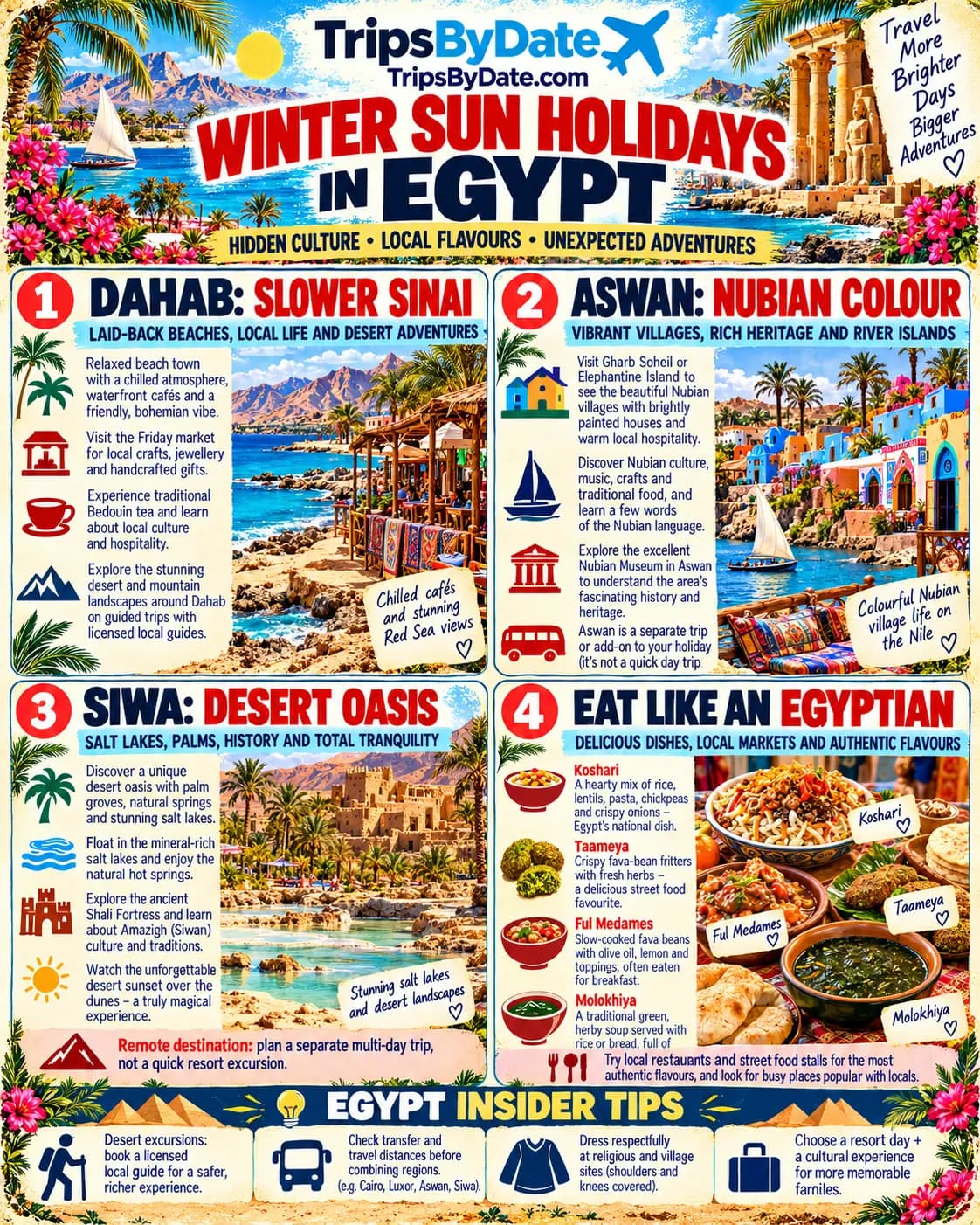
Dahab offers waterfront cafés, a slower pace and a different identity from big resort complexes. It attracts divers, independent travellers and people who prefer a long breakfast watching the water to a timetable of organised entertainment. The town also introduces visitors to Sinai's Bedouin heritage, although a tourist tea stop is not the same as understanding an entire culture. Choose community-led experiences where possible and treat guides and hosts with respect.
One unusual idea: spend a day with a responsible local guide exploring the landscape around the town, subject to current access restrictions. Dahab's famous Blue Hole is associated with serious diving hazards: this is absolutely not a place for unqualified visitors to attempt demanding dives. Even for snorkelling, follow local guidance and stay within your ability. Dahab needs its own itinerary and appropriate regional checks, not a casual assumption that everything is close to Sharm.
Aswan: colourful Nubian culture and an entire island history
Aswan reveals an Egypt that a Red Sea resort cannot. The Nubian Museum, Elephantine Island and the villages around the river bring layers of history, language, architecture and craft traditions. Consider a respectful visit with a local Nubian guide rather than treating painted houses as a photography backdrop. Buy directly from makers if you can, ask before photographing residents and don't assume one visitor village represents every Nubian community.
Here's a remarkable fact: monuments including Philae and Abu Simbel were relocated through a major international rescue effort as water levels rose during the creation of Lake Nasser. UNESCO documents how this vast effort preserved temples that might otherwise have been lost. Read the Abu Simbel rescue story. It's hard not to be impressed by a civilisation that built colossal temples, followed by a modern project that had to move them.
Siwa Oasis: astonishing, but emphatically not a resort day trip
Siwa's palm groves, salt lakes, distinctive Amazigh heritage and desert architecture are extraordinary. The oasis has a different cultural and geographical character from Egypt's resort coast. Our second image introduces it, but here's the essential reality: Siwa is remote and requires a separate, carefully researched itinerary. Parts of the Western Desert and certain access roads are covered by UK travel warnings or permit restrictions. Check the latest FCDO regional advice before considering it. Do not book a casual desert excursion based on an appealing salt-lake picture.
A quieter cultural wildcard: discover living Cairo beyond the pyramids
The pyramids are an extraordinary sight, but modern Egyptian culture is not frozen in ancient stone. If Cairo is part of your trip, allow time for neighbourhood food, Islamic architecture, museums and crafts as well as the famous plateau at Giza. UNESCO recognises Historic Cairo and the pyramid fields among Egypt's World Heritage properties. Make Cairo a proper city visit with an experienced guide where useful, rather than treating it as a quick photo opportunity squeezed between airport connections.
Eat like an Egyptian: four dishes that beat the resort buffet
Egyptian food is one of the easiest ways to discover the country beyond its big attractions. The official Egypt tourism culture guide highlights several everyday favourites worth seeking out:
- Koshary: rice, pasta, lentils, chickpeas, tomato sauce and crunchy onions. It sounds like somebody couldn't decide which carbohydrates to invite, and the result is excellent.
- Ful medames: slow-cooked fava beans, often enjoyed for breakfast with Egyptian bread, herbs, lemon and other accompaniments.
- Taameya: Egyptian falafel made with fava beans and herbs. Crisp on the outside, wonderfully fragrant inside and ideal for a casual food stop.
- Molokhia: a green leafy soup or stew with a distinctive texture, often served alongside rice or bread and meat or poultry.
Also investigate fresh seafood by the Red Sea, baladi bread from a neighbourhood bakery, and seasonal sweet treats. For friends: plan a guided food walk with several small stops. For families: sample mild dishes first and check hygiene and dietary requirements. For couples: a riverside meal followed by a walk can be just as memorable as a more expensive excursion. Ordering one unfamiliar thing each is a more enjoyable challenge than insisting the entire group live on hotel chips.
Everyday customs and practical tips first-time visitors appreciate
Egypt is a predominantly Muslim country with diverse communities, traditions and ways of life. In established beach resorts, dress codes and rhythms may feel quite international; in religious sites, traditional neighbourhoods and rural areas, more modest clothing is appropriate. Ask before taking photographs of people, especially around religious or sensitive locations. The FCDO cultural and photography guidance also describes legal restrictions on photographing particular subjects. Don't bring a drone on the assumption that holiday footage is automatically permitted.
Shopping tip: souks and local markets can be lively, social places. Some prices may be negotiated, while everyday shops and supermarkets may have fixed prices. Ask politely, agree a total before a paid service and don't feel obliged to buy something because a seller has offered tea. If you book a guided market tour, choose someone who is transparent about commissions and planned stops.
Religious calendar tip: Ramadan moves through the calendar and can affect opening hours, activity schedules and the rhythm of meals. It can also be a meaningful time to learn about local culture when approached respectfully. Check current arrangements instead of relying on evergreen opening times.

Ancient wonders or a reef-side retreat?
Start with your UK airport and available dates. TripsByDate lets you browse upcoming package holidays, discover new ideas and follow the options that actually fit your time off.
Find holidays by dateWinter Egypt ideas for couples, friends and families
- Couples who want easy sunshine: a well-reviewed Hurghada-area resort with a heated pool, a relaxed seafront afternoon and one carefully chosen boat or cultural outing.
- Friends who want an adventure: a Sharm-based holiday with supervised snorkelling, a safe desert experience and time in a lively waterfront area.
- Families with younger children: choose a sandy-entry beach, confirmed pool heating, realistic transfers, appropriate food options and short excursions. A fantastic coral reef doesn't help much if your child can't get into the water.
- History-focused couples or older families: several nights in Luxor, with a guide for key archaeological sites and a Nile sailing experience, rather than rushing around on a huge resort-to-temple day trip.
- Travellers wanting the deepest cultural experience: build a properly organised Luxor–Aswan itinerary that allows meaningful time for Nubian heritage and river landscapes.
Seven checks before you book an Egypt winter sun package
- Confirm the exact resort: 'Hurghada' can cover very different hotel districts and transfer distances.
- Ask the right swimming question: is there a sandy entry, an accessible reef jetty, a sheltered bay and a heated pool? Don't assume all four.
- Compare total cost: baggage, meals, transfers, excursions, visa requirements and suitable room configurations change the value of a deal.
- Check documents: the official UK Egypt entry guidance explains passport validity and visas. Certain short stays arriving at Sharm el-Sheikh qualify for a Sinai entry stamp, but travel outside the permitted resort area or longer stays can require a full visa. Never assume the exemption covers Luxor or Cairo.
- Take excursion safety seriously: the UK government warns about varying safety standards on diving boats, road journeys, quad bikes and some adventure activities. Use reputable operators and suitable insurance.
- Check regional advice: conditions and FCDO restrictions are not identical across Egypt. Check your actual route before paying for desert or Sinai excursions.
- Plan your winter clothing: pack sun protection and swimwear, but also a warm layer for evenings, desert outings and early-morning sightseeing.
For more ways to compare a holiday honestly, see our winter sun value guide and warm-weather reliability guide. The cheapest headline offer isn't the best deal if it needs a long transfer, several pricey extras and a pool nobody wants to enter.
A seven-night Egypt plan that doesn't pretend the country is tiny
For a Red Sea resort week: spend the first two days settling in and exploring the hotel beach. Set aside one day for a professionally organised snorkelling or boat experience, with a weather backup. Give another day to local food and a manageable visit outside the hotel. Keep a spare day genuinely free. If you want history, investigate whether a carefully planned Luxor visit from an appropriate Hurghada-area base is right for your group's stamina and travel needs.
For a history-first week: stay in Luxor and consider adding Aswan with properly arranged transport. Visit temples in manageable blocks, give the west bank its own day and leave space for the Nile and present-day Egyptian life. A multi-centre journey can be wonderful, but check connections and travel advice. The biggest mistake is assuming Cairo, Luxor, Aswan, Sharm and Hurghada are all interchangeable excursions from one beach hotel.
Frequently asked questions about Egypt winter sun holidays
Is Egypt hot enough for a winter holiday?
Red Sea resorts often offer mild-to-warm sunny afternoons during winter, but temperature, wind and conditions vary. Winter evenings can feel cold after a day at the pool. It is a good winter sun option, not a guarantee of tropical temperatures every day.
Which is better for winter sun, Hurghada or Sharm el-Sheikh?
Hurghada suits travellers seeking broad resort choice and certain mainland excursions; Sharm is particularly appealing for reef-focused stays and Sinai scenery. The hotel's individual beach, location, pool heating and airport transfer can matter more than the destination name.
Can you swim or snorkel in Egypt in winter?
Yes, many visitors do, especially in the Red Sea. But water temperature, wind, currents and access vary. Check the precise beach, lifeguard information and excursion standards. A wetsuit may improve comfort for longer snorkelling sessions.
Can you visit the pyramids from a Red Sea resort?
Organised excursions may be offered, but Egypt's distances are substantial. Check whether the trip involves flights or very long road travel and how much time remains at the actual site. A Cairo-based stay can be a better choice if the pyramids are your main priority.
Is Egypt suitable for a family winter holiday?
Yes, with the right resort. Look for a genuinely heated children's pool, an appropriate swimming beach, manageable transfers and family-friendly food options. Choose age-suitable activities and use reputable operators for excursions.
Do British passport holders need a visa for Egypt?
Usually yes, although a limited South Sinai entry-stamp exemption can apply to certain short resort stays arriving by air at Sharm el-Sheikh. Requirements depend on the actual itinerary, passport and duration, so use the current official rules before travelling.
What is the best Egyptian winter holiday for culture?
Luxor is a particularly strong starting point because of Karnak, Luxor Temple and the Valley of the Kings. Aswan adds a different layer of Nubian heritage and exceptional monuments. Book the right location rather than expecting everything to be a short trip from a Red Sea resort.
Ready to find the Egypt that suits you?
Egypt's greatest trick is making a beach holiday feel like the beginning of something much bigger. You can spend the morning spotting reef fish, the evening trying a wonderfully hearty local dish, and another day learning the story of a temple that stood long before your great-great-great-grandparents were even a possibility. Or you can simply enjoy the sunshine. It's your holiday.
TripsByDate gives you a simpler place to begin: choose your departure airport, explore upcoming package holidays ordered by date and scroll through options rather than working through endless traditional destination-first forms. Compare the actual resort, duration, transfer and total value, and let a new idea catch your eye. Less searching. More choosing.
Find your next story in the sunshine
Browse package holidays by departure date from your UK airport. Explore Egypt or discover somewhere unexpected, then check the full booking details with the holiday operator.
Find holidays by date