

Winter Sun Holidays in Cyprus
Flamingos by the airport, snow above the vineyards, ancient mosaics beside the sea and a lunch that may require a second afternoon.
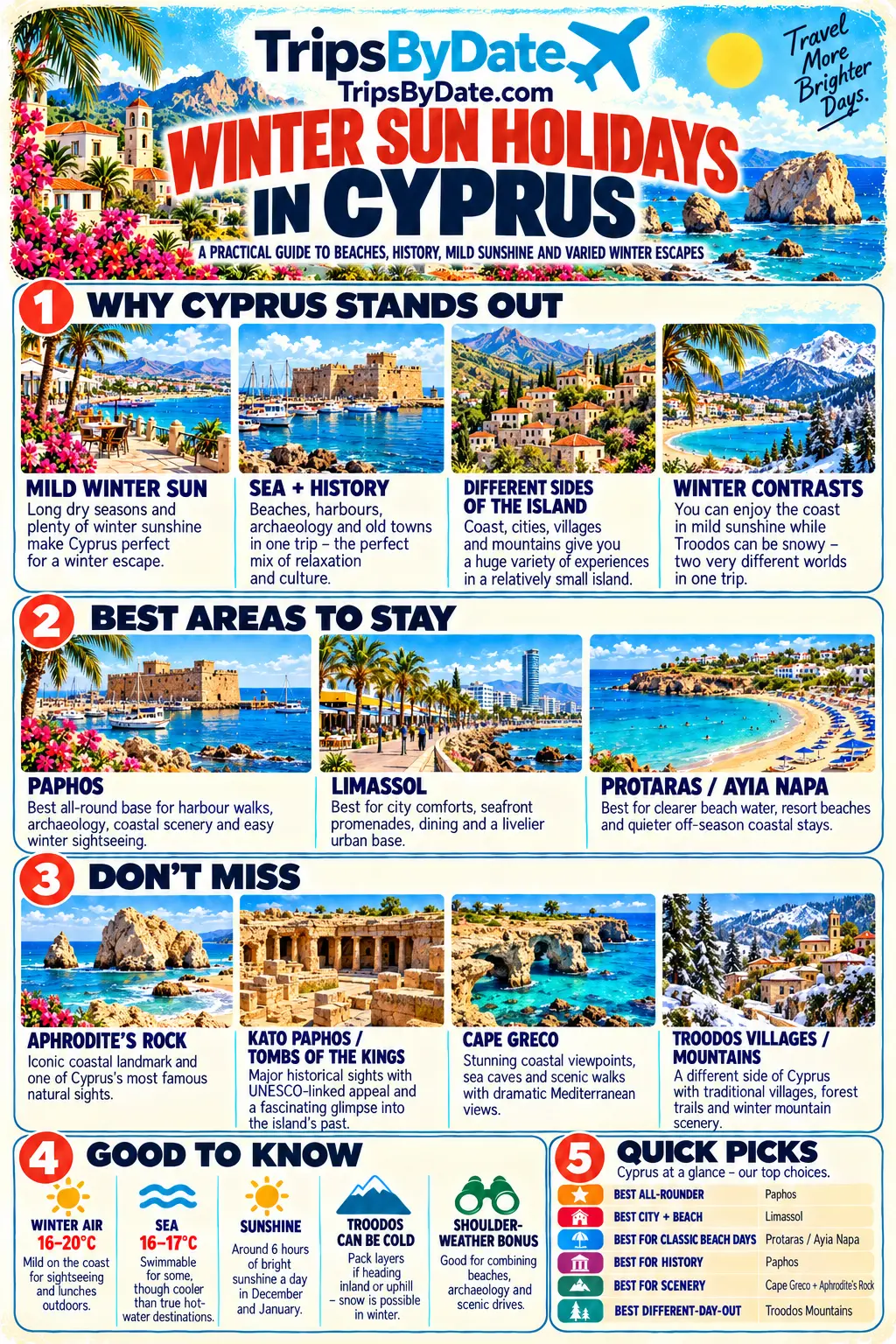
Cyprus is the Mediterranean island that refuses to do just one type of holiday. You can have lunch overlooking a fishing harbour, examine mosaics left by ancient Romans, watch flamingos feeding at a salt lake and, with the right weather, see snow in the mountains. All while your friends back in Britain are arguing about whose turn it is to put the heating on. Winter sun holidays in Cyprus can be wonderful, provided you know what you are booking: this is more often a mild, culture-rich escape than a guaranteed hot beach holiday.
Quick answer: choose Paphos for coastal walks, archaeology and a relaxed holiday base; Limassol for restaurants, city life and countryside excursions; Larnaca for easy seafront days and winter birdwatching; and the Troodos villages for mountain scenery, food, craft traditions and perhaps snow. Protaras and Ayia Napa have beautiful beaches, but resort businesses can be seasonal. For a winter trip, the precise hotel and town matter more than a glamorous summer photograph.
We'll cover the famous places first, then reveal another Cyprus: prehistoric roundhouses, handmade lace, a wine with medieval history, wildlife beside a mosque and tavernas where ordering meze is less a meal than a long-term commitment. If you're still choosing between countries, compare our warmest European winter sun destinations or broader winter sun choices from the UK.
Is Cyprus actually warm enough for a winter holiday?
Yes, if your idea of winter sunshine is a bright coastal walk, café terrace, historic site or scenic drive rather than lying in 30°C heat. The Cyprus Deputy Ministry of Tourism's climate guidance describes mild winters with rain and possible snow in the Troodos Mountains. December and January average around six hours of bright sunshine per day. That is a useful improvement on many British winter days, but it is not a promise of endless clear skies.
For a concrete example, Cyprus's published climate tables give Limassol a January average daytime maximum of approximately 17°C. Colder, wetter days happen. Upland villages are considerably cooler; the Troodos peaks can be snowy while people are eating lunch outdoors on the coast. See the official monthly climate figures rather than relying on a single rounded number from a holiday graphic.
Can you swim? Some hardy visitors do, but average open-sea temperatures in the coldest months are about 16–17°C, as the tourism board explains. That's refreshing rather than tropical. If the children want an hour of swimming every day, ask whether the hotel's indoor or outdoor pool is heated and operating during your travel dates. Our winter swimming guide explains the difference between pleasant sunshine and genuinely warm water.
The clever winter swap: choose sea-view cafés, archaeology, village walks and good food as the foundation of your trip; treat a warm afternoon on the beach as a bonus. Cyprus is especially rewarding when you stop asking it to behave like the Caribbean.
See where your next available dates could take you
These are four varied upcoming package-holiday examples from the wider TripsByDate inventory, ordered by departure date. They are not filtered to Cyprus, winter dates or the resorts mentioned in this guide. Pick your UK departure airport and the dates you can travel to browse possibilities, then check the actual destination, hotel, board basis, flights, price and availability with the operator.


 LTN • 7 nights
 AI · On the Beach

 SEN • 7 nightsSkiworld

 BHX • 7 nightsB&B · Iglu Ski
 BHX • 7 nightsSC · Ski Line
Where should you stay in Cyprus during winter?
Paphos: the best balance of seafront relaxation and ancient history
Best for: first-time visitors, couples, curious families and anyone who enjoys an easy harbour stroll before exploring something 2,000 years old. Paphos has waterfront restaurants, archaeological attractions and access to western Cyprus's rugged scenery. Look carefully at the difference between the harbour area, Kato Paphos, Coral Bay and hotels further outside town. A cheaper resort address can mean more driving or taxis if your favourite activity is wandering into a restaurant after sunset.
Do not miss: the UNESCO-listed archaeological park around Kato Paphos, famed for Roman mosaics, the Tombs of the Kings, and the harbour fort. The tombs were not actually reserved for kings, which feels like an early example of ambitious estate-agent marketing. They're monumental rock-cut burial chambers and well worth exploring in comfortably cool winter weather. Combine a major sight with a long lunch rather than attempting every ruin in one day.
Limassol: a proper city with a beach attached
Best for: food-minded friends, couples wanting lively neighbourhoods and travellers who prefer a functioning city to a sleepy holiday strip. Limassol offers an attractive seafront promenade, marina, historic quarter and access to wine-growing villages. Its restaurants and cultural offerings make it a strong off-season base; always verify individual venue opening days, though.
The excellent day out: visit Kolossi Castle, then head into the hills for the Commandaria wine region. The official Commandaria Wine Route connects villages, wine presses and a story stretching back through medieval crusader history. Leave plenty of time to see the villages and arrange a responsible driver if tasting.
Larnaca: waterfront breakfasts and a remarkable winter wildlife bonus
Best for: relaxed short breaks, wildlife lovers and visitors who want easy access to traditional inland villages. Stroll the palm-lined Finikoudes promenade, visit the Church of Agios Lazaros and spend time around the historic old centre. Larnaca is not just somewhere you land on the way to another resort.
Its surprise is a real winter spectacle: the protected Larnaca Salt Lake hosts migrating flamingos and other birds. The tourism board describes their presence between roughly November and March, depending on conditions. Go with binoculars, keep to permitted paths and enjoy a distant view without approaching or disturbing wildlife. Read the official salt-lake guide. Wildlife is not an attraction that keeps an appointment, so sightings are never guaranteed.
Protaras and Ayia Napa: magnificent coastline, but check winter life
Best for: travellers prioritising quiet coastal scenery over nightlife. Fig Tree Bay and the eastern resort beaches look spectacular, with turquoise water and sheltered coves. But these are strongly seasonal holiday areas: some accommodation, excursions, cafés and entertainment close or reduce service during winter. Check that your chosen property is fully operating, including restaurants and pool heating, rather than assuming summer facilities continue year-round.
Nearby Cape Greco has dramatic sea caves and coastal viewpoints. Visit established paths and viewing areas, and avoid climbing unstable rocks or entering rough water. A peaceful winter coastline is a wonderful outing; leaping from a cliff because someone did it on social media is less wonderful.
Troodos villages: a different holiday entirely
Best for: scenery, culture, cosy meals and travellers happy to pack a coat alongside sunglasses. Troodos has pine forests, stone villages, traditional churches and mountain food. Omodos is a lovely introduction, with its cobbled square, historic wine press and specialist breads. Cyprus Tourism's Omodos guide describes its wine, monastery and village heritage.
Don't plan a mountain excursion solely around a forecast from Paphos: snow, fog, road conditions and closures can change the day completely. In winter, take warm layers, follow official road advice and prepare an easier coastal alternative.
The famous Cyprus experiences genuinely worth your time
Aphrodite's Rock: mythology with an Atlantic-sized warning label
Petra tou Romiou, often called Aphrodite's Rock, is among Cyprus's most photographed coastal landmarks. The coastline and mythology are evocative, and the views make a memorable stop between Paphos and Limassol. Don't let a legend about swimming around the rock encourage you into strong waves or currents. Appreciate the scenery from a safe place; a mythology-inspired photo is quite enough proof that you visited.
Paphos mosaics: ancient drama in glorious colour
Inside Kato Paphos Archaeological Park, elaborate mosaic floors show scenes from Greek mythology. They are a wonderful way to engage children who normally think ancient history means standing silently in front of stones. Turn it into a game: can they spot animals, characters and stories? Check opening hours, especially during public holidays, and allow time to explore rather than trying to fit it between two restaurant bookings.
A very different city break: Nicosia
Cyprus's capital, Nicosia (Lefkosia), deserves consideration if you'd like old streets, museums, cafés and a more complex understanding of the island's history. The city's division is part of modern Cyprus and should be approached with curiosity and sensitivity, not treated as a novelty attraction. If considering crossing the Green Line, consult the UK government's entry guidance and check your insurance and travel arrangements.
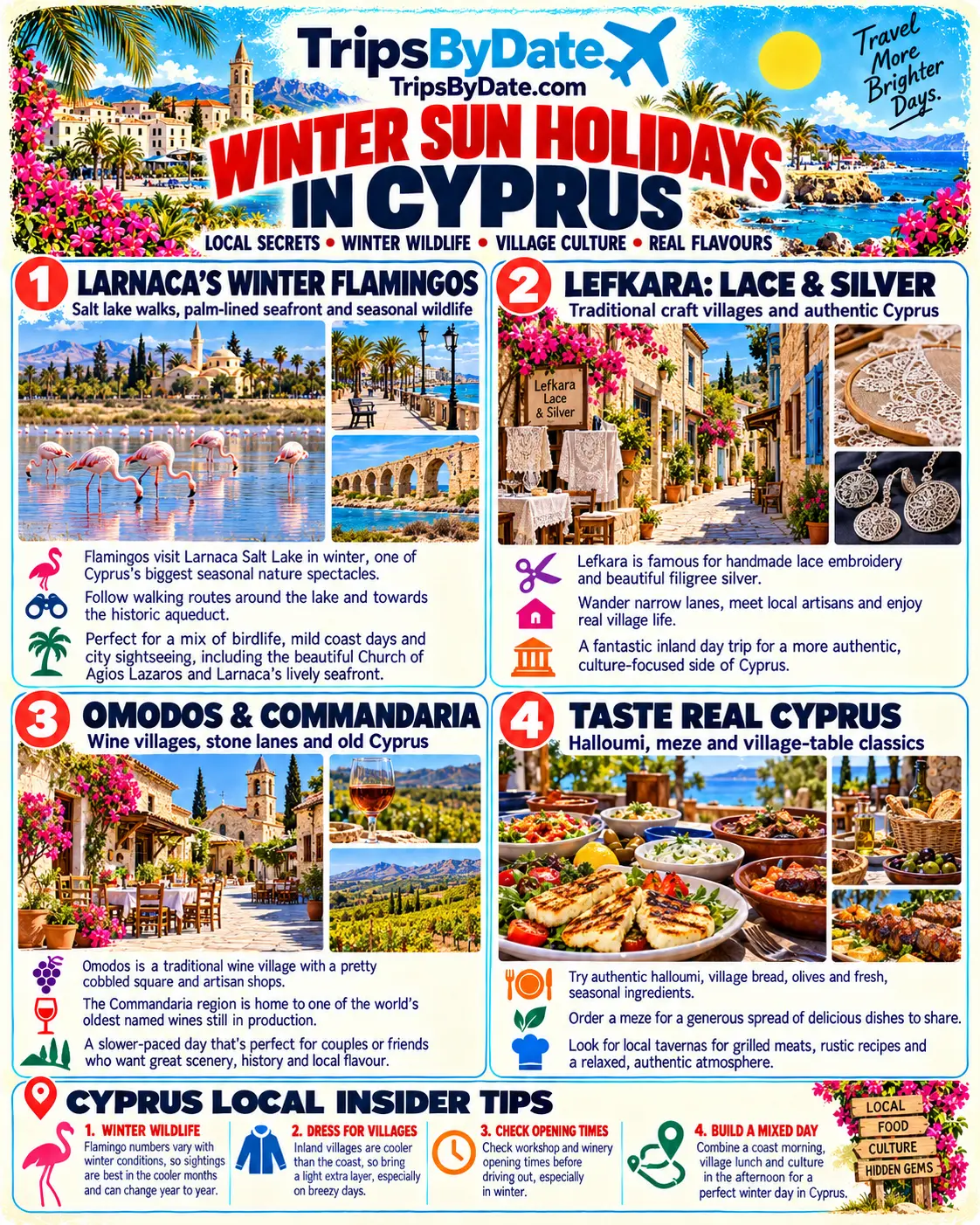
Seven lesser-known Cyprus experiences worth leaving the sunlounger for
1. Watch flamingos, then investigate the ancient aqueduct
Larnaca's winter birds are in the second infographic for good reason, but there's more to the area than pink feathers. Pair a responsible salt-lake visit with the Kamares Aqueduct and, if open to visitors, nearby historic sites. One morning can mix nature, engineering and a waterfront lunch. A good alternative for birdwatchers based nearer Limassol is the protected Akrotiri Salt Lake, another important winter wetland.
2. Visit Lefkara and see a craft that survived the centuries
Forget anonymous souvenir stalls for an afternoon. In the foothills, Lefkara is known for handmade lace embroidery and delicate filigree silver. The official village guide describes workshops and traditional handicrafts. There is even a famous story that Leonardo da Vinci bought Lefkara lace; treat that as local legend rather than an independently proven shopping receipt. Watch a craftsperson work, ask politely about techniques and consider buying directly from a maker.
3. Travel further back than the Romans at Choirokoitia
If you think Cyprus's history starts with classical columns, Choirokoitia has a surprise. This UNESCO-listed Neolithic settlement preserves evidence of a much earlier society, and reconstructed cylindrical houses help visitors imagine everyday life. It's a brilliant alternative to another castle, particularly for families with inquisitive children. Visit Cyprus explains the archaeological site and its reconstructed dwellings.
4. Taste a wine with a remarkably long memory
Commandaria is an intensely flavoured sweet wine associated with villages in the Troodos foothills. The traditional process uses sun-dried grapes, and the wine's name reaches back to the medieval commandery near Kolossi. Think of this as history you can taste, rather than an instruction to drink several glasses at lunchtime. Tour a winery when bookable, ask about production and pair it with village bread, cheese or local sweets. Families and non-drinkers can enjoy the scenery and historic wine presses too.
5. Find a village where lunch has its own timetable
Omodos is charming, but smaller villages such as Kato Drys and Vavla can reward a slow drive and a little curiosity. Check for locally run tavernas, bakeries and workshops before making a special trip: a picturesque lane doesn't guarantee an open restaurant on a winter Tuesday. Choose one or two places to linger rather than trying to collect a dozen village names before sunset.
6. Hunt for painted churches, not just mountain views
The Troodos region has extraordinary Byzantine churches, including UNESCO-recognised painted churches with elaborate wall art. These quiet sites bring a completely different character to a winter break. Dress respectfully, check visiting arrangements, and remember that some churches are small community places of worship rather than constantly staffed museums. A visit can be more rewarding than a rushed dash to a mountain summit in poor weather.
7. Know when *not* to hike a famous gorge
Avakas Gorge looks irresistible in photographs: a narrow, sculpted rocky passage with towering walls. But winter rain changes the calculation. Cyprus Tourism's official nature-trails guide identifies March to November as the more suitable period and warns about river levels rising rapidly during storms, slipping and landslides. Don't make it a casual wet-weather adventure. Choose a safe signed coastal route or a museum instead.
Your free dates deserve something more exciting
See package holidays by departure date, then discover destinations you might never have searched for. TripsByDate makes finding the next escape feel more like browsing than filling in forms.
Find holidays by dateWhat should you eat in Cyprus? Start with these delicious decisions
Cypriot food is one of the strongest reasons to explore beyond the hotel buffet. The familiar halloumi is only the beginning. Cyprus Tourism's halloumi guide explains traditional uses ranging from grilling to village breakfasts and soups. You can spend a week discovering how many ways there are to eat cheese before somebody suggests you also try dessert.
- Meze: a generous succession of small dishes, often including dips, salads, vegetables, cheese and grilled food. Ask what the restaurant's version contains, whether it has a minimum number of diners and how much arrives before ordering a mountain of starters.
- Sheftalia: seasoned minced-meat parcels traditionally grilled and served with pitta, salad and lemon. Look for a good local grill house rather than automatically choosing the most elaborate waterfront menu.
- Trahana: a comforting traditional soup made with fermented grain and dairy ingredients, often enjoyed in cooler weather. A wonderful counterargument to the idea that every Mediterranean meal has to involve a seaside salad.
- Kleftiko: slow-cooked lamb, a classic for a leisurely meal. Check whether the restaurant prepares it on particular days.
- Kolokasi: taro root, associated particularly with the Sotira region, commonly cooked in rich stews. Worth investigating if you're looking for something beyond international resort favourites.
- Loukoumades and spoon sweets: sweet treats that give you an excellent reason to stop at a local bakery or traditional café.
For couples: book a village taverna and order slowly. For friends: share a meze and let everybody choose one unfamiliar dish. For families: pick an accommodating restaurant with several small plates and avoid turning lunch into a formal endurance event. For help comparing the full holiday cost, see our guide to comparing total break costs.
Winter in Cyprus: what the glossy brochure tends to leave out
- Sunshine and warmth are separate things. A bright January day might be delightful for wandering but too cool for a long swim, especially after wind or rain.
- Your resort's winter opening matters. Ask whether the hotel's restaurants, children’s facilities, spa, pools and nearby businesses operate during your exact stay.
- The mountain forecast is a different forecast. Carry warm clothing and reconsider road journeys in snow, mist or heavy rain.
- A hire car opens up inland Cyprus. Visitors from the UK will find driving on the left familiar, but roads, parking and rental insurance still need checking. The FCDO driving guidance is essential if planning to cross into the north.
- Flights and transfers are part of the holiday. Paphos and Larnaca airports serve different parts of the island; compare actual travel to your hotel rather than assuming every resort is near either airport.
- Winter has natural highlights. Flamingos, green countryside and almond blossom offer experiences you won't necessarily get from a hot midsummer visit.
- Public-holiday and church schedules vary. Religious celebrations can be fascinating, but attractions and family businesses may adjust their opening days.
How to plan a brilliant week in Cyprus without spending it in a car
Day one: settle into Paphos or Limassol, find a waterfront walk and choose a local dinner. Day two: visit one major archaeological site with time for a slow lunch. Day three: explore a village, artisan workshop or winery; build in an alternative if mountain weather turns. Day four: enjoy your hotel's facilities or a scenic coastal walk. Day five: investigate wildlife at a wetland or spend a full day in Larnaca or Nicosia, allowing for the drive. Day six: follow a coastal viewpoint trail in safe conditions or plan a family-friendly museum. Day seven: revisit your favourite café, browse a market and leave enough time for your airport journey.
That's a menu of possibilities, not a challenge to cross the whole island every morning. A family with younger children may be happiest alternating short outings with hotel time. Couples might enjoy three long cultural days followed by deliberately lazy lunches. Friends can build the trip around food, history and one memorable excursion without racing from east to west.
Find a Cyprus winter holiday the TripsByDate way
Traditional holiday searching often begins by demanding that you name a destination, choose a hotel, set a budget and complete what feels like an application for permission to relax. TripsByDate approaches discovery differently: start with the UK airport you want to leave from and the dates you have available, then browse package holidays arranged by departure date. It feels more like scrolling through possibilities than repeatedly filling in the same travel search form.
Cyprus might fit your dates brilliantly. Or you might discover that Madeira's scenery, Tenerife's south-coast resorts or a different winter destination suits your available flights better. The point is to see the choices before becoming attached to just one answer. Less searching. More choosing.
Frequently asked questions about winter sun holidays in Cyprus
Is Cyprus worth visiting in December, January or February?
Yes, particularly for sightseeing, food, villages, coastal walks and milder days. Expect some rain and cooler evenings, and remember that the mountains may have snow. If guaranteed hot weather and warm sea swimming are your priorities, Cyprus is not the strongest midwinter choice.
Which area of Cyprus is best for a winter holiday?
Paphos is a strong all-round choice for a first visit, Limassol suits food and city life, and Larnaca makes a practical base for short stays and winter birdwatching. Choose Protaras or Ayia Napa in winter only after confirming the particular hotel and nearby facilities remain open.
Is Cyprus warm enough to swim in winter?
Some people swim, but the official tourism board gives typical winter sea temperatures around 16–17°C. That's cold for many holidaymakers. A properly heated hotel pool can make a big difference, particularly for families.
Can you see flamingos in Cyprus during winter?
Yes. Larnaca and Akrotiri salt lakes are important seasonal bird habitats. Flamingos are often present during the cooler months, but numbers and sightings vary with rainfall, migration and food availability. Keep your distance and use binoculars.
Can you ski in Cyprus while enjoying sunshine at the coast?
Snow and winter sports can be possible in the Troodos Mountains when conditions permit, but neither snow cover nor skiing facilities are guaranteed on your dates. The coastal and mountain climates differ dramatically, so check official conditions before planning a trip around snow.
Should I hire a car for Cyprus?
A car is useful for exploring villages, wine routes and some remote archaeological or natural sights. A city-based holiday can work with transfers and organised excursions. Compare the actual cost and insurance terms, especially for journeys outside the main resort areas.
Are winter package holidays in Cyprus cheaper?
They can be, but prices depend on school holidays, flights, hotel choice, what remains open and package inclusions. An inexpensive room far from restaurants or attractions may not be the best overall value. Compare available dates on TripsByDate and confirm all current prices with the travel provider.
Final thought: Cyprus is far more than a summer beach island
Cyprus is a rare place where one holiday could involve flamingos, ancient theatre, lace makers, medieval wine, hearty village food and, if the weather is feeling theatrical, a snow-capped mountain. It isn't always hot enough for an afternoon in the sea. But for people who like their winter sunshine served with genuine experiences, that's hardly a reason to stay home. Pick the dates you can travel, explore the possibilities and discover the version of Cyprus that makes you want to pack a bag.
Swap another grey week for a story worth telling
Choose your UK departure airport and travel dates on TripsByDate, then browse upcoming package holidays across Cyprus and beyond. Find a better reason to get your suitcase out.
Find holidays by date