

Cheapest European Countries for a Holiday | Best-Value Destinations
Where does your holiday money really go furthest? Explore affordable countries, surprising exceptions and clever ways to compare the whole trip.
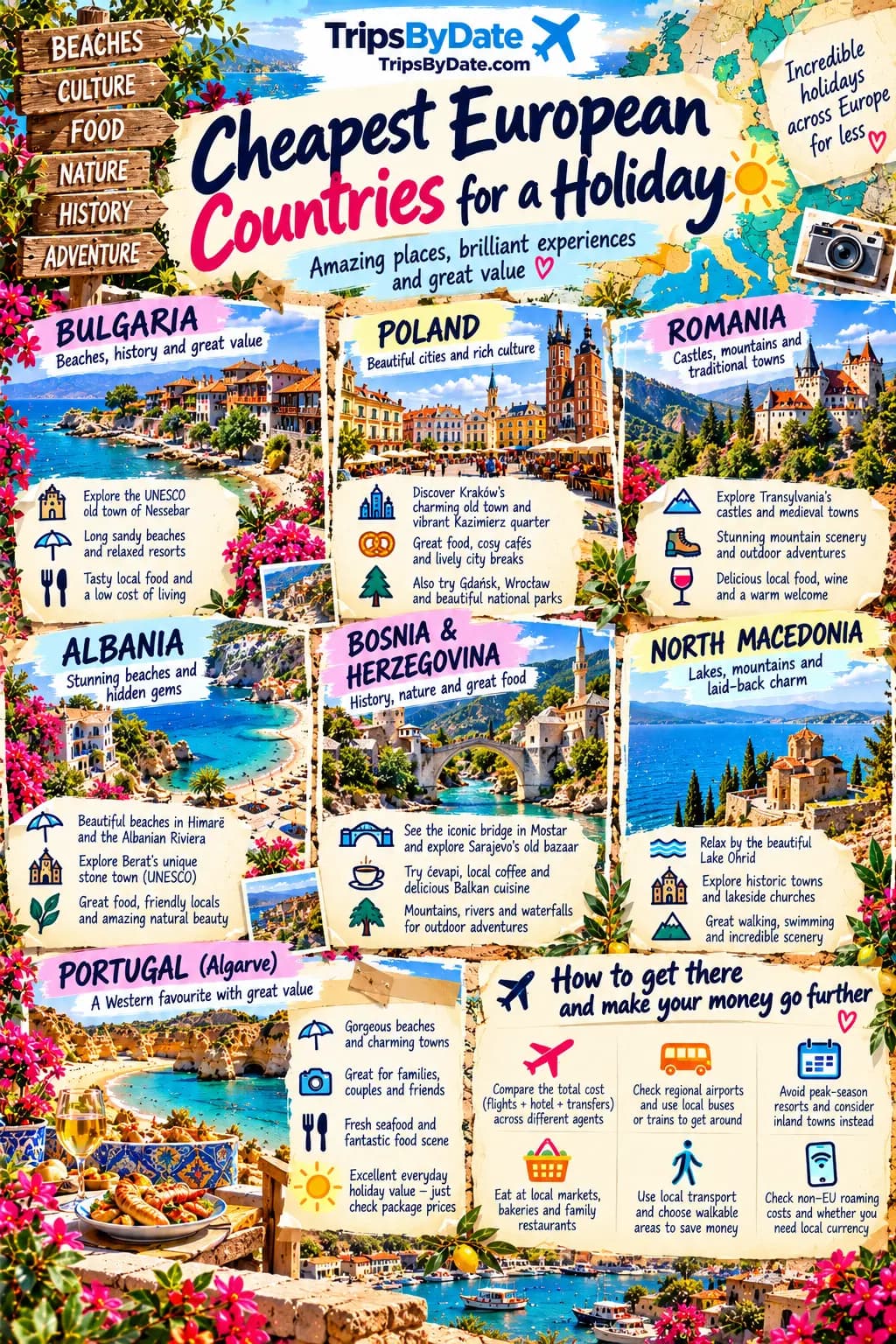
What is the cheapest European country for a holiday? A sensible question, until Europe replies with approximately forty-seven different definitions of cheap. A coffee in a beautiful old square might cost very little, while getting to that square requires a flight, three buses and a taxi driver with ambitious retirement plans. Happily, some extraordinary places really do offer excellent value. The secret is comparing the whole holiday, not crowning a country champion based on the price of one beer.
Quick answer: Bulgaria, Romania and Poland are strong places to start when looking for relatively low everyday costs. Albania, Bosnia and Herzegovina, North Macedonia and Serbia deserve consideration for food, culture and accommodation value, while Latvia, Lithuania and Hungary can make appealing city breaks. For a familiar beach holiday from the UK, the Algarve and Bulgaria's Black Sea coast can be competitive too. None of these countries is guaranteed to be cheapest on your travel dates. Flights, hotels, season, location and the way you actually spend your days can overturn any ranking.
If you already know when you can get away but are open about where, start by browsing TripsByDate. Choose a UK departure airport, scroll through the dates that work for you and see which package-holiday destinations appear. It is a particularly useful way to discover a place you had not thought to search for. Check back regularly as listings change, then verify the final price, availability and inclusions with the holiday provider. TripsByDate shows opportunities, not a league table of verified cheapest countries or every holiday sold online.
What does “cheapest country” actually mean?
There are at least four different competitions going on. They rarely have the same winner.
- Cheapest to reach from the UK: flights or a flight-and-hotel package, plus getting from your front door to your accommodation.
- Cheapest place to stay: the actual hotel or apartment for your dates, not an average accommodation price from a different season.
- Cheapest day-to-day holiday: meals, drinks, public transport, museums, beaches and the things you will actually do.
- Best holiday value: how much pleasure, comfort and freedom you get for the total cost, even if another destination is nominally cheaper.
That distinction matters. An inexpensive room in a landlocked city is excellent for a culture break, but fairly useless if the family specifically wants a week building sandcastles. Equally, a slightly dearer package with a short transfer and breakfast included may beat an ultra-cheap booking that requires a hire car and a daily expedition to find food.
What the research really tells us
According to Eurostat's comparative price-level research, Bulgaria, Romania and Poland sit among the lower-cost EU countries for general household consumption. That is meaningful evidence about domestic price levels, but it is not a ranking of package-holiday prices from the UK. It measures a wider basket of goods and services than a tourist typically buys.
The Post Office City Costs Barometer examines a different question: the cost of a typical basket of sightseeing, transport, eating, drinking and accommodation in European cities. Sarajevo, Bucharest, Tirana and Belgrade have all performed strongly in its city-break comparisons. These results are useful starting points, but the sample does not include flights from Britain and cannot predict the cost of your particular holiday.
Then there is the Post Office Family Holiday Report, which considers everyday holiday spending at resorts, not city-break costs or the price of a package. Destinations including the Algarve and Bulgaria's Sunny Beach have demonstrated strong value in that different type of comparison. A country can therefore be average in one measure and brilliant for your kind of holiday.
Our approach: use independent price research to produce a shortlist, then compare real total prices for your dates. No imaginary universal cheapest-country ranking, and no claims that any destination always has bargain flights.
Start with countries worth checking, not a false cheapest-to-priciest ranking
The countries below offer different kinds of value. Some work well for classic package holidays; others are better for independent flights and accommodation. That difference is important if you are browsing TripsByDate, which focuses on package-holiday discovery.

 LHR • 7 nights
 Skiworld


 LGW • 7 nightsB&B · Skiline
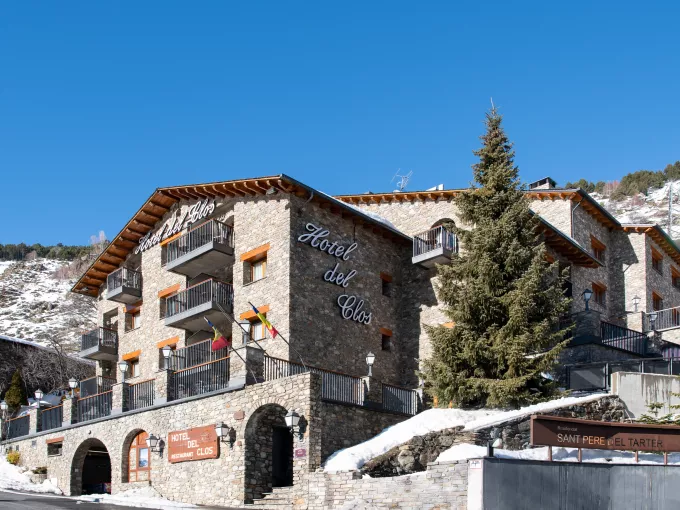 LGW • 7 nightsHB · Neilson
 LGW • 7 nightsSC · Iglu Ski
Bulgaria: the beach-and-history contender
Best for: families seeking beach time, couples who like old towns and travellers comparing resort packages.
The Bulgarian Black Sea is the obvious place to investigate if you want an affordable sun-and-sea break. Sunny Beach offers a large resort scene; Nessebar gives you an entirely different afternoon among lanes, churches and layers of history. UNESCO describes ancient Nessebar as an exceptionally rich historic settlement shaped by Thracian, Greek and medieval traditions. It is the sort of place where the sightseeing can be more exciting than the hotel buffet, and that is saying something if the buffet has a chocolate fountain.
Spend less intelligently: compare hotels in the busier resort against smaller nearby bases, then look at the cost and convenience of local transport. A hotel with breakfast or half-board may help a family manage spending, but only if the meals are ones you would actually eat. For couples, a walkable location can be more valuable than another hotel star.
The catch: seaside resorts can feel very different outside the main season. Check whether pools, restaurants, attractions and flights operate when you want to travel. Bulgaria is a compelling search candidate, not a permanent promise of the lowest package price.
Romania: medieval towns, mountain scenery and city value
Best for: architecture, castles, markets, rail adventures and travellers who would rather explore than sit beside a resort pool.
Start with Bucharest for grand boulevards, lively neighbourhoods and museums, or look at Brașov, Sibiu and Transylvania for attractive historic centres and access to mountain landscapes. Romania's reward is variety: one day a café in an old square, another a forested hillside or castle, with local food such as ciorbă soup and sarmale stuffed cabbage rolls between outings.
A smarter trip: choose one well-connected base and research a realistic train or organised-day-trip itinerary rather than hiring a car for every day. A castle can be wonderful; a five-hour detour to a very crowded castle may not be. Check transport and admission costs before committing your itinerary.
The catch: the pretty mountain town may be some distance from the airport, and some landmark attractions command substantial visitor prices. Romania's relatively low national price level does not make every tourist attraction cheap.
Poland: wonderful city breaks with plenty to do beyond the main square
Best for: friends, couples, museums, food markets and short holidays with a strong cultural focus.
Kraków makes an excellent starting point for a walkable historic centre, cafés and hearty Polish food; Wrocław gives you bridges, islands and remarkable architecture; Gdańsk offers maritime history and a colourful waterfront. Look for pierogi, żurek soup and neighbourhood milk bars (bar mleczny), which can be a good-value way to try simple Polish cooking.
The clever alternative: don't assume Kraków is the only Polish city worth checking. Where direct routes suit your airport, Wrocław or Gdańsk might provide an equally memorable break. Choose the experience first: museums, riverside evenings, historic streets or the coast.
The catch: headline flights can be inexpensive while popular central hotels, guided tours or major tourist sights are less so. Comparing a hotel near public transport with one right on the main square can reveal better value without losing the atmosphere.
Albania: beautiful coast, absorbing history and a transport reality check
Best for: curious couples, beach lovers happy to research logistics and travellers interested in less familiar places.
Albania offers several different holidays under one flag. Tirana is colourful and energetic, Berat has distinctive hillside architecture, and the southern coast around Himarë has clear water and dramatic scenery. A local meal, seafront promenade or village wander can be a lovely way to discover the country without paying for an elaborate excursion.
The less obvious choice: consider mixing a city or heritage stop with beach time, rather than expecting one resort to deliver everything. If you want a relaxing week, however, a single well-chosen seaside base may be better than constantly moving luggage around.
The catch: transfer distances and road journeys matter. Cheap accommodation on the coast may not mean an inexpensive or quick journey from the arrival airport. The availability of UK packages to specific Albanian resorts will also differ from that of long-established Spanish destinations. Check the latest FCDO Albania advice before travel.
Bosnia and Herzegovina: soulful cities, rivers and astonishing scenery
Best for: food, culture, history and travellers who want a holiday that feels genuinely different.
Sarajevo has an extraordinary mixture of cultural influences, markets and cafés. Mostar is famous for its arched bridge and old town, while the wider region offers river landscapes and historic towns. Eating ćevapi, sipping Bosnian coffee and exploring neighbourhood streets is not a compromise holiday. For many people, it is exactly the point of going.
The real value: the city-break spending research makes Sarajevo a particularly interesting destination to investigate. Pair an affordable base with walking, museums and one thoughtfully chosen day trip rather than booking a different expensive tour every morning.
The catch: city-break affordability does not guarantee cheap or direct flights from your UK airport. Nor should a busy day trip to Mostar be treated as the same thing as spending a few relaxed nights there. Check journey times, transport options and current travel advice.
North Macedonia: lakeside calm and inexpensive-feeling adventure
Best for: couples, walkers and anyone who prefers a lake to a crowded Mediterranean beach.
Lake Ohrid is a particularly appealing wildcard. Imagine clear water, lakeside cafés, old churches and a leisurely evening watching the light change across the hills. You can combine gentle exploring with boat trips and local food without needing the constant entertainment schedule of a giant resort.
Make it work: compare the availability of suitable flights and packages, then choose somewhere walkable for evenings. Research the location of beaches, swimming access and boat operators before booking. The appealing guesthouse furthest up the hill may have a spectacular view and an equally spectacular climb back from dinner.
The catch: a beautiful, lower-cost destination may still lose the overall-price contest if getting there is awkward. Consider it because it suits your holiday, not simply because a list labels it cheap.
Portugal: the Algarve proves that value is not confined to eastern Europe
Best for: familiar beach holidays, food, coastal exploring, couples and families.
Portugal demonstrates why country rankings cannot tell the full story. The Algarve has performed well in research into everyday family-resort spending even though Portugal is not generally one of the EU's absolute lowest-price countries. Lagos offers dramatic coastal walks, Tavira rewards slower wandering, and Faro gives access to the Ria Formosa landscape.
The winning approach: look beyond the cost of a restaurant dinner. A walkable base with markets, local cafés and straightforward public transport can make the entire stay feel good value. A half-day exploring an old town may be more enjoyable than a packed excursion programme.
The catch: Algarve package prices and hotel costs are highly seasonal. A good-value lunch does not rescue a flight-and-hotel quote that was expensive to begin with. Our Portugal holiday timing guide offers more seasonal context.
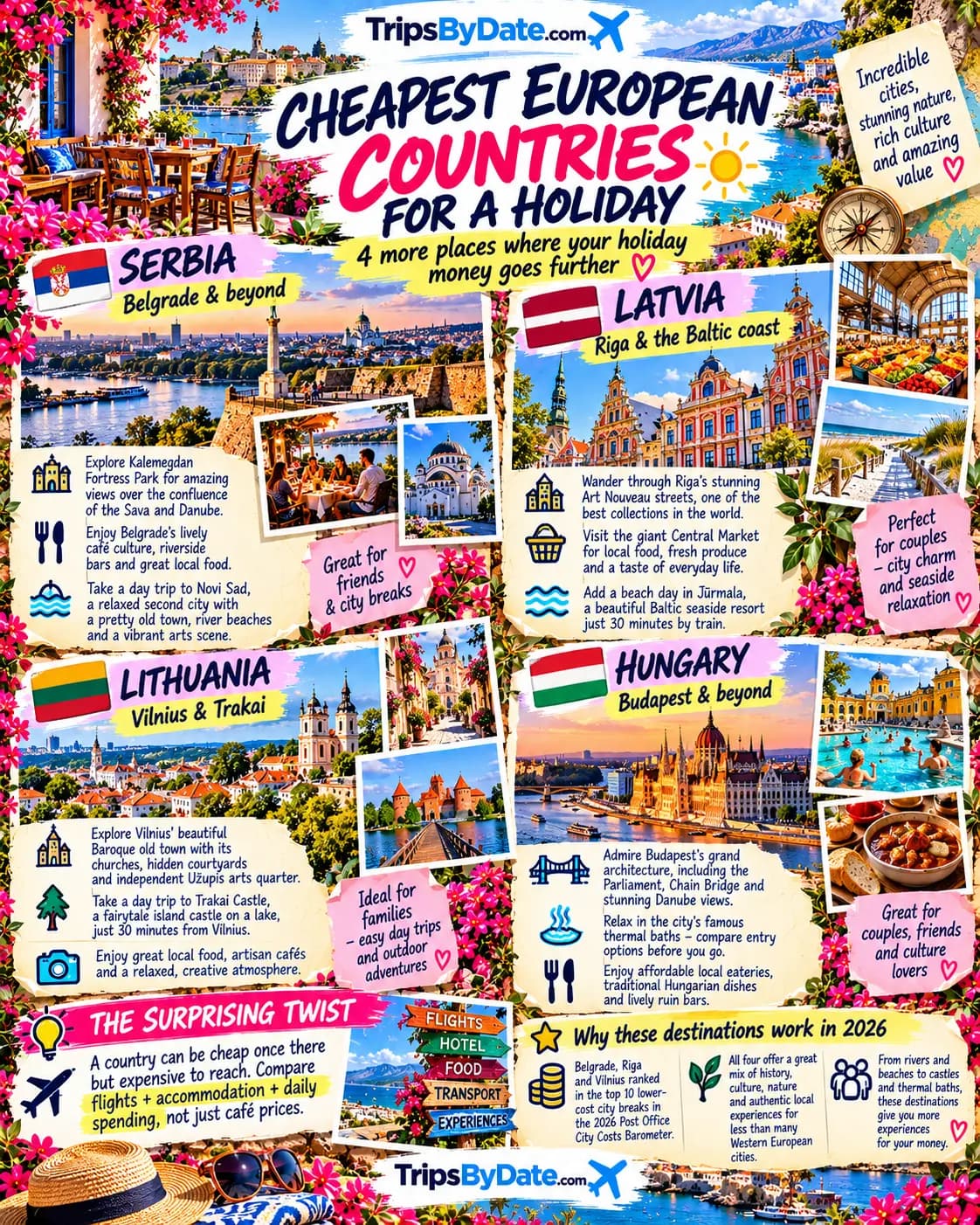
Four European wildcards worth putting on your search list
These are not guaranteed cheaper than the countries above. They are interesting because a comparatively affordable city, a well-timed flight and the right hotel can turn an overlooked destination into an excellent holiday.
Serbia: Belgrade, then a second city by the river
Belgrade combines riverfront life, cafés, markets, fortresses and an energetic evening scene. Kalemegdan Fortress Park is a particularly rewarding place to walk, with views around the Sava and Danube confluence. Try pljeskavica or ćevapi, and see what the city's neighbourhood restaurants offer rather than eating every meal in the most prominent tourist square.
For a different pace, investigate Novi Sad with its old streets and cultural life. Compare the train or bus journey against an organised excursion before deciding. Serbia often makes more sense as a city-and-culture holiday than a conventional beach package.
Latvia: Riga with a Baltic beach day
Riga offers Art Nouveau architecture, markets and a handsome old town. The trick is not to treat Latvia as a city-only destination: if the weather and transport suit, Jūrmala offers a Baltic coastal contrast. A morning among ornate streets and an afternoon beside a wide sandy beach can feel like two holidays without booking two hotels.
Reality check: the Baltic coast is not the Mediterranean. Go for beach walks, summer atmosphere and the novelty of exploring somewhere different, not a guaranteed hot-water swimming holiday. Check train times and the actual forecast.
Lithuania: Vilnius and a castle on an island
Vilnius has a beautiful old town, contrasting neighbourhoods and cafés made for long conversations. Trakai Castle adds a memorable lake-and-history outing if transport and opening arrangements work for your dates. Try cepelinai, the country's famous potato dumplings, but leave room for a relaxed bakery stop too.
Best-value move: choose a conveniently located city base, then enjoy a mix of free wandering and one paid experience you genuinely care about. A crowded itinerary is not automatically a richer holiday.
Hungary: Budapest can still be good value if you plan the expensive bits
The Danube, bridges, grand buildings and neighbourhood food make Budapest hugely appealing. But popularity means you should not assume every hotel, thermal bath or river cruise is inexpensive. Decide whether you really want the famous spa experience, then compare official entry options and quieter alternatives. You can admire a great deal of Budapest's beauty simply by walking.
For food, look for lángos, soups and Hungarian dishes outside the most visitor-focused streets. The best evening may be a walk by the river followed by one properly good meal, not an expensive activity booked for every hour.
The best-value country might be one you haven't searched for
Start with your available dates and UK airport on TripsByDate. Browse the destinations that actually appear, then compare the complete holiday cost before you choose.
Find holidays by dateCheapest to reach versus cheapest once you're there: the test that changes everything
Imagine two entirely hypothetical holidays. Holiday A costs less for accommodation and meals but requires awkward travel and a costly airport transfer. Holiday B has a dearer hotel but an easier flight, affordable transport and most of what you want within walking distance. A country price ranking might prefer A. Your bank balance, and possibly your sanity, might prefer B.
So compare these six things together:
- Getting to the airport in Britain: rail tickets, parking, fuel or an overnight stay.
- The package or flight-and-hotel price: for the correct number of travellers and room configuration.
- The transfer: shared coach, public transport, taxi or hire car, plus how long it takes.
- Food and drink: not just what a beer costs, but how many meals you will buy and where.
- Activities: museum tickets, boat excursions, guided tours, beach clubs or nature outings.
- Useful holiday time: a cheap package that arrives very late and leaves at dawn may deliver fewer enjoyable hours.
The equation is straightforward: total holiday cost = travel to your UK airport + flights/accommodation + transfers + food + activities + essential extras. It is the same calculation for every destination that makes a comparison meaningful. For more help, see our guide to balancing airport costs and package prices.
Does that mean never choose the cheaper country?
Of course not. It means a country with low day-to-day costs becomes particularly attractive when you stay longer, eat locally and explore independently. For a short two-night trip, the flight and travel time may dominate. For a fortnight, everyday food and transport bills deserve much more attention.
That is why your own holiday style matters more than any ranking. A friend who never leaves the all-inclusive pool will have a very different spending pattern from the friend who wants a museum, boat trip, fancy cocktail and souvenir magnet before breakfast.
The beer-price trap: what should you compare instead?
A cheap pint makes a wonderfully shareable headline. It is less useful if you drink mostly water, have children or would rather spend the afternoon at an art gallery.
For food and drink, investigate a typical neighbourhood café breakfast, a simple local lunch, an ordinary restaurant dinner, bottled water if necessary and supermarket basics. Look up recent menus, not just a decade-old travel blog. A bargain beer in one city does not prove that groceries, hotels or attractions are equally cheap.
For families, compare a familiar set of expenses: simple meals, snacks, ice creams, transport, one family attraction and any pool or beach extras. The Post Office Family Holiday Report is more relevant to that question than a city-break beer table.
For couples, a well-located hotel, beautiful walking routes and one memorable dinner can offer more value than a remote resort with an impressive room photograph. For friends, nightlife may matter, but so will how much it costs to get home safely and whether sharing a room actually makes the trip cheaper.
Can you compare countries using the same basket?
Yes. Build your own little holiday basket before searching. For example: one week's accommodation, flights, airport transfer, seven breakfasts, five simple lunches, four dinners out, local transport and two paid outings. Price the same types of things in each shortlisted destination.
You don't need to turn the holiday into a financial audit. This is a ten-minute sanity check to stop a single tempting number from running the whole show.
The hidden costs that can make a cheap country surprisingly expensive
The attractive hotel is nowhere near what you came to see
A bargain room is less appealing if the old town, restaurants and beach require a taxi every time. Read the map. Check whether the distance is walkable in real conditions, not just a straight line on a screen. Hills, missing pavements and summer heat are surprisingly effective ways to ruin a cheerful budget spreadsheet.
The flight is cheap, but the transfer eats the saving
This particularly matters for lesser-known coastal destinations. Find out which airport serves the actual resort, how long the journey is and what the included transfer really covers. A country can be affordable in general but awkward for one specific holiday base.
You accidentally compare two completely different holidays
Room-only against all-inclusive, checked baggage against hand luggage, two adults sharing against a solo room, seven nights against five, seaside town against inland hotel: these are not comparable quotes. For a more detailed checklist, use our package-holiday comparison guide.
You spend your way through a cheap destination
Private transfers, daily tourist restaurants, ride-hailing for every short journey, imported drinks and organised excursions can add up wherever you go. A destination's cost-of-living statistics cannot control your holiday decisions. Neither can the very persuasive ice-cream seller on the promenade.
You assume a familiar currency or travel rule
Not every European country uses the euro or follows identical entry and roaming rules. Before travelling, check currency, card fees, mobile roaming, passport and entry requirements. Use the UK government's country-specific travel advice for the latest practical requirements. When a card terminal offers to convert a local-currency transaction into pounds, compare your card's exchange arrangements before accepting its conversion.
How to make a cheap European holiday feel genuinely rich
The goal is not to visit a low-cost country and then spend seven days congratulating yourself for buying nothing. It is to make better choices about what you spend on.
Give yourself a free day that feels like a proper adventure
A beautiful city walk can be an experience in its own right. In Kraków, wander the old streets and riverside; in Sarajevo, investigate a neighbourhood beyond the obvious shopping route; in Nessebar, explore layers of history; in Vilnius, pick an old-town route and see what you find. Verify which museums, sites and churches require tickets rather than assuming everything historic is free.
Buy one outstanding experience instead of five forgettable ones
A castle visit, excellent cooking workshop, guided nature walk or a scenic boat trip can be the centrepiece of the holiday. Choose it deliberately, then enjoy inexpensive discoveries around it. On Albania's coast, that might mean a genuinely worthwhile boat outing. In Transylvania, a guided heritage experience. In Budapest, the spa you actually want rather than the one everyone happens to photograph.
Use a market as an activity, not just a supermarket substitute
A neighbourhood food market can introduce regional ingredients and local life while helping you plan lunch. In Riga, the Central Market is an adventure in its own right; in Bucharest, local bakeries and ordinary food shops can be more revealing than a tourist menu. Check opening days and be respectful of working markets.
Learn a tiny amount about the food before you go
Discover a few dishes, then order something beyond the familiar. Poland has pierogi and żurek; Serbia has grilled specialities; Bosnia has burek and coffee traditions; Albania has regional pastries and grilled dishes; Romania offers hearty soups and stews. Being curious about local cooking is often a better-value experience than paying extra for an imported version of the food you eat at home.
Mix the big sights with one slightly odd story
Visit the historic centre, absolutely. Then find the unusual local detail: Wrocław's little dwarf statues, a Roman-era site in Romania, Trakai's island castle, or a Baltic beach reached by local train. Those are the stories people remember when the novelty of the hotel breakfast machine has worn off.
Which cheap European country suits your kind of holiday?
For couples: atmosphere first, bargain second
Shortlist Kraków, Sarajevo, Vilnius or Ohrid for different versions of a romantic break: cafés and historic streets, river and mountain views, or slow lakeside evenings. Check whether the neighbourhood feels enjoyable after dark and whether you can walk to dinner. One beautiful evening beats a luxury upgrade you barely notice.
For families: package convenience can beat the cheapest daily costs
Bulgaria's Black Sea and the Algarve are sensible regions to compare for beach-oriented family holidays. Look at family-room layouts, children's facilities, transfer time, pool arrangements and how food is priced. Research by the Post Office specifically compares family-resort spending, but its results do not tell you the cheapest total family package from your local airport. That requires a real quote for your family.
For groups of friends: the room arrangement changes the maths
Belgrade, Budapest, Kraków and Riga suit different combinations of food, nightlife and culture. But a headline price based on two people sharing may not work for three friends who all want separate rooms. Compare apartments, hotel rooms and actual beds, not the optimistic accommodation photograph featuring one enormous sofa.
For solo travellers: low local prices aren't enough
A good-value city with easy public transport and plenty to explore can work brilliantly for one person. Bucharest, Vilnius, Kraków and Sarajevo are places to investigate. However, single-room supplements can change package prices dramatically, and an unfamiliar late-night arrival deserves extra planning. Compare the solo price from the start rather than discovering it at checkout.
For the beach-first traveller: do not mistake a cheap city for a cheap beach holiday
Try Bulgaria, Albania or the Algarve first if a seaside escape is the goal. You might discover another option through dates-first browsing, but be realistic about transfer times and seasonal weather. A charming Balkan city has many virtues. A sandy beach directly outside the hotel may not be one of them.
When to go: why a cheaper country can have an expensive month
Shoulder seasons can bring appealing combinations of milder weather, smaller crowds and better availability, particularly if you like exploring more than intense beach heat. But this is not an instruction to book any random week in spring or autumn. Some coastal businesses reduce their opening days, while school holidays, festivals and major events can push demand up.
Summer may be ideal for Bulgaria's beaches or the Albanian Riviera, while a cooler period can be more comfortable for walking around Kraków, Bucharest or Sarajevo. The relevant question is what do you want to do every day? A low-priced beach hotel with cold seas and closed restaurants is not much of a bargain if you booked it for swimming and nightlife.
For a wider look at seasonality, see our cheapest months to go on holiday guide and how to compare package-holiday prices across months.
Is booking late always cheapest?
No. Last-minute discounts sometimes exist, especially when operators have capacity to fill, but the choice of flights and rooms may be worse. Booking earlier can be useful if you need school-holiday dates, accessible accommodation or a particular family room. The MoneySavingExpert package-holiday guide explains opportunities to compare, not a guaranteed magic discount date.
The practical approach is to check regularly, compare genuine offers for your dates and stop treating the calendar as a fortune-telling device. Browsing TripsByDate whenever you have a moment makes that exploration less of a project and more of an enjoyable habit.
A simple five-step plan for finding your best-value European holiday
- Choose your type of escape. Beach, city, culture, food, nature or a mixture. Decide how much travel time you can tolerate.
- Check what's available from your UK airport. Start with TripsByDate if you're looking for a package and want inspiration by departure date, rather than naming a destination first.
- Shortlist three very different options. Perhaps a Bulgarian beach, a Polish city and an Albanian coastal escape. Do not force them into a single fake comparison. Ask what each holiday would actually feel like.
- Compare complete totals. Flights and hotel, room sharing, baggage, transfers, food, travel insurance and the activities you would genuinely enjoy. Check booking protection and the provider's final terms.
- Spend deliberately. Save on forgettable costs and keep some money for the one experience that makes the trip yours.
If your first choice doesn't fit your dates, don't assume Europe has run out of bargains. There may be another interesting destination you didn't think to search for. That possibility is exactly why a date-first discovery tool is useful.
Frequently asked questions about Europe's cheapest holiday countries
What is the cheapest European country to visit from the UK?
There is no single reliable answer for every trip. Bulgaria, Romania and Poland have relatively low general price levels, while Albania, Bosnia and Herzegovina and Serbia can offer appealing everyday travel value. But UK flights, hotel rates, transport and travel dates decide the actual cheapest holiday for you. Compare the full cost rather than a national average.
Which European countries are cheapest for food and drink?
Several countries in central, eastern and south-eastern Europe offer good opportunities for inexpensive local meals, including Bulgaria, Romania, Poland, Bosnia and Herzegovina and Serbia. Prices vary within each country, especially between neighbourhood restaurants and major tourist areas. Check current menus and drinks costs for the actual town you want to visit.
Is eastern Europe always cheaper than Spain or Portugal?
No. National price levels can be lower in some eastern European countries, but that doesn't guarantee cheaper holidays from Britain. Good-value flight-and-hotel packages and favourable everyday resort spending can make parts of Spain and Portugal extremely competitive. Flight availability and your chosen dates matter.
Are Albania and Bosnia and Herzegovina good for cheap holidays?
They can be rewarding places for travellers who value food, heritage, scenery and local experiences. But examine UK flight routes, transfer times, local transport and accommodation carefully. For beach holidays, a long airport transfer can change the whole calculation.
Which cheap European countries are best for families?
For an easy beach holiday, compare Bulgaria's Black Sea resorts and the Algarve, then check the actual family package price and the facilities you need. A low-price city might be excellent for older children who love history, but not necessarily for a toddler who wants a pool every afternoon.
Is it better to book a package or flights and hotel separately?
Neither is always cheapest. Compare the same hotel, dates, flights, luggage, transfers and protection. A package may offer value and convenience, while separate bookings can offer flexibility, particularly in destinations with fewer conventional UK packages. See our guide to comparing package holiday offers.
Which European countries offer inexpensive city breaks?
Sarajevo, Bucharest, Tirana, Belgrade, Riga and Vilnius have all featured favourably in UK-based city-break cost comparisons. These studies generally assess accommodation and visitor expenses within the destination, not a live flight-and-hotel quote from your chosen UK airport.
The cheapest holiday is the one you can actually enjoy
A low-cost European holiday can mean watching sunset from the walls of an old town, discovering a family-run bakery, eating a dish you've never heard of, taking a ferry across a harbour or walking beside a lake without spending much at all. That sounds substantially better than taking the cheapest flight somewhere you don't really want to visit and congratulating yourself on the savings.
Use these countries as ideas, not instructions. Start with the days you're free and the airport you can reach. See what appears on TripsByDate, compare the complete holiday and choose the place that offers the best mix of price, time and experiences for you. Europe is full of possibilities, and some of the best ones won't be on your original shortlist.
Find a European escape that's worth every penny
Browse package holidays by date and UK departure airport on TripsByDate. Discover new possibilities, check the final provider price and choose somewhere you'll love exploring.
Find holidays by date