

Best Package Holidays Under £600: More Adventure for Your Money
Could £600 buy you more than a sunlounger? Explore beautiful coastlines, unforgettable little adventures and clever ways to get more holiday from your money.
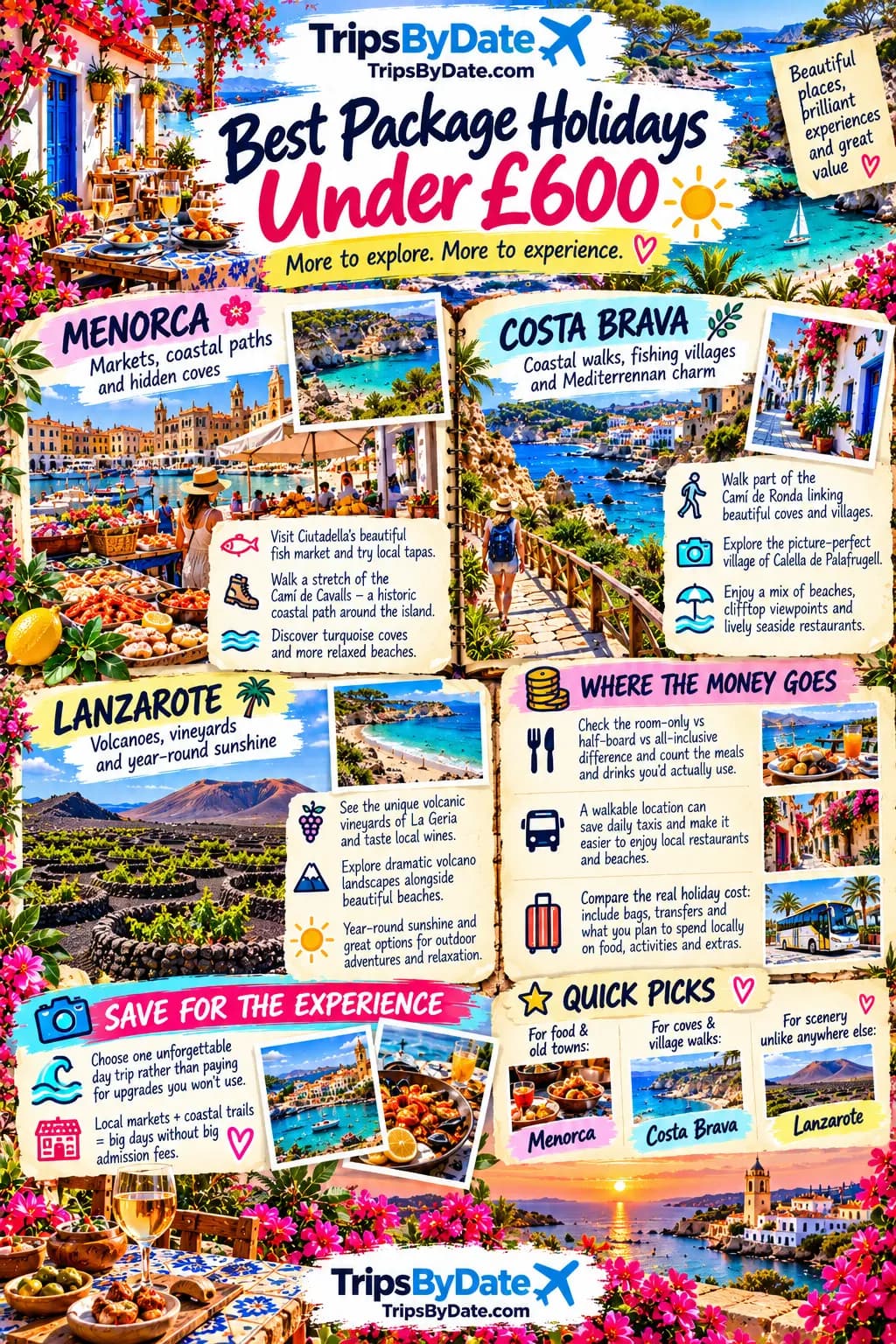
Imagine a morning wandering through a harbour market, an afternoon finding a cove that looks suspiciously like someone's expensive screensaver, and a sunset dinner at a little restaurant where the menu has more character than the hotel brochure. Package holidays under £600 per person are worth exploring because this budget can give you some genuine choices about how you spend your holiday, not just whether you can afford to get away. It still won't buy everything, everywhere, at any time. But choose your dates, base and experiences intelligently and you might return with a very full camera roll and a pleasantly unremarkable bank statement.
Quick answer: Start your search with Menorca, the Costa Brava and Lanzarote if you want a mix of beaches and worthwhile days out. Other options worth checking include Madeira for walking, mainland Greece for history and food, and less central resort areas in Portugal or Spain. These are destinations to investigate, not verified packages available below £600. Flight availability, departure airport, travel season, occupancy, length of stay and board basis decide whether a suitable deal exists.
Here's the more interesting approach: TripsByDate lets you start with the UK airport and dates you can travel, then browse changing package-holiday possibilities without first choosing a destination. Dip in regularly when you have a moment, spot a place you would never have typed into a search box, and follow through to the provider to confirm the exact price and inclusions. You don't need to decide whether you're a “Menorca person” before you discover Menorca.
This guide focuses on something a little different from our under-£500 holiday ideas: how to turn an extra margin of budget into a better experience. Not a bigger hotel lobby. Not necessarily an extra star. A holiday you can actually enjoy from morning to evening.
What can £600 per person realistically buy?
At this price level you may be able to compare a wider range of flight times, destinations, hotels and durations than at the very tightest budgets. You might find a longer beach stay, a more convenient base, breakfast included, or accommodation that makes outings easier. You might find none of those things for peak school-holiday dates. A £600 ceiling is a search limit, not a promise.
A holiday advertised at £600 per person is normally not £600 for two people. Many headline quotes assume two adults sharing a room. Family configurations, child ages, single occupancy and accessible accommodation can change the total substantially. Always search for your real group before getting attached to the brochure photograph.
Decide whether £600 is your booking budget or your entire holiday budget
This is the decision that determines everything else. If £600 is for the package alone, you can compare offers up to that ceiling and separately budget for travel insurance, airport transport, local meals and activities. If £600 must pay for everything, booking a £599 package could leave you with a daily budget of one bread roll and the hotel tap water.
Try these questions before browsing:
- What must be included? Flights and accommodation, certainly, but what about baggage, transfers, meals or a usable family room?
- What would make the trip special? A boat outing, long coastal walk, excellent food, child-friendly pool or a few mornings of glorious nothing?
- How much will you need on the ground? Price transport, food and one or two paid activities before deciding what to spend on the booking.
- Which things would you genuinely use? A private plunge pool is not much of a bargain if you plan to spend every waking hour sightseeing.
If you need a deeper comparison of total costs, our guide to checking a cheap package before booking is a useful companion.
Three ways to make £600 feel like a much bigger holiday
The location upgrade: pay for freedom, not marble floors
A well-placed three-star hotel near the waterfront, buses, bakeries and an old town can be a smarter buy than a grander property needing taxis whenever you want to leave. Check the actual walking route rather than the straight-line distance. “Five minutes from town” can become twenty minutes along a dual carriageway with no pavement. The map is less romantic than the sunset photograph but much better at preventing expensive mistakes.
The time upgrade: buy usable hours
Compare a six-night and seven-night package, but also examine the arrival and departure times. A late arrival and very early return can shrink the holiday noticeably. The alternative with one fewer advertised night might offer more enjoyable daylight. Consider transfer duration and how long you have to wait for check-in. For a detailed method, read our guide to departure and return times.
The experience upgrade: choose one thing worth remembering
Perhaps it's a guided volcano walk, a market-to-table cookery session, a short harbour cruise or an organised wildlife outing. Pick one memorable paid experience, then build the rest of the trip around beaches, public paths, inexpensive museums and good local food. You don't have to prove you had fun by buying six excursion tickets before breakfast.
Explore available holidays by departure date
These are changing package-holiday examples from TripsByDate's wider inventory, not a specially filtered collection of holidays under £600 or departures to the destinations below. Browse for inspiration, then check the operator's current offer, full price, party size, dates and inclusions before booking.


 LGW • 7 nights
 B&B · Broadway Travel

 LGW • 3 nightsSC · First Choice
 LGW • 7 nightsAI · easyJet holidays
 STN • 7 nightsRO · Hays Travel
Where to look for a package holiday under £600
Think of the following as travel ideas with specific rewards and trade-offs. None has a permanent price tag, and some will be entirely unsuitable for your season or departure airport. A good deal is one that fits your dates, needs and interests, not a country that appeared in a cheap-holiday article once.
Menorca: little coves, big walks and a surprisingly good food trip
Menorca has the reputation of a beach island, but its real trick is combining sandy coves, traditional towns, local food and stretches of rugged coast. If you only lie beside the hotel pool you may have a lovely week, but you'll miss much of what makes it special.
For a charming base, investigate Ciutadella, with atmospheric streets and a harbour, or the possibilities around Mahón (Maó) for waterside restaurants and a different side of the island. If your priority is a short walk to a sandy beach, search actual resorts and beaches rather than assuming a historic town centre is also a seaside hotel strip.
The memorable idea: walk a suitable section of the Camí de Cavalls, the long-distance trail that circles Menorca. You don't need to walk the whole island, buy specialist hiking gear or insist that a seven-mile cliff path is “just a little stroll”. Choose a manageable section, check access and weather, take water, and plan the return journey. Some beaches are reached by longer walks and have limited facilities, particularly outside peak season.
The food mission: look out for Menorcan cheese, local seafood and the island's traditional pastries. Compare a small harbour restaurant's menu with a resort set menu, and allow yourself one proper sit-down meal rather than relying entirely on snacks. For planning island travel, consult the Balearic Islands' official tourism information.
Budget warning: an apparently cheap hotel can be awkward if the beach you want requires a hire car or a long transfer. Factor in parking, fuel, buses or excursions. Menorca can be very popular in summer, so don't assume a £600 package is waiting at the height of school holidays. The wider best months to visit Spain guide can help you choose the type of season you want.
Costa Brava: a coast where the walk between beaches is half the holiday
The Costa Brava, northeast of Barcelona, rewards people who like old fishing villages, little coves and evenings built around a long, lazy meal. You can organise a holiday around walking rather than paying for a stream of organised excursions.
Try the area around Calella de Palafrugell, with its fishing-village character, or look into Llafranc and nearby coastal places. The Camí de Ronda coastal paths connect sections of shoreline and offer beautiful walks, but conditions vary by section. Some portions have steps, rough surfaces or exposure, and shouldn't be treated as one continuous effortless promenade.
Make a day of it: walk a suitable stretch early, swim where conditions allow, have lunch in a village and spend the afternoon exploring instead of buying another beach club day. If you like local culture, look out for markets, festivals and historic streets in inland towns. Verify dates and public transport before building your holiday around an event.
The booking catch: the coast is spread across different towns, and some places are more practical with a car than others. A package to the wider region does not necessarily mean your hotel is close to the pretty village you've seen in a photograph. Use the exact address, real journey times and an updated public transport timetable. See Spain's official tourism site for ideas beyond the resort strip.
Lanzarote: black volcanic vineyards and beaches that feel like another planet
Lanzarote is a compelling alternative when you want landscape as well as lounging. The island's volcanic scenery makes even a relatively simple day out feel extraordinary. There are resorts for easy beach time, but also villages, markets, artistic sites and scenery that invites exploration.
The wild card: La Geria vineyards. Vines grow in black volcanic material, often in hollows protected by curved stone walls. It sounds improbable until you see it. Spain's official tourism guide explains the volcanic wine-growing landscape. Look for a small tasting experience if it fits your budget and use an organised outing or suitable transport if drinking.
Build a low-cost day: spend time exploring a village, look for public coastal viewpoints and choose one paid attraction rather than cramming every advertised excursion into a single trip. Volcanic roads and remote attractions may not be reachable on a straightforward local bus, so investigate connections first.
A seasonal reality check: Lanzarote can be attractive for winter sunshine, but wind, ocean conditions and cool water can affect swimming plans. A sheltered hotel pool may matter more than the words “beachfront” on a booking page. Our Lanzarote winter sun guide explains the differences between resorts and activities.
Wild cards that are worth checking, even if they were not on your list
Madeira: swap the beach week for a botanical adventure
Madeira isn't a guaranteed cheap or hot-beach option, but it offers striking scenery, gardens, coastal towns and walking. Funchal makes a practical base for restaurants and transport options. For adventurous travellers, a single appropriately chosen guided walk can be the centrepiece of the holiday. Some mountain routes require advance arrangements or can close for safety, so check official Madeira walking guidance before committing. A hotel with an outdoor pool is not a substitute for checking the mountain forecast.
Thessaloniki or mainland Greece: food and history instead of resort wristbands
A city-and-food break can occasionally be the smarter use of a £600 ceiling, especially if you are not demanding seven nights and sea-swimming weather. Thessaloniki offers waterfront walks, Byzantine heritage and a lively food culture. Try regional pastries, savoury pies and traditional markets while planning around real opening times. Compare flight-and-hotel packages from your airport rather than assuming a famous Greek island will always be the bargain. Visit Greece is a starting point for destination and cultural information.
A quieter Portugal or Spain base: fewer headline attractions, better daily life
Sometimes the best-value holiday is not the famous resort. A smaller, walkable town with local cafés, a beach and straightforward transport might give you a more enjoyable week than a distant luxury hotel. But don't romanticise isolation: a beautiful town without convenient buses or open restaurants in your season can be more expensive, not less. Search the exact town name, read season-specific reviews and check its connections.
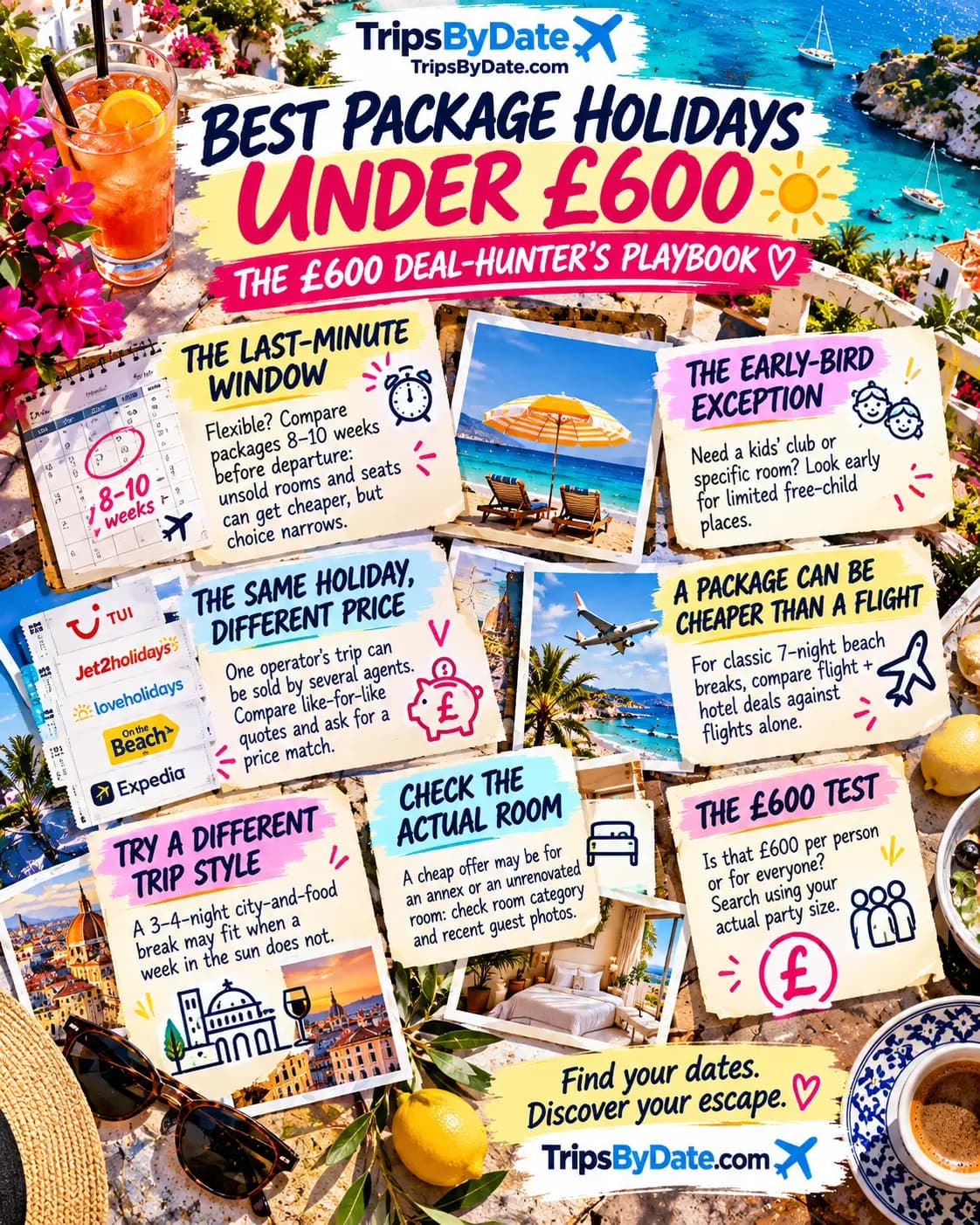
The £600 deal-hunter's playbook
This is where a decent budget turns into a well-judged booking. The key is not memorising one “cheapest day” or assuming everyone else is shopping incorrectly. It's testing what changes the total cost and quality of the exact holiday you're considering.
1. The early-booking versus last-minute test
MoneySavingExpert's package-holiday research describes the potential for late reductions as tour operators sell remaining capacity. But Which?'s package-holiday tracking has found earlier booking cheaper for a number of destinations. Both can be true. Prices depend on demand, operator capacity and the exact trip.
Use the distinction sensibly: flexible travellers without a preferred hotel can monitor late options. Parents needing a specific family room, accessible facilities or school-holiday flights should generally place more weight on availability and booking earlier. The ABTA early-booking advice also explains the limited nature of some free child places.
2. The identical-package test
Two agents may sell the same underlying holiday at different prices. Note the operator, hotel, room category, board, departure airport, flights, baggage, transfers and dates, then compare truly identical quotes. MoneySavingExpert explains how to request a like-for-like price match. Discounts aren't guaranteed, and the cheapest number on the screen is meaningless if it quietly excludes the suitcase.
3. The unexpected-length test
Try several lengths of stay, including a shorter city-and-culture trip or a full week, if your schedule allows. Package flight and hotel combinations do not always become cheaper simply because you remove a night. Flight schedules, contracted accommodation and availability all matter. Compare the whole booking, then divide the price by usable holiday days, not merely hotel nights.
4. The room-name detective test
Read the room category as carefully as the hotel name. “Annex”, “economy”, “inland view”, “garden building” and “standard” can describe quite different arrangements. None is automatically bad. But if you pictured the sea-view balcony shown in the first photograph, don't assume it comes with the cheapest room.
Compare the room's actual floor plan or description, whether it is in the main building, bed type, air conditioning where relevant, accessibility and recent reviews from travellers in the same room category. A pleasant basic room is a bargain; an unpleasant surprise is not.
5. The real-party-price test
A £600-per-person result may be based on two adults sharing. Try the search with your actual party composition immediately. A solo traveller could face a supplement; two adults and two children may need a different room; a teenager may be priced differently from a younger child. Don't plan your entire holiday around a quote for imaginary travellers.
Which holiday style gives the best value at £600?
For couples: choose atmosphere over unnecessary upgrades
A hotel close to a harbour, old town or beautiful walk makes spontaneous evenings easier. Imagine a bakery breakfast, time to explore, a swim and a lovely dinner rather than paying extra for facilities you won't use. Menorca's historic towns and the Costa Brava's smaller coastal bases appeal to couples who want their holiday to happen outside the hotel as well as inside it. Read our winter sun holidays for couples for more experience-led ideas.
For families: spend on the things that reduce friction
A short transfer, the right beds, a shallow pool and reliable eating options may matter more than a spa or a higher star rating. Check whether a children's club operates in your travel period and accepts your child's actual age. Some free-child-place promotions are limited and conditional, and may require two paying adults or certain rooms. Compare the whole family price, not the size of the word FREE.
A simple beach day followed by a promenade ice cream can be a terrific family memory. Paying for a waterpark every single day is not a requirement of successful parenting. If you want ideas specific to children, see our family winter sun guide.
For friends: agree the real budget before agreeing the destination
Share accommodation only if it gives everyone an acceptable bed and some personal space. Check whether the cheap headline requires three adults in a room, whether transfers arrive together, and which activities the group actually wants. “We'll just split everything” sounds lovely until one person wants fine dining and another wants supermarket sandwiches.
A useful compromise is a common base, one shared paid experience and plenty of optional free time. Choose a place where people can split up to browse markets, relax on the beach or explore independently without taxis for every movement.
For solo travellers: compare total enjoyment, not a misleading per-person quote
A centrally located city break can be easier than a remote resort if you want food, museums and social opportunities. Check genuine single-occupancy pricing and whether group walking tours or day trips offer enjoyable company. Paying more for a hotel in a walkable, well-connected location can sometimes eliminate a surprising amount of transport expense. See our solo holiday advice for general booking checks that also matter when travelling alone.
Board basis: breakfast, half-board or all-inclusive?
The cheapest package isn't necessarily the cheapest holiday, particularly if food and drink will be a large part of your spending. But an all-inclusive label isn't automatically better value either.
Choose breakfast included if you love getting out
A generous breakfast can set you up for a day exploring villages and beaches, while leaving lunch and dinner free for local food. Check whether the hotel is within reach of restaurants you actually want to use. Breakfast included at an isolated hotel can still leave you paying for expensive evening taxis.
Choose half-board if you want predictable evenings
Half-board can suit people who enjoy sightseeing by day but prefer an easy hotel dinner. Check whether drinks cost extra, whether a buffet or set menu is provided, and whether dinner timings suit you. It may be poor value if you plan to spend half your evenings trying restaurants elsewhere.
Choose all-inclusive if you will genuinely use it
For pool-focused travellers, families with hungry children or people who don't want to watch every food bill, all-inclusive can make sense. Examine the inclusion list: snack hours, branded drinks, à la carte restaurants, ice cream, bottled water and opening times can differ significantly. Which? has researched the pitfalls of apparently cheap all-inclusive packages.
Try the halfway option: an apartment or apart-hotel with a fridge and kettle can let you have simple breakfasts, enjoy lunches out and reserve money for dinners that matter. This only works if a self-catering routine sounds like a holiday to you. Nobody needs to fly abroad to rediscover how much they dislike washing up.

Find the holiday that fits your £600 ambition
Start with your UK airport and the days you can go. Browse TripsByDate for unexpected package-holiday possibilities, then check the operator's exact deal and total price.
Find holidays by dateAvoid the spending traps that make a £600 holiday feel expensive
The first-evening trap
Late arrival, closed shops and hunger can lead to the most overpriced meal of the trip. Before flying, identify the hotel's dinner arrangements and a realistic nearby food option. If you arrive after dining hours, a small snack packed within airport security rules can be surprisingly comforting.
The hire-car trap
A cheap rental quote can become costly once deposits, excess, fuel policy, additional drivers and insurance are considered. If you will only make one or two excursions, compare the cost of organised trips or local transport. If driving is essential to the destination you want, budget it from the start instead of pretending it's a surprise later.
The excursion-menu trap
Resort excursion desks make booking easy, which is valuable. They are not automatically the best or most suitable way to explore. Compare what is included, how long you get at each stop, whether transport is necessary and whether you could enjoy the same place using public transport. Don't substitute unsafe DIY excursions for a properly guided activity where expertise matters, particularly on boats, in mountain terrain or at sea.
The souvenir trap
Buy something you genuinely want rather than collecting objects because someone announced a “special price”. For food and craft purchases, look at local market rules, baggage restrictions, fragile packing and customs requirements. The perfect giant ceramic bowl is considerably less perfect when it has to travel home on your lap.
The currency and card trap
When offered a choice on a card terminal abroad, paying in the local currency often avoids an unfavourable merchant conversion rate. Check your own bank's foreign-transaction fees and cash-withdrawal terms, and watch out for ATM charges. MoneySavingExpert's travel money guidance covers this in more detail. The best savings are usually the ones you never notice because they didn't turn into surprise fees.
Make the destination do some of the work for you
Some of the nicest holiday experiences are inexpensive because they are simply part of being there. A harbour at dusk. A coastal path in morning light. A bakery selling something unfamiliar. A public market where you can spend half an hour people-watching without buying a thing.
But “free” must not mean ignoring safety, regulations or seasonal limitations. Check beach flags, path closures, local access restrictions and whether public transport still runs for the return journey. A viewpoint isn't worth a cliff-edge photograph. A remote beach isn't a saving if you need a rescue or a costly unplanned taxi.
A practical day plan: start with a bakery breakfast, explore a village or historic district on foot, enjoy a beach or public park in the afternoon, and have a deliberate dinner rather than automatically eating beside the nearest attraction. Choose one paid highlight for the week. That may be enough for a holiday that feels rich in experiences rather than rich in receipts.
A simple way to search for better-value departures on TripsByDate
Try a different search order from the usual destination-first approach:
- Choose the UK airports you would realistically use. A smaller airport can be convenient, but compare the package cost with travel to the airport and parking.
- Look at your actual available days. Browse nearby dates if you are flexible, without assuming a midweek flight is always cheaper.
- Let the destination surprise you. Spot an intriguing place on TripsByDate, then investigate the season, beach, neighbourhood and what you'd do there.
- Check the total on the operator's site. Re-enter your party size, confirm baggage, hotel room, transfers, cancellation terms and current availability.
- Save a shortlist and revisit when useful. Listings can change, so regular browsing can help you notice new opportunities, but it does not guarantee the lowest market price or an offer under £600.
A good next read is our guide to comparing holiday prices from different UK airports if you have several possible departure points.
What to check before you pay
A genuine bargain still needs sensible protection and basic planning. For a flight-inclusive package sold by a UK travel business, verify what financial protection applies, and use the Civil Aviation Authority's ATOL holder search where appropriate. ABTA explains how package holidays are defined, including why not every combination of travel purchases is automatically the same thing.
Check passport and entry rules, current UK foreign travel advice, suitable travel insurance, airline baggage conditions, hotel terms, airport transfers and local taxes. ATOL financial protection is not travel insurance. If you want to compare packages against arranging everything separately, make sure you are comparing like-for-like services and protection.
It's tempting to treat £600 as a magic threshold, but it should never distract you from an unsuitable hotel, an impossible connection or a poor-value deal. If the trip doesn't work, keep looking. There is no prize for buying the first holiday with a bright red discount sticker.
Frequently asked questions about package holidays under £600
Can I get a seven-night package holiday for under £600 per person?
It's possible for some destinations and travel dates, but it isn't guaranteed. Airport, season, number travelling, hotel, board basis and live availability all influence the quote. Compare several suitable dates and check the actual provider total before booking.
Is £600 a reasonable budget for a family holiday?
It may be a reasonable per-person search ceiling, but it is not automatically a realistic total family budget. Children's ages, family-room availability, school-holiday demand and promotional conditions can change prices. Always run the full family search.
Is all-inclusive the best option at this price?
Only if its inclusions match how you will actually spend your days. It can suit a pool-led week or a family that will eat frequently at the hotel. For a couple exploring markets, historic towns and restaurants, bed-and-breakfast or a self-catering base might work better.
Should I book early or wait for a last-minute bargain?
Neither strategy always wins. Late availability can produce reductions, while booking early may secure specific rooms, family facilities or better prices on popular dates. Check live comparisons and decide how much flexibility you can afford.
Can £600 buy a better holiday than £750?
Yes, in terms of personal enjoyment, though not necessarily on paper. A well-located, properly chosen £600 trip can be more satisfying than a £750 booking with awkward flights, unnecessary upgrades or nothing interesting nearby. The point is matching the holiday to your priorities.
Which destinations should I search first?
Try Menorca for coastal walks and traditional towns, the Costa Brava for coves and villages, and Lanzarote for volcanic landscapes. Madeira and selected mainland city-and-coast destinations are useful wild cards. These are suggestions, not confirmed under-£600 offers.
How can I search without deciding on a destination first?
Use TripsByDate to browse opportunities by your UK departure airport and travel dates. If a destination catches your eye, research the location, weather, practicalities and full provider price before booking.
The best £600 holiday is the one you can enjoy without counting every minute or pound
Maybe your highlight will be a section of Menorca's coastal trail, a small Costa Brava cove reached on foot, an extraordinary vineyard carved into Lanzarote's volcanic landscape, or an unplanned evening in a town you hadn't heard of before. None requires a gold-plated hotel key card.
Put the money into the experience you actually want: a comfortable base, good travel times, the freedom to get around and one or two things that make you grin when you remember them. Then browse TripsByDate when you have a few minutes. The next great idea might be a departure you would otherwise have scrolled right past.
Your next great holiday might be somewhere unexpected
Browse changing package-holiday ideas by UK airport and departure date on TripsByDate. Find somewhere intriguing, then check the full details and price with the provider.
Find holidays by date